Is NCSA a Scam?


Table of Contents
If you’re thinking of signing up for NCSA, you need to know: Is NCSA a scam?
Below, we explain whether NCSA is a scam and discuss some steps you can take to improve your safety when using this platform.
What Is NCSA?
NCSA stands for Next College Student Athlete.
It’s a private organization that connects student-athletes with college coaches for sports recruitment.
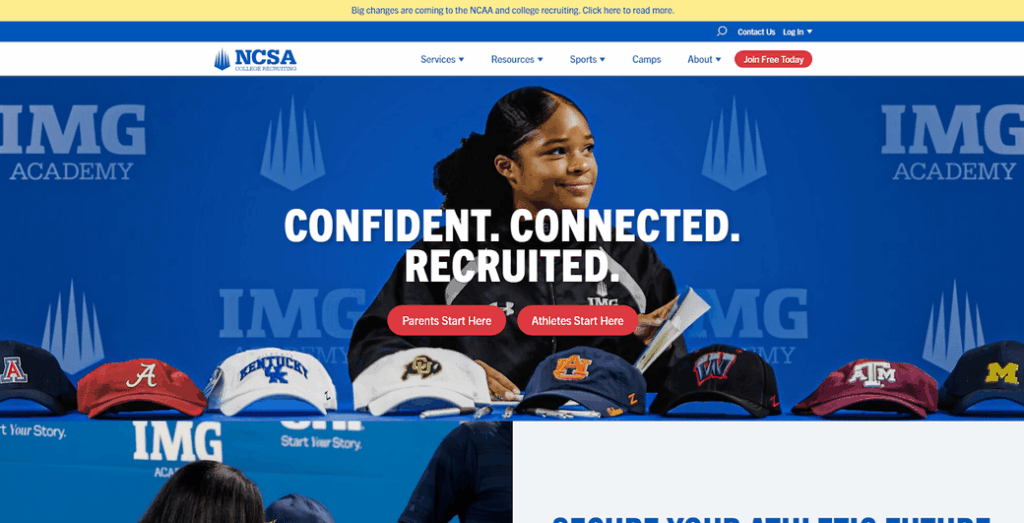
It helps students create recruiting profiles, understand NCAA/NAIA rules, and find scholarship opportunities.
NCSA has different membership tiers, including a free one that gives you access to a college coach directory and map, and a (limited) college coach message center and activity reports.
The paid tiers include additional features, such as scholarship guidance, roster opening notifications, direct promotion, and one-on-one personal recruiting coaching.
Is NCSA a Scam?
No, NCSA is not a scam.
However, whether enrolling in premium NCSA membership plans is worth it is up for debate.
User reviews about NCSA are mixed:
- 1.8 out of 5.0 stars (from 163 reviews) on Yelp.
- 4.8 out of 5.0 stars (from 4,178 reviews) on Trustpilot.
- 2.8 out of 5.0 stars (from 1,273 reviews) on the App Store.
- 3.3 out of 5.0 stars (from 906 reviews) on Google Play.
On internet forums like Reddit, most people say that NCSA is not worth it.
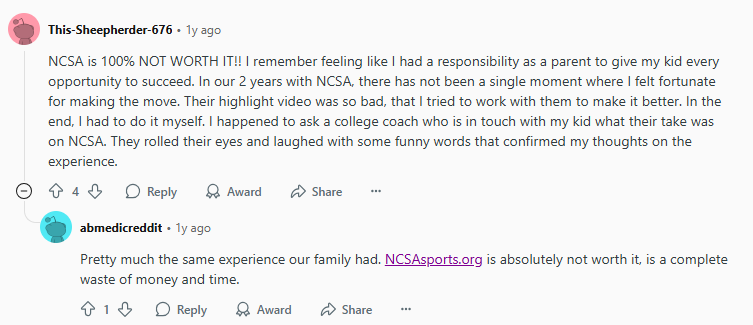
One person noted: “I happened to ask a college coach who is in touch with my kid what their take was on NCSA. They rolled their eyes and laughed with some funny words that confirmed my thoughts on the experience.”
Another reported: “I bought the highest paying package and they helped me for like a month . Now my “personal coach” asks me “ how do u think I can help you “. Your the Coach man tell me . Anyways just don’t spend money on it it’s not needed.”
That said, a number of people say they found NCSA helpful.
For instance, one person said: “NCSA is absolutely legit. People complaining that that it’s a scam either didn’t bother putting in any work of their own, or were never recruitable to begin with. Exposure is exposure, despite acknowledging that the company IS very aggressive and coercive in its sales tactics.”

Most people recommend creating a free NCSA profile or browsing the site (without giving away any of your personal information) to learn about how to email coaches.
According to one person, creating an NCSA account led to their daughter getting emails from coaches who found her through the NCSA system:
“We have a profile, haven’t spent a dime. We have, however, received email from coaches looking at my daughter via that system. Kid is only a freshmen, so right now…emails inviting her to camps and site visits. It does link you directly to the university recruitment questionnaires and it also gives you the names of coaches at the schools you look up. For that, free is worth it, even as just an athletic LinkedIn page of sorts.”
NCSA is a Better Business Bureau (BBB) accredited organization and holds an “A+” rating. (See also: Is the BBB a Scam?)
Security
We were unable to find much information about NCSA’s security measures.
In its privacy policy, it says it maintains “commercially reasonable security measures” but does not go into detail as to what these measures are.

Privacy
NCSA explains the type of data it collects, why it collects it, and with whom it shares it in its privacy policy.
It collects the following information:
- Directly from users: Names, contact details, birth date, and payment info. Plus, additional information (optional).
- Automatically: IP addresses, browser/device details, location, and usage patterns (via cookies).
- From third parties: Marketing partners, payment processors, schools, recruiting services, etc.
NCSA uses this data to provide and improve its services, for marketing and analytics, security and fraud prevention, legal compliance and enforcement, business operations, and user communication.
It may share your data with affiliates, subsidiaries, service providers (including those providing technology, analytics, and customer support), marketing and advertising partners, legal authorities (if required), and buyers in the event of a merger or sale. It may also share it with others with your consent.
NCSA says it can retain your data “for as long as necessary” and does not provide data retention timeframes.
The website recognizes the Global Privacy Control (GPC) signal.
Depending on where you reside, you may be able to exercise privacy rights, like the right to obtain a copy of the personal information NCSA has collected about you and the right to delete this data.
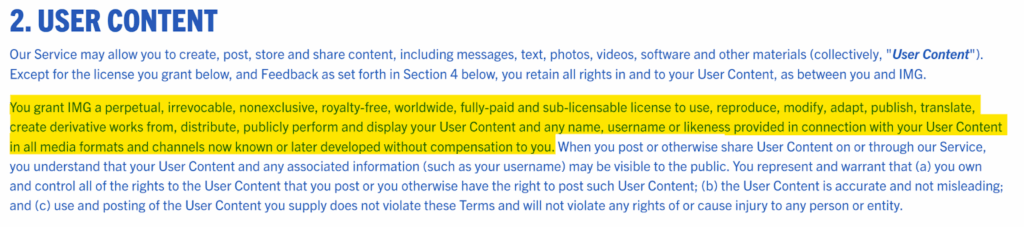
As per its terms of service, by posting or otherwise sharing content with NCSA, you give it a perpetual, irrevocable, royalty-free license to use your content (text, photos, videos, etc.) for any purpose, including commercial use, without compensating you.
So, Should You Use NCSA?
Depends on your specific goals and resources.
NCSA can help you understand recruiting timelines and eligibility rules and connect with thousands of college coaches.
However, success with NCSA usually requires proactive effort from the athlete and/or their family. Simply purchasing a premium plan won’t guarantee results.
So, if you’re already informed, have support, or are targeting lower divisions where personal contact is key, you can probably do just as well on your own.
Either way, there’s probably no harm in creating a free NCSA account – just be ready for hard upselling.
How to Use NCSA Safely and Privately
- Start with a free account. Many people say a free NCSA account is worth it. Paid membership tiers get more mixed reviews. Consider starting with a free NCSA account and upgrading if you believe it could be beneficial to you.
- Create a strong password. And don’t reuse it elsewhere on the web.
- Don’t overshare on your profile. Be selective with the personal details you share in your public NCSA profile.
- Create a separate email or use a masked email address. This can help you avoid spam.
- Be selective about the video content you upload. Avoid personal footage and don’t include sensitive background information (e.g., location and school names if not relevant).
- Don’t overshare in messaging. Avoid giving out personal details unless you’ve verified the coach and school.
- Watch out for scams. Scammers may pretend to be coaches contacting you through or outside the platform. Don’t click suspicious links or open unknown attachments.
- Read the fine print. Review NCSA’s privacy policy and terms of service. Understand how your data is stored and shared.
- Avoid sharing your profile. Don’t link your NCSA profile to public social media profiles unless your profiles are professional and clean. Don’t share your NCSA profile URL in open forums or with unverified parties.
- Involve a trusted adult. Especially if you’re a younger athlete, have a parent or coach oversee the recruiting process.

news?
Don’t have the time?
DeleteMe is our premium privacy service that removes you from more than 750 data brokers like Whitepages, Spokeo, BeenVerified, plus many more.
Save 10% on DeleteMe when you use the code BLOG10.
Related Posts
Is Clawee a Scam?