Is Groupon a Scam?

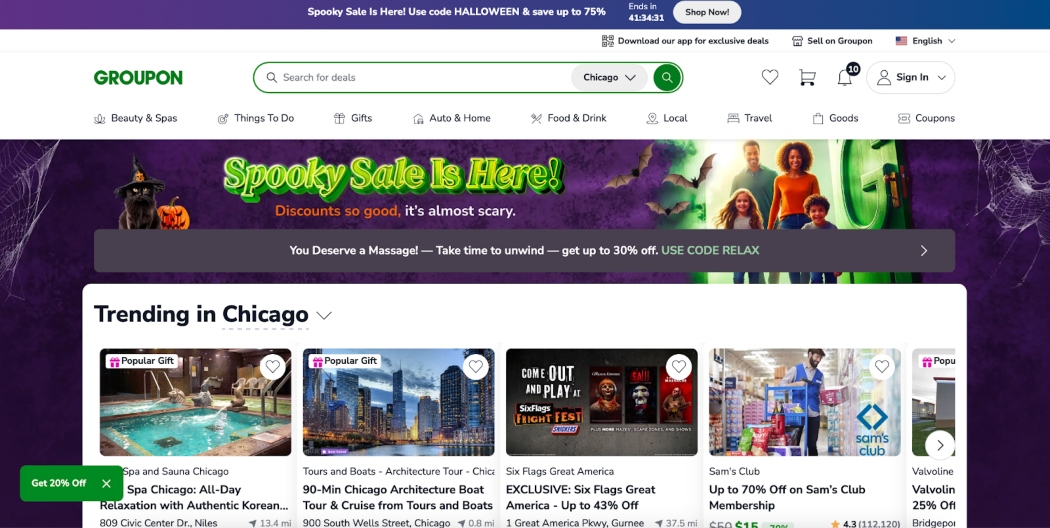
Table of Contents
If you’re thinking of using Groupon, you need to know if it’s safe. Is Groupon a scam?
Below, we explain whether Groupon is a scam and discuss some steps you can take to improve your safety when using this marketplace.
What Is Groupon?
Groupon is a marketplace that sells discount vouchers for goods, services, and travel packages through its website and mobile app.
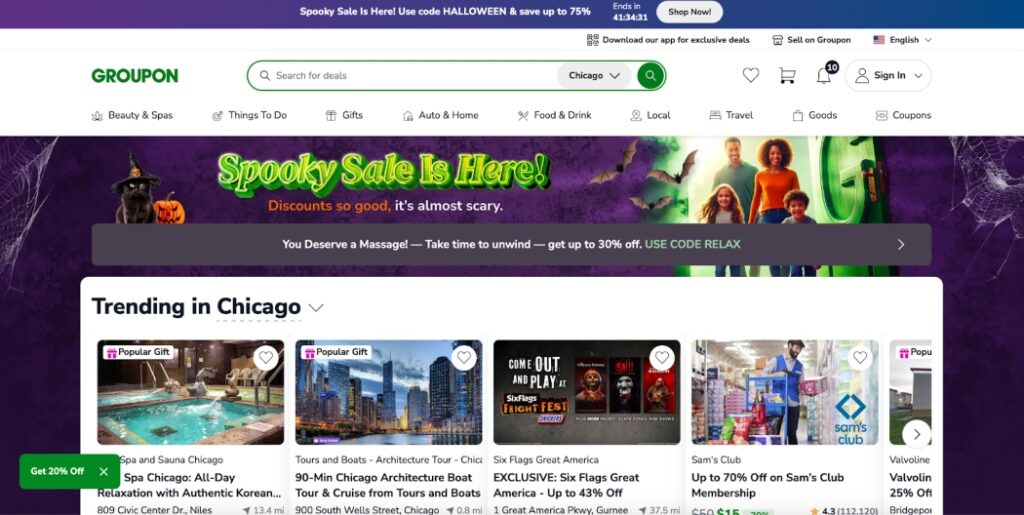
The company launched in 2008 as a “deal‑of‑the‑day” site that required a minimum number of buyers before the deal could be availed of, but it later switched to on‑demand vouchers that can be bought at any time.
Groupon started in Chicago in 2008 and went public in November 2011.
Is Groupon a Scam?
No, Groupon is not a scam. It’s a legitimate platform for finding deals and a publicly traded company.
However, its marketplace lists third‑party sellers whose reliability varies.
A small number of third-party sites have written about and reviewed Groupon.
For instance, a US News article on Groupon cautions consumers to read reviews, understand the fine print, and remember that not all deals are equal.
NerdWallet looked specifically at Groupon Getaways, the part of Groupon’s website that sells discounted travel packages. The publication concluded that Groupon’s travel packages can be worthwhile but often come with caveats. Third-party agencies run deals, and travelers must read the fine print to understand date restrictions, tour agendas, and the quality of hotels.
Groupon gets wildly mixed reviews from customers:
- 4.0 out of 5.0 stars (from 67,972 reviews) on Trustpilot.
- 4.5 out of 5.0 stars (from 1.71m ratings and 100m+ downloads) on Google Play.
- 4.8 out of 5.0 stars (from 566,771 ratings) on the App Store.
- 1.2 out of 5.0 stars (from 2,528 reviews) on ConsumerAffairs.
- 1.04 out of 5.0 stars (from 585 reviews) on the Better Business Bureau website.
- 1.8 out of 5.0 stars (from 5,287 reviews) on SiteJabber.
- 1.5 out of 5.0 stars (from 11,929 reviews) on PissedConsumer.
On ConsumerAffairs, customers praise great prices on digital goods, quick delivery, and easy download instructions. Some buyers also note responsive third-party sellers.
On the other hand, others complain about poor or nonexistent customer service, refund difficulties (even after sellers agreed to a refund), AI-only support, installation failures, and issues with product authenticity.
On online forums like Reddit, people likewise report varying experiences.
Some people say the platform was useful when it only featured one deal per day, but now the deals are allegedly much less useful (with some users even alleging encountering scams).
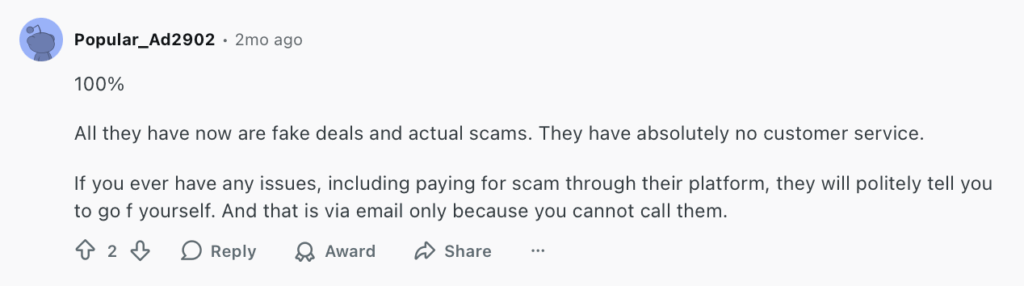
However, several people said they ended up getting good deals through Groupon.

One person said: “I bought a piece of furniture there last year because it was the lowest price on that particular model when I shopped around. I didn’t even know they sold stuff like that, but yeah it went well. I think it just really depends on what you’re looking for.”
Elsewhere online, users reported encountering counterfeit products on Groupon.
Groupon is not Better Business Bureau (BBB) accredited at the time of writing. In the last three years, Groupon has received 3,882 total complaints, of which 1,333 have been closed in the previous 12 months.
Groupon’s business practices and consumer protection actions
In 2021, the UK Competition and Markets Authority (CMA) consulted with Groupon entities for potential consumer protection law breaches.
That same year, Groupon formally committed to the CMA to improve its customer service and refund practices.
The company also agreed to acknowledge consumer complaints within 24 hours, resolve them within 14 days, establish a deals investigation team, conduct mystery shopping, and ensure accurate descriptions of goods and services, as well as their availability.
Groupon also said it would appoint a compliance officer and report to the CMA on the progress it makes.
Groupon security
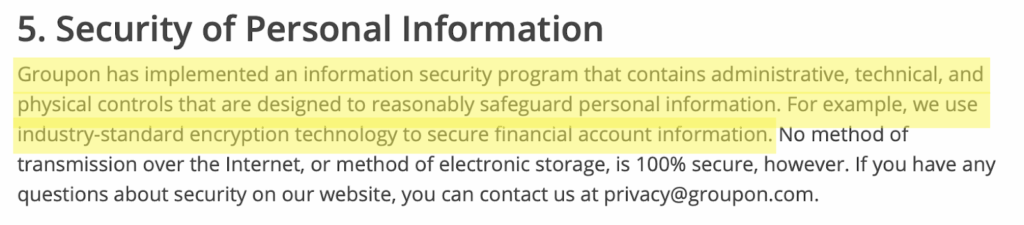
In its privacy policy, Groupon briefly mentions its security practices.
It states it has an information security program with administrative, technical, and physical controls to protect users’ personal information. An example it gives is industry-standard encryption technology for securing users’ financial account data.
In its 2025 10-K filing, Groupon says it uses multiple technical controls, including firewalls, VPNs, multi-factor authentication, single sign-on, and intrusion and anomaly detection tools.
The company also conducts regular phishing tests and internal and third-party penetration testing. It uses cloud-based infrastructure with continuous monitoring and manages vendor risks through security requirements and incident notification obligations.
Groupon privacy
Groupon explains the kind of data it collects, why, and with whom it shares it in its privacy policy.
It may collect the following personal information:
- Identifiers (e.g., name, address, phone number, and social media account names).
- Demographic information (e.g., age, gender, birth date).
- Commercial information (e.g., order history and purchasing tendencies).
- Location information (e.g., state/province, city, neighborhood, and, if you agree, more specific information through your device’s GPS functionality).
- Financial information (e.g., payment card number, expiration date, and card verification number).
- Internet and network activity information (e.g., browsing behavior, search history, and interactions with ads and websites).
- Inferences regarding preferences and other characteristics (e.g., products/services you may be interested in).
Groupon collects the above information from you, your device, social media networks, and other third parties.
Groupon uses your information to operate its service, process transactions and bookings, and deliver personalized advertisements and offers based on your interests and location.
The company also uses your data for customer analytics, marketing communications, promotional activities, and business operations, including fraud prevention and legal compliance.
Additionally, Groupon uses your precise geolocation to deliver location-based offers, automatically creates accounts linked to your email for passwordless purchases, and collects personal information of people you share products with through the service.
The company may disclose your personal information to service vendors, merchants, and affiliates to operate its business, as well as for legal compliance, law enforcement requests, and fraud prevention.
It may also share your information during business transitions, such as mergers or acquisitions, when data is de-identified, or with your consent.
Groupon provides a list of entities with which it may share your data.
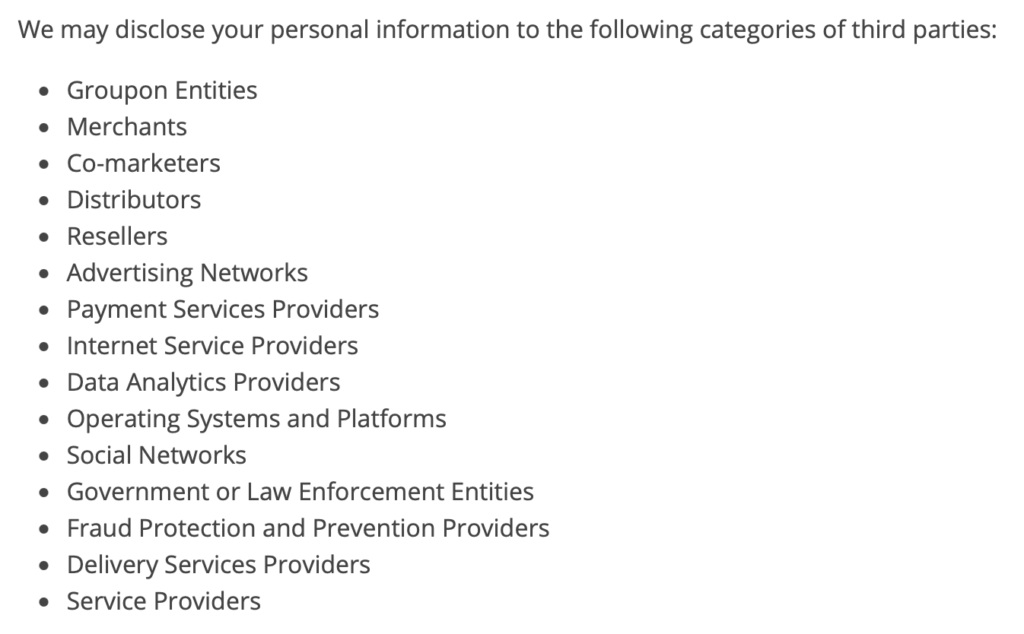
It also notes the kinds of categories of personal information it may disclose for its own business and operational purposes, as well as the kind of information it may disclose in exchange for services, insights, and other “valuable consideration.”
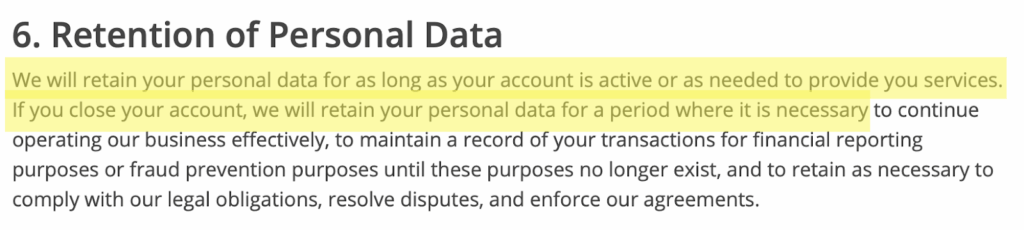
Groupon says it retains data for as long as your account is active or as needed to provide you services. If you close your account, they can keep your data for “a period that is necessary.” They do not provide specific timeframes.
Users have privacy rights, such as the right to request details of what Groupon has collected and to opt out of “sales” or “sharing” of personal information. They can also unsubscribe from marketing messages, manage cookies in their browser settings, and turn off geolocation in their device settings.
Groupon does not honor the Do Not Track signal. It uses behavioral and location data for targeted ads.
Note that public posts (forums, reviews, etc.) are visible to anyone, so avoid sharing personal information.
Groupon states that it isn’t responsible for the privacy practices of other sites or partners.
The Common Sense Privacy Program, which evaluates online services’ policies, gives Groupon a “Warning” rating at the time of writing. This means Groupon “Does not meet our recommendations for privacy and security practices.”

Some of the issues flagged by the Common Sense Privacy Program include Groupon’s sale or rental of personal information to third parties and its display of personalized ads.
So, Should You Use Groupon?
Depends.
Groupon may suit budget‑conscious shoppers who are flexible and willing to research merchants, read fine print, and accept some risk in exchange for discounts.
How to Use Groupon Safely and Privately
- Create a secure password. Groupon accounts can store your card details and other personal information (e.g., home address, phone number), so make sure to create a strong, unique password. Never, ever reuse passwords from other sites.
- Watch out for phishing emails. Groupon sends many promotional emails, which scammers can imitate. Always double-check the sender’s address and never click on links from suspicious emails.
- Use secure payment methods. When possible, pay with a credit card or PayPal. Both offer better protection than debit cards in case something goes wrong.
- Don’t save your card information. Groupon lets you store payment data for faster checkout the next time. Avoid doing this to limit data exposure in the event your account is compromised.
- Limit how much personal data you share. Don’t fill out unnecessary profile details unless absolutely necessary.
- Turn off location access. In the Groupon app, you can manually set your location instead of letting it track you via GPS. That way, Groupon can’t continuously track your geolocation.
- Manage ad tracking. Groupon uses behavioral and location data to target ads. You can turn off “personalized offers” in your Groupon account or in your device settings, use privacy-focused browser extensions, and limit ad tracking in your mobile device’s privacy settings.
- Avoid sharing personal information in reviews. Reviews on Groupon are public, so don’t include any information you wouldn’t want to be visible to the public.
- Opt out of marketing communications. Doing so will help you keep your email inbox clutter-free.
- Exercise your privacy rights. As per Groupon’s privacy policy, you can request to see the kind of information the company has about you, update it, request a portable copy of it, ask to delete it, and opt out of the “sale” or “sharing” of data with third parties.
- Read the fine print. Check things like expiration dates, redemption limits, hidden fees, etc.
- Check merchant reputation. Google the brand or look it up on third-party review sites like Yelp before redeeming a discount to avoid falling victim to a scam.
- Keep transaction records. Take screenshots of the deal terms, order confirmations, and merchant contact information in case you need to request a refund or dispute a charge.

news?

Don’t have the time?
DeleteMe is our premium privacy service that removes you from more than 750 data brokers like Whitepages, Spokeo, BeenVerified, plus many more.
Save 10% on DeleteMe when you use the code BLOG10.
Related Posts

Is Clawee a Scam?