Groundhog Day Is the Internet

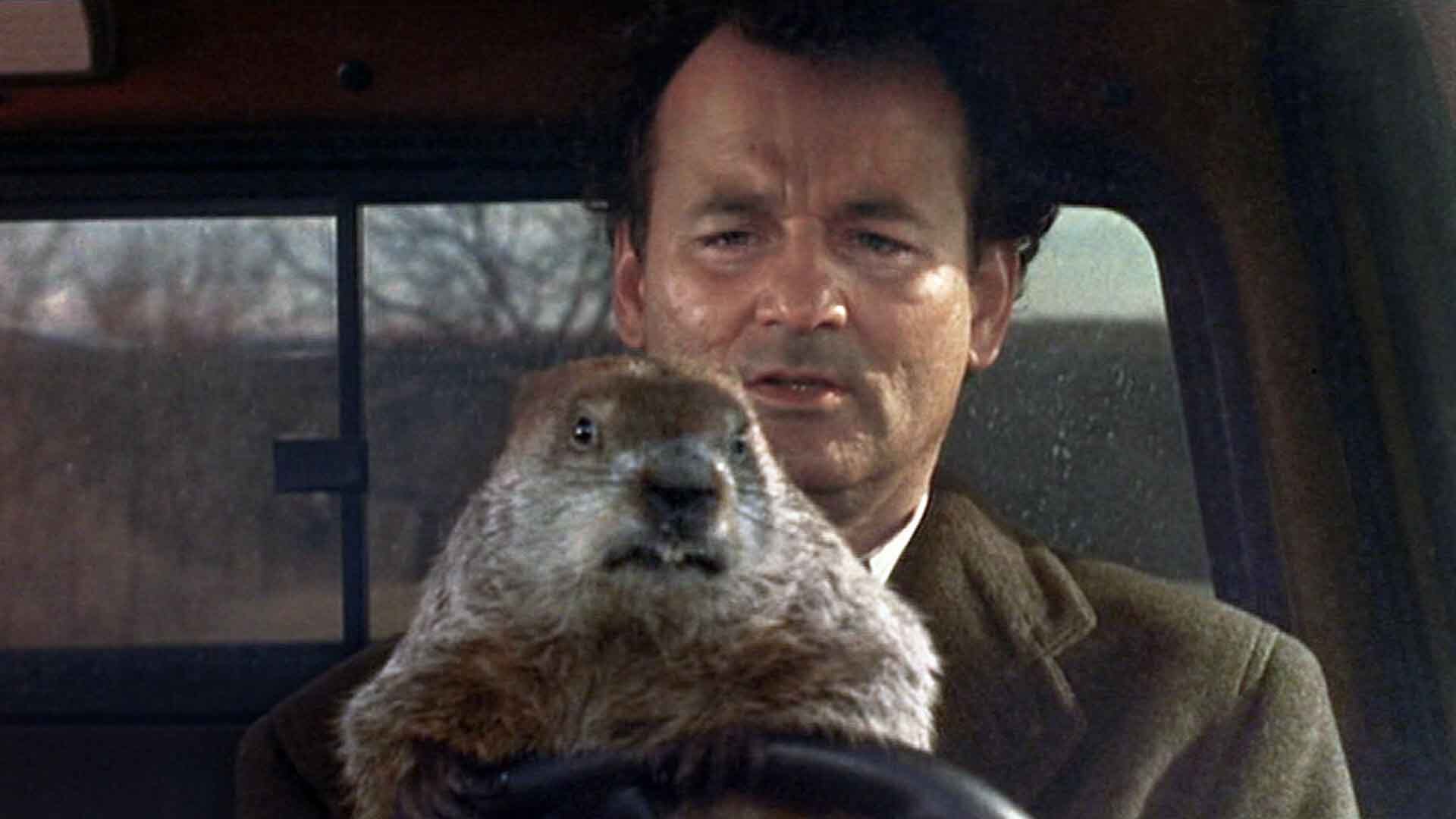
How Groundhog Day, Harold Ramis’s matchless 1993 rom-com, accidentally predicted surveillance capitalism—and how AI is perfecting the creepshow that started back when NAFTA was new.
In this episode of What the Hack, cultural critic Virginia Heffernan helps me drop a thesis bomb about the movie Groundhog Day—released the same year the world wide web went public—specifically, that it’s an accidental prophecy about the surveillance economy, data brokers, and AI.
The Take
In 1993, Groundhog Day was released. That same year, the World Wide Web went public. The movie is about a guy trapped in a loop, the same day repeating over and over. The internet turned out to be the same thing. Mind blown.
I was driving to an interview with Seth Godin when this parallel hit me. So, naturally, it was the first thing I talked about before we recorded Seth Godin’s Anti-Spam Playbook.
“So it’s not that the internet is Bill Murray,” Seth riffed, “It’s that, there are companies that are rewarded for acting like Bill Murray.”
Indeed. As Virginia pointed out in the conversation we had last week, there’s something comforting about a rom-com predicting the future more accurately than sci-fi.
To get you oriented here, when I say “the Internet” I mean all the data-related practices that define it today, from social media profiling us for marketing companies, to the creepier forms of surveillance that seem to get scarier every day. So, naturally, we started there because I hadn’t talked to Virginia since Tucker Carlson singled her out on his show, and she received death threats in her physical mailbox—handwritten notes, delivered to her home. The people who threatened her weren’t hackers. Her address, her phone number, her family connections were scattered people search sites on the now-thirty-two year old public world wide web, aggregated by data brokers, available to anyone..
But the movie Groundhog Day wasn’t prescient because Harold Ramis somehow anticipated surveillance capitalism. It was predictive because it understood something older: that perfect knowledge of another person cuts two ways: it can be the ongoing project of true love or it can be a form of violence.
The Surveillance Reconnaissance Economy
ICYMI: Phil Connors, played by Bill Murray, gets stuck reliving the same day, Groundhog Day, over and over. After the initial thrashing subsides in this temporal rat trap, Phil realizes that infinite repetition means infinite self-seeking possibility powered by what we call data collection these days. He can learn everything. Watch people. Memorize patterns. Predict words before they’re spoken. It’s novel, and his first instinct is to be selfish.
He hovers over Nancy Taylor’s table at a Punxsutawney diner. What high school did you go to? Who was your English teacher? She’s trying to brush him off, but she can’t help herself. The next loop, he uses everything he got out of her against her, approaching her like a long lost school mate. “Nancy Taylor! Lincoln High School! I sat next to you in Mrs. Walsh’s English class!”
This is Facebook eleven years before it launched. This is phishing. This is chicanery of people search sites deployed by hormones and zero humanity. This is every form you’ve ever filled out that asked for your mother’s maiden name “for security purposes.”
None of this requires malice–just a mission. From there, the only things needed are repetition, memory, and a marketing plan.
With his producer Rita—played by Andie MacDowell—Phil becomes even more methodical, using every trick he’s taught himself in the loop. He mirrors her perfectly. But the illusion of being known breaks.
“Are you making some kind of list?” Rita asks. “Did you call up my friends and ask them what I like and what I don’t like?”
Reconnaissance is surveillance with a mission. Surveillance takes an agnostic stance: I have no idea what will be useful, so I’m going to clock everything and make you sign a privacy policy that makes any future use completely legal. Phil had goals. The internet prefers to figure that out later—ideally with zero visibility into what it’s doing.
Thank You, Thank You
Late in the film, something changes. Phil approaches his producer and cameraman before the Groundhog Day shoot on day umpteen of his life in the rat trap.
“What do you think about XYZ?” he asks both of them. He brings them coffee. He clearly wants to be helpful. Everyone is shocked.
This is where Phil discovers something the internet only figured out more recently: sycophancy in the service of actual service while creating an even better rat trap.
Phil has learned, through thousands of iterations, that asking people what they think makes them feel valued, makes the work go better, makes everyone happier. The empathy he’s developed has been refined through repetition until he’s discovered the optimal formula. And here’s the thing—it actually works. Everyone benefits. The shoot goes better. People feel heard. Phil gets what he wants and he is released from the trap.
This is the “double thank you” of commerce perfected. The merchant asks “How can I help you?” and means it, because helping you helps them.
This is AI being genuinely helpful while simultaneously extracting value.
At the bachelor auction that night, the bidding goes wild. Three hundred thirty-nine dollars and eighty-eight cents—that’s how much Rita is willing to pay for Phil Connors 2.0. Both parties are satisfied. Someone gets help. Someone gets paid. The double thank you.
But while Phil’s loop ends, internet’s doesn’t. AI’s politeness is real. Its helpfulness is real. And the underlying business model—gather data, improve the product, optimize engagement, monetize attention—remains constant. The sycophancy isn’t a personality flaw. It’s a feature that makes the system run more smoothly while keeping you in the loop.
Data brokers don’t collect your information to serve you better vacations or grills. They collect it because your information is worth cold hard cash. Your preferences, location data, social connections—sold to the highest bidder, often without your knowledge, sometimes ending up in the hands of people who send threatening messages disguised as Thank You cards in your physical mailbox without a stamp.
Phil Connors escapes Groundhog Day by learning that being known isn’t the same as being understood and that prediction isn’t connection. That the loop only breaks when you stop seeing other people as means to your ends.
The internet hasn’t had to learn this. Its dominant business models don’t require it. The loop is profitable. It’s a confirmation bias of a business model that refuses to prove itself wrong because it’s making bank. Phil had to escape or go insane. Surveillance capitalism is insane.
The question isn’t whether the internet can know us—clearly it can. The question is whether that knowledge will ever be accountable to the people it describes. For now, lean into the Thank you, Thank you, and hope for the best.
We’re still in the loop. The only question left is whether we’ll wise up and pass some laws to make it possible to escape the digital loop we all occupy. The loop only breaks when we reclaim agency over our privacy—when we stop treating our digital lives as always-already exposed and start making ourselves harder to find.

news?

Don’t have the time?
DeleteMe is our premium privacy service that removes you from more than 750 data brokers like Whitepages, Spokeo, BeenVerified, plus many more.
Save 10% on DeleteMe when you use the code BLOG10.
Related Posts

Why Doesn’t Gen Z Care About Privacy?
The IDScan Breach Investigation and Your Privacy