Is Match.com a Scam?

Table of Contents
If you’re thinking of using Match.com, you need to know whether it’s safe. Is Match.com a scam?
Below, we explain whether Match.com is a scam and discuss some steps you can take to improve your safety when using this dating platform.
What Is Match.com?
Match.com is an online dating platform – one of the oldest ones, in fact (it was launched in 1995).
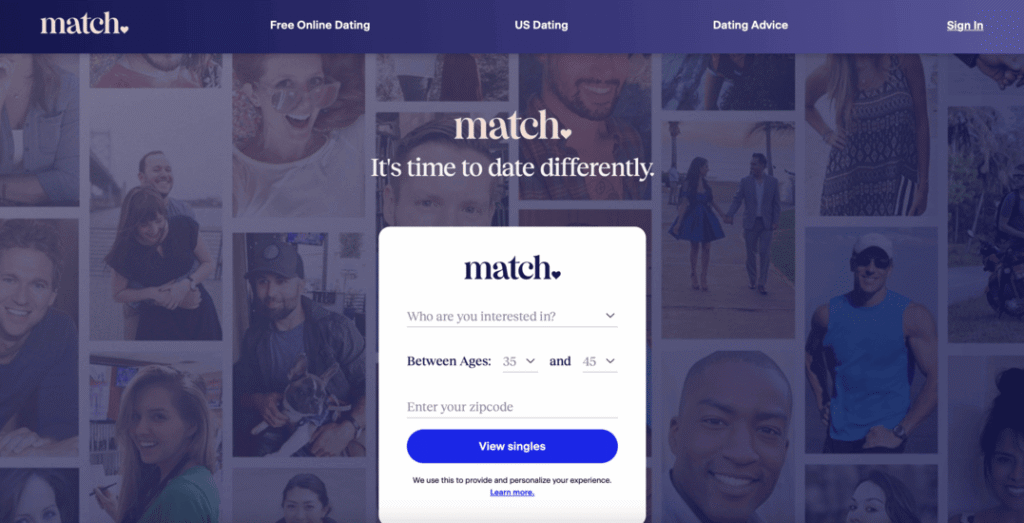
As a Match.com user, you can create a profile, browse for potential matches, and talk to other members. You can browse for free, but if you want to access other features, you’ll need to pay for them.
The platform uses a combo of algorithm matching and user preferences to surface good matches.
The service is owned by Match Group, which is also the owner of other dating apps such as Hinge, Tinder, PlentyOfFish, and OKCupid.
Is Match.com a Scam?
No, Match.com is not a scam. It’s a legitimate dating platform that has been around for a few decades.
Several third-party publications and review sites have reviewed Match.com.
For example, in 2023, PCMag gave Match.com a rating of 4.0 out of 5.0 stars and concluded that “With its easy-to-use interface and detail-rich profiles, Match remains one of the most enduring dating apps for people looking for long-term love.”
User reviews of Match.com are mixed as of this writing, though they lean mostly negative:
- 1.1 out of 5.0 stars (from 3,500 reviews) on ConsumerAffairs.
- 1.2 out of 5.0 stars (from almost 100 reviews) on Trustpilot.
- 2.4 out of 5.0 stars (from over 50 reviews) on REVIEWS.io.
- 1.2 out of 5.0 stars (from over 1,000 reviews) on Sitejabber.
- 1.1 out of 5.0 stars (from almost 200 reviews) on ProductReview.
- 1.07 out of 5.0 stars (from 500 reviews) on Better Business Bureau (for the parent company of Match.com, Match Group Americas).
Positive reviewers say they met their partners through Match.com.
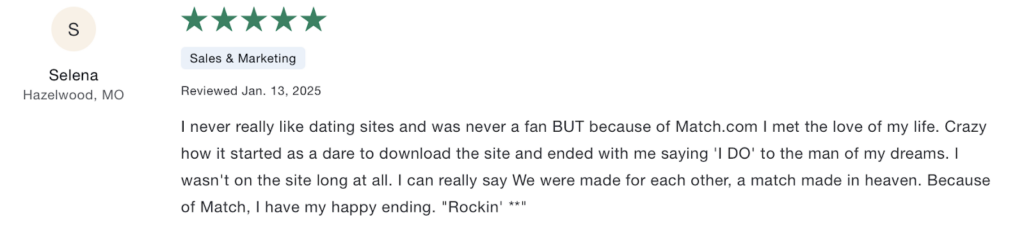
Negative reviewers allege that there are too many fake and scam accounts on Match.com, and some people say they’ve encountered cancellation issues. Others say that the service is too expensive for what you get.

On online forums like Reddit, people report varying experiences with Match.com.
A minority of people say they’ve met their partners through Match.com, but the vast majority allege that many of the accounts on the service are dormant or even fake.
The parent company of Match.com, Match Group Americas, is not Better Business Bureau accredited but holds a “B” rating at the time of writing.
The company has received a total of 4,713 complaints as of this writing in the last three years, 1,822 of which have been closed in the past 12 months.
There’s one alert on the BBB Match Group Americas profile, which states that the owner and operator of Match.com (and other dating services like PlentyOfFish and OKCupid) was sued by the FTC in 2019 (see below).
Enforcement actions
In 2019, the FTC filed a complaint against Match.com’s parent company alleging that the company engaged in several unfair and deceptive practices to consumers.
These included Match.com:
- Using notifications from fraudulent accounts to trick free users into buying paid subscriptions (leading to almost 500,000 purchases between 2016 and 2018).
- Deceptively promoting a “free” six-month subscription guarantee with stringent eligibility conditions (so few users actually qualified).
- Had a “hard to find, tedious, and confusing” (according to internal Match presentation) cancellation process.
- Retaliated against consumers who filed billing disputes by terminating their accounts and deleting their profiles, even when they had remaining subscription time.
In 2025, the FTC and Match reached a $14 million settlement to resolve these allegations.
Match.com security
The section below looks at Match.com’s security measures and security incidents.
Match.com security measures
Match.com describes its security measures in a separate “Security” page.
It says it prioritizes its applications’ and users’ data security through practices like access management, application security, governance and compliance, offensive red team testing, and continuous threat monitoring.
All Match.com employees get security and privacy training from day one and annually after that, and third-party vendors are also reviewed before onboarding.
The company holds ISO/IEC 27001:2022 certification and undergoes annual independent audits, and it encourages responsible disclosure from security researchers while prohibiting DoS testing or automated scanning.
Third-party evaluation of Match.com security
Mozilla *Privacy Not Included, which reviewed Match.com in 2024, notes that Match.com meets its Minimum Security Standards.
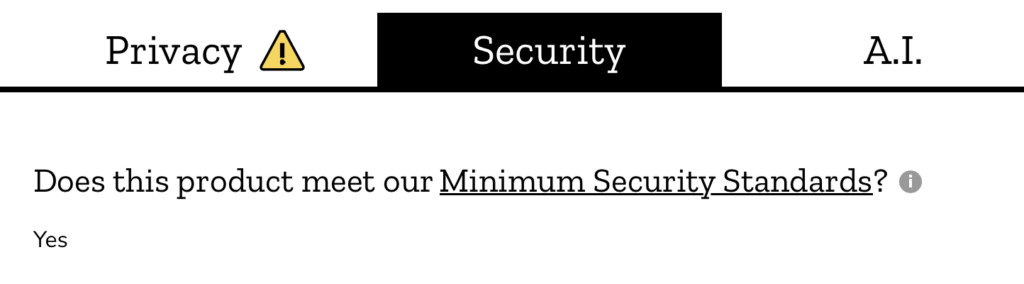
The platform encrypts personal data, requires a strong password, and pushes out security updates. It also encourages security researchers to share any vulnerabilities they find on the platform.
Match.com security incidents
In 2026, criminals claimed to have breached Match platforms, including Match.com, and obtained access to over 10 million records tied to the company’s dating sites.
Match said it quickly terminated this unauthorized access and noted that most of the exposed data was usage material and internal documentation. It stated that it didn’t see evidence of user financial details, login information, or private communications being compromised.
Match.com privacy
The section below looks at Match.com’s privacy policy and what independent evaluators think of the platform’s privacy.
Match.com privacy policy
Match.com explains in its privacy policy the kind of data it collects, why, and with whom it shares it.
It collects the following information from you:
- Account data (email address, phone number, and date of birth).
- Profile data (gender, interests, preferences, approximate location, etc.)
- Content (photos, text, audio, videos, and chats you have with other members).
- Purchase data.
- Marketing, survey, and research data
- Third-party data (e.g., contact details of someone you know).
- Customer support data.
- Social media data.
- Usage data (including how you use Match.com and interact with their ads on third-party platforms).
- Technical data (e.g., device ID, IP address, operating system, network information, etc.)
- Insights and inferences (e.g., characteristics, preferences, behavior, predispositions, etc.)
- Geolocation data.
- Face data (if you participate in Match.com features like Photo Verification)
- ID data (if you share a copy of your government-issued ID to help Match.com verify that you are who you say you are).
The company uses this data to deliver its services, process purchases, run ads and marketing campaigns, improve the platform, and ensure safety and security. It may also use it for legal compliance and defending claims.
Your profile data is visible to other members. Beyond that, Match.com shares your data with service providers, partners, advertising partners, other Match Group companies, and law enforcement (when legally required).
It also notes a joint data controller relationship with Meta Ireland when using Facebook tools.
Because it’s a global service, data moves across borders. Match.com relies on EU adequacy decisions and standard contractual clauses to justify those transfers.
When it comes to your privacy rights, you can access, correct, delete, or port your data. You can also object to processing, restrict it, or withdraw consent.
For EU/UK users, you can also lodge complaints with data protection authorities.
After you close your Match.com account (by the way, it also auto-closes after 2 years of you being inactive on the service), the company keeps your data for a 3-month safety window.
Some data sticks around longer for legal reasons: transaction data for 10 years, traffic logs for 1 year, customer care records for 6 years, and banned-account content for 2 years, among others.
Third-party evaluation of Match.com privacy
A Mozilla *Privacy Not Included review gives Match.com a warning label.
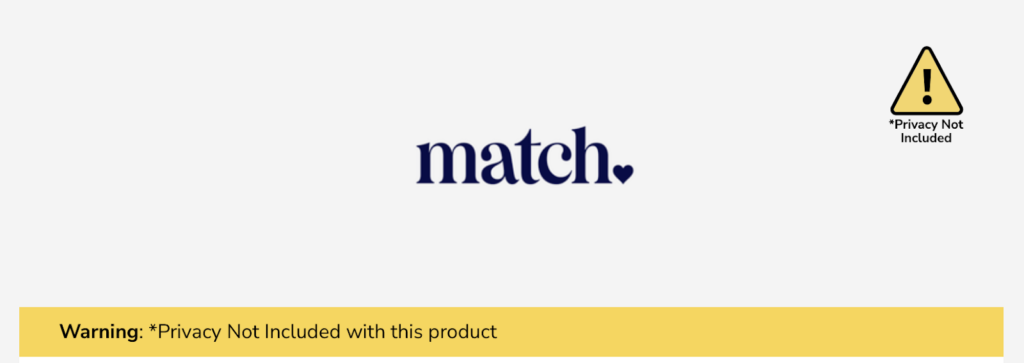
Mozilla says it dings Match.com for several reasons, including saying (in its privacy policy) that it can use personal data to provide offers and run ad campaigns, sharing non-personal information with other group companies and third parties to deliver targeted ads, and not being clear on how users can delete their data, among other things.
So, Should You Use Match.com?
Depends.
Match.com is a legitimate, long-running dating platform, but reviews suggest mixed experiences, including fake profiles, high costs, and past regulatory issues.
If you do use it, make sure you go in with realistic expectations, protect your personal data, and review subscription terms carefully.
How to Use Match.com Safely and Privately
- Be mindful of what you share on your profile. Share only the details you’re comfortable making public. Don’t include information like your full name, address, workplace, or identifiable background elements in photos.
- Don’t share sensitive information. Unless you’re comfortable with this data (such as sexual orientation or health information) being processed for matching and service improvement.
- Review pricing, terms of service, and cancellation terms carefully. And do this before subscribing to Match.com to avoid unexpected charges or difficult cancellations.
- Be skeptical. Of profiles that seem too good to be true, push you to upgrade, or move conversations off-platform.
- Stay on Match.com. If you move to email or messaging apps, protections are generally weaker.
- Protect your account. Create a strong password and don’t reuse it elsewhere on the web.
- Turn off your location. Unless necessary to prevent the collection of your exact latitude and longitude.
- Don’t link social accounts. This allows Match to import and process additional personal data.
- Don’t overshare in chats. Match.cm stores messages and media, which may be reviewed for safety purposes.
- Limit ad tracking. That way, you can minimize having your activity used for ad personalization.
- Be careful with identity verification. Only submit government ID or participate in face verification if you trust the process and understand that biometric or ID data will be processed.
- Close your account. This will trigger data deletion timelines.
- Control your consent. Regularly review app permissions and account settings to withdraw consent for data uses you no longer agree with.

news?

Don’t have the time?
DeleteMe is our premium privacy service that removes you from more than 750 data brokers like Whitepages, Spokeo, BeenVerified, plus many more.
Save 10% on DeleteMe when you use the code BLOG10.
Related Posts
Is Clawee a Scam?