Is GCU a Scam?

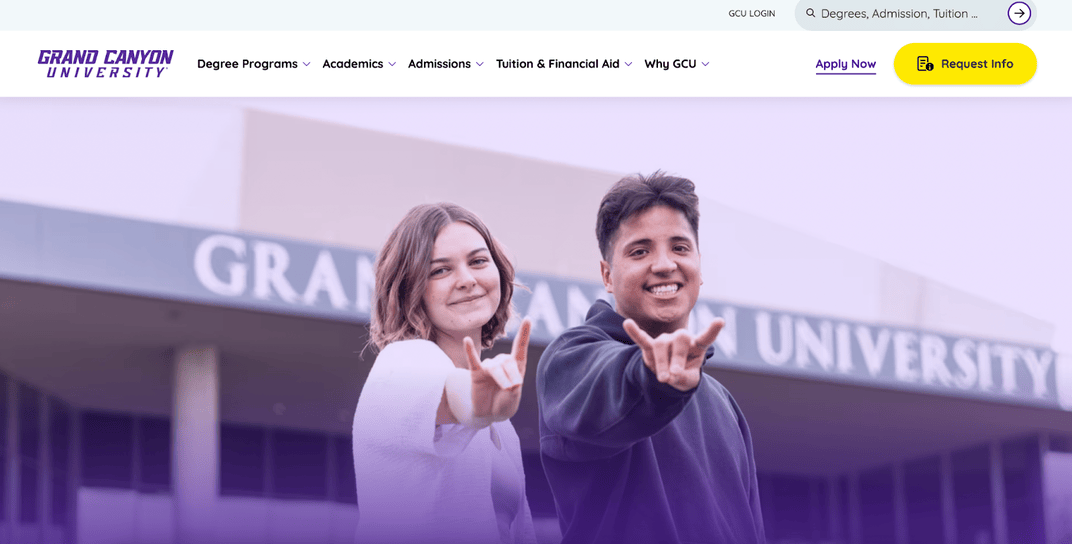
Table of Contents
If you’re thinking of attending GCU, you need to know whether it’s safe. Is GCU a scam?
Below, we explain whether GCU is a scam and discuss some steps you can take to improve your safety when attending this university.
What Is GCU?
GCU, or Grand Canyon University, is a Christian university located in Phoenix, Arizona. It’s a private school and operates as a nonprofit today.
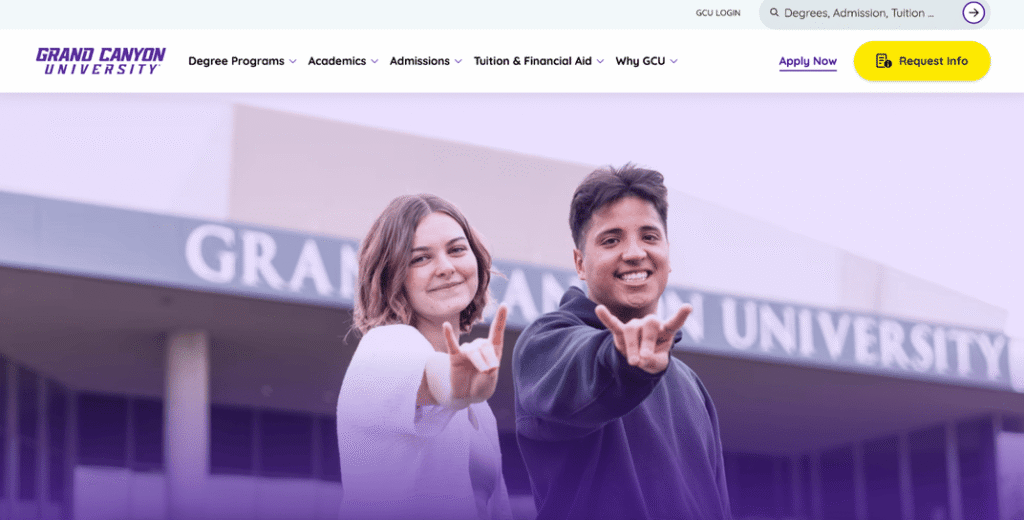
Classes are available on campus and online, and individuals can enrol in business, education, nursing, healthcare, STEM subjects, theology, and other programs.
GCU hasn’t always been a nonprofit. It switched to a for-profit model in 2004 and later changed back to nonprofit again in 2018.
Is GCU a Scam?
No. Grand Canyon University is a legitimate, regionally accredited institution.
User reviews of GCU are mixed as of this writing:
- 3.8 out of 5.0 stars (from over 1,500 reviews) on Google.
- 2.6 out of 5.0 stars (from over 500 reviews) on Yelp.
- 2.8 out of 5.0 stars (from over 700 reviews) on GradReports.
- 4.2 out of 5.0 stars (from over 10,000 reviews) on Niche.
- 1.03 out of 5.0 stars (from over 30 reviews) on Better Business Bureau.
Positive reviews commend individual professors and the online learning platform.
Negative reviews mention counsellor issues, feeling misled about total costs, rigid policies without any flexibility, and doctoral program delays.
On online forums, particularly Reddit, people report varied experiences.
Some people report ending up with good jobs after GCU, and having manageable debt, and several point out that the campus is modern and well-kept.
One person writes:
“Have two degrees from GCU, I work in my field of study and make over 6 figures. I also graduated with nearly no debt. Worked for me haha.”

Some also say that business, business, nursing, and some other programs worked out well for them.
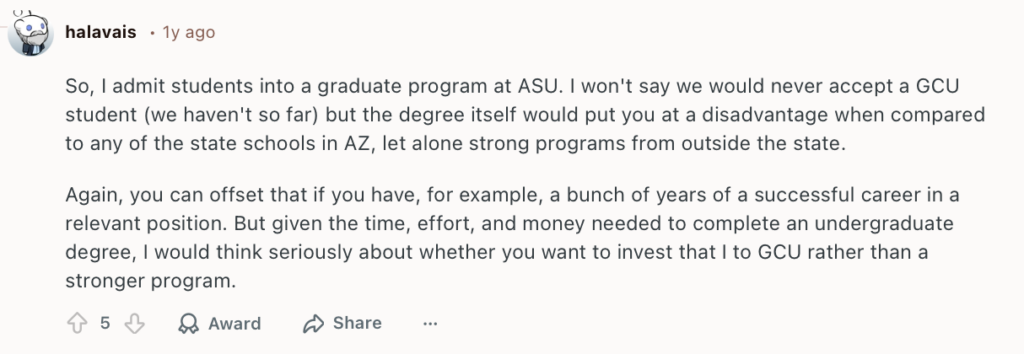
However, others allege aggressive and high-pressure recruitment tactics (several former enrollment counselors confirmed this) and say that some specialized programs may not meet the specific licensure requirements of every state. Some also say that it’s expensive for what you get, the classes are very easy, and credits often don’t transfer well to other universities.
One person writes:
“So, I admit students into a graduate program at ASU. I won’t say we would never accept a GCU student (we haven’t so far) but the degree itself would put you at a disadvantage when compared to any of the state schools in AZ, let alone strong programs from outside the state.”
Grand Canyon University is Better Business Bureau accredited and has an “A+” rating at the time of writing. BBB ratings reflect how the BBB thinks an organization interacts with its customers.
As of this writing, GCU has received a total of 126 complaints on the BBB site, 33 of which have been closed in the past 12 months.
In their complaints, people allege that private loans were applied to tuition without authorization, disbursements arrived late, there was trouble getting transcripts and pressure to stay enrolled despite difficult personal circumstances, and a confusing withdrawal process.
GCU regulatory actions
In 2023, the US Department of Education announced a $37.7 million fine against the university, alleging that it misled students regarding the actual cost of its doctoral programs.
GCU appealed, and in 2025, the Department of Education ended up rescinding the fine with prejudice, dismissing the case with no findings, fines, liabilities, or penalties.
The Federal Trade Commission also sued GCU and its CEO for allegedly deceiving prospective doctoral students about costs and course requirements, misrepresenting the school’s nonprofit status, and engaging in deceptive and abusive telemarketing practices.
A federal judge dismissed the lawsuit’s claims against the university in early 2025, and later that same year, the FTC announced that it had voted to dismiss the entire case.
GCU security
In its privacy policy, GCU briefly describes its security measures.
It says that it uses standard and advanced security measures to protect data.

GCU privacy
GCU goes over the kind of data it collects, for what reasons, and the entities it shares it with in its privacy policy.
It says it may collect the following personal information:
- Identifiers, such as name, alias, address, identifiers, email address, Social Security number, etc.
- Commercial information: What you’ve bought, considered buying, and your shopping habits.
- Biometric information: Fingerprints, face prints, or other physical patterns.
- Internet or similar network activity: Browsing and search history, and your interactions with the GCU website, application, or advertisement.
- Geolocation data: Physical location or movements.
- Professional information: Current or past job, history, or performance evaluations.
- Educational information (FERPA-protected): Grades, transcripts, schedules, and financial aid information.
- Inferences: Preferences, characteristics, psychological trends, predispositions, etc.
GCU uses this data to run and improve its services and websites, market GCU, and process admissions, enrollment, financial aid, and employment. Additionally, it uses it to communicate with students, applicants, and employees as well as maintain security, compliance, and auditing. Plus, to create accounts and authenticate users.
It states that it does not sell personal data.

The university may share your personal data with approved vendors who perform services for GCU (under confidentiality obligations). It may also disclose information if required by law enforcement, court orders, or subpoenas.

GCU uses analytics and advertising tools (e.g., Google Analytics, Meta/Facebook, Snapchat, LinkedIn, TikTok, etc.) for marketing and tracking, generally using non-PII data.
You can opt out of certain ad tracking tools through third-party platforms.
GCU uses cookies for functionality, analytics, and advertising. You can turn off cookies through your browser settings.
You have to opt in to get automated texts. Messages may include marketing, transactional, or informational content. You can opt out anytime by replying STOP or emailing privacy@gcu.edu. Mobile data from texting is not sold. You can also opt out of marketing emails and mailing lists.
Students have rights under FERPA to access and control education records.
So, Should You Go to GCU?
Depends.
It can work for some online bachelor’s or master’s programs if you verify accreditation, costs, and licensing, and monitor billing.
How to Go to GCU Safely and Privately
- Monitor your finances and document everything. Check your student account weekly for billing and aid changes, save PDF copies of all financial documents and enrollment agreements, set alerts for tuition charges and disbursements, and always get written confirmation of any changes so you’re protected if issues or disputes arise.
- Verify program accreditation and licensing. Before enrolling, confirm accreditation and licensing eligibility with state boards or professional associations.
- Secure your GCU account. GCU’s privacy policy says that you share responsibility for security, so make sure you set a strong, unique password for your GCU account (never reuse it elsewhere).
- Minimize tracking. GCU uses analytics, cookies, and ad platforms. Use a privacy-focused browser, block third-party cookies, and turn on “Do Not Track.”
- Opt out of marketing. Don’t opt into marketing texts to begin with, but if you’ve already done so, reply STOP or email privacy@gcu.edu. Opt out of marketing emails and unsubscribe from mailing lists.
- Use a separate or masked email address. Use a separate email address for school communications if possible to keep your primary inbox clean and to reduce your exposure in case of a security incident.
- Reduce the amount of information you share. Only fill out required fields on forms and be cautious with uploads.
- Be careful with links to external sites. GCU’s privacy policy warns about external sites. Assume external job portals, tools, or learning platforms have different privacy rules, and read privacy notices before linking accounts.
- Exercise your privacy rights. Request a copy of the data GCU holds about you, request corrections if something is inaccurate, and opt out of marketing communications.
- Act fast in case of a security incident. If you suspect a security incident, change your password, contact ITSecurity@gcu.edu, and document the issue (dates, screenshots, emails).
news?

Don’t have the time?
DeleteMe is our premium privacy service that removes you from more than 750 data brokers like Whitepages, Spokeo, BeenVerified, plus many more.
Save 10% on DeleteMe when you use the code BLOG10.