Is Solitaire Smash a Scam?

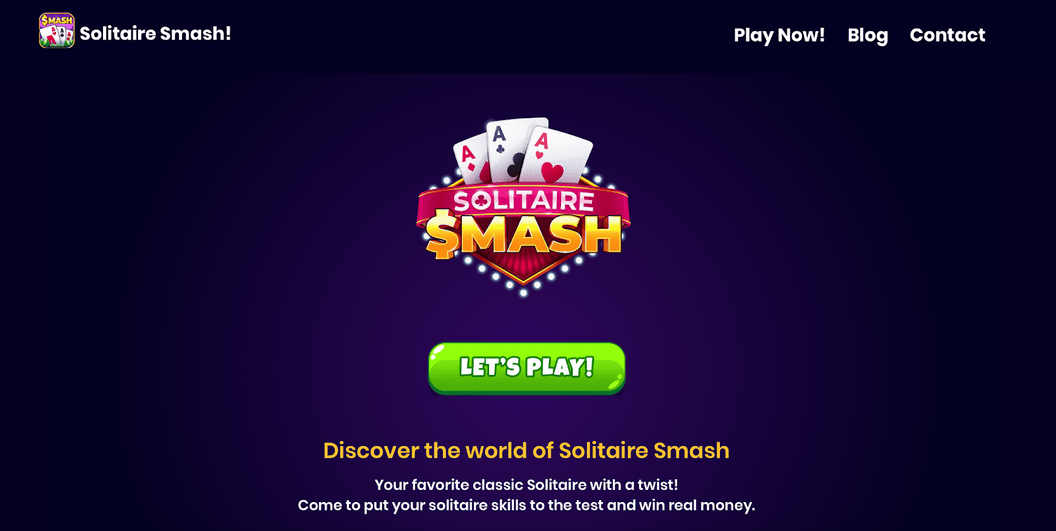
Table of Contents
If you’re thinking of playing Solitaire Smash, you need to know whether it’s safe. Is Solitaire Smash a scam?
Below, we explain whether Solitaire Smash is a scam and discuss some steps you can take to improve your safety when playing this game.
What Is Solitaire Smash?
Solitaire Smash is a mobile game that combines classic Solitaire with the chance to win cash prizes.
You can practice your skills for free or join cash tournaments with prize pools. The entry fee into cash tournaments depends on how large the prize pool is.
If you win cash prizes, you can cash them out through PayPal.
Solitaire Smash is available on iOS and Android (primarily via the Samsung Galaxy Store).
The game’s cash tournaments are not available in “Prohibited Jurisdictions,” i.e., US states with legal restrictions against real-money skill-based games. At the time of writing, these states include Arizona, Indiana, Iowa, Louisiana, Maine, Michigan, Montana, and South Carolina.
Is Solitaire Smash a Scam?
No, Solitaire Smash is not a scam. It’s a legit mobile game for playing Solitaire (and potentially winning small amounts of money if you’re good at it).
The game has been reviewed by numerous third-party publications and review sites, almost all of which rate it very favorably:
- The reviewer for Finance Buzz says that Solitaire Smash is more fun than other cash Solitaire apps, and even though they didn’t win often, they gave the game 4.9 out of 5.0 stars.
- Millennial Money gives Solitaire Smash a rating of 7.8 out of 10.
- The Penny Hoarder rates the game 4.5 out of 5.0 stars, noting that while the game is legit, you can still lose money in cash tournaments.
Solitaire Smash also gets positive ratings from users. For example, it has 4.8 out of 5.0 stars (from 170,527 reviews) on the App Store at the time of writing.
On online forums like Reddit, people report that Solitaire Smash is legit, but warn that to win anything, you need to be a quick player.
One user said: “It’s a legit app, but it really favors those who can speed-tap like crazy. If you’re just looking to earn on FreeCash, there are way easier offers tbh.”

Several users noted they had issues with withdrawals.
Solitaire Smash terms of service
Before you use any service, it’s always a good idea to read its terms and conditions.
Some points from Solitaire Smash’s terms & conditions you’ll want to be aware of include the following.
- Entry fees for cash tournaments are non-refundable.
- “Bonus Funds” are free credits that can be used to enter cash competitions, but which you can never withdraw as actual money.
- If you withdraw any funds, you forfeit all Bonus Funds in your account.
- If you don’t enter a cash competition for 90 days, you forfeit all Bonus Funds.
- Withdrawals can take up to 90 days, and Solitaire Smash can freeze your account or delay withdrawals while it investigates fraud, eligibility, or legal issues.
- If your account is inactive (i.e., you don’t participate in any competitions) for 6 months, Solitaire Smash can take a $2/month “maintenance fee” from your account until your account’s balance is zero.
- Solitaire Smash does not guarantee that competitions will be fair or that other players won’t cheat.
- The game can match you not only against live players but also against “Historical Playthroughs,” i.e., recordings of other players’ past games.
- Solitaire Smash can suspend or terminate your account, with or without notice, if it believes you broke the Terms or engaged in suspicious activity. If this happens, you may lose your funds.
- The company is not responsible for technical problems, bugs, security breaches, malware, etc., and its total liability to you is capped at US $100.
- There may be AML/KYC checks. For example, Solitaire Smash may ask for your ID scan and other personal documents and share this information with third-party verification providers and payment processors.
That said, we urge you to read the entire policy.
Solitaire Smash security
In its privacy policy, Solitaire Smash says it takes what it deems “reasonable steps designed to protect Personal Information.”

Solitaire Smash privacy
Solitaire Smash explains in its privacy policy the kind of data it collects, why, and with whom it shares it.
It collects the following personal information:
- Information you give them directly (e.g., when you create an account, contact support, add to your player profile, and share in surveys, contests, and sweepstakes): Name, age/birthday, email, phone number, password, Social security number, profile photo, username, gender, bio details (like age/age range), approximate location, links to social profiles, and information about tournaments/games you play.
- Information from other platforms (i.e., if you use Facebook or other third-party logins): Name, profile picture, user ID, email, birthday, age range, location, device location, information about your friends (names, IDs, and profile photos), and information about your activity on those apps. However, what Solitaire Smash gets specifically depends on your privacy settings on the platform you log in with.
- Automatic collection (cookies & tracking): Device type, OS, device identifiers (IDFA, IMEI, MAC), browser, language, pages visited, time spent, clicks, referring and exit pages, game state, gameplay, achievements, prizes, bonus funds, and virtual items.
- User-generated content: Anything you post in forums, chats, public profiles, comments, message boards, etc.
- Payment information: Name, email address, address, and billing information.
- Analytics/aggregated data: Solitaire Smash says this data doesn’t identify you personally (once processed).
- Cache data (on mobile): Solitaire Smash may use cache on your device to store and track some usage data.
The company uses your personal data to run the service, improve and personalize your experience, for social features (i.e., for you to be able to communicate with other users), security, compliance, marketing, promotions, research, and analytics.
It may use automated decision-making or profiling, but say they won’t do it in a way that has a “legally significant impact” on you without consent or legal basis.
Solitaire Smash may share your information with service providers, subsidiaries, advertisers, and ad networks.
The company may also disclose your data to comply with laws, court orders, and law enforcement. Plus, to investigate fraud or abuse and for security, safety, and to protect rights.
In case of sale, merger, investment, etc., your data may be transferred to another entity.
Solitaire Smash doesn’t respond to “Do Not Track” browser signals.
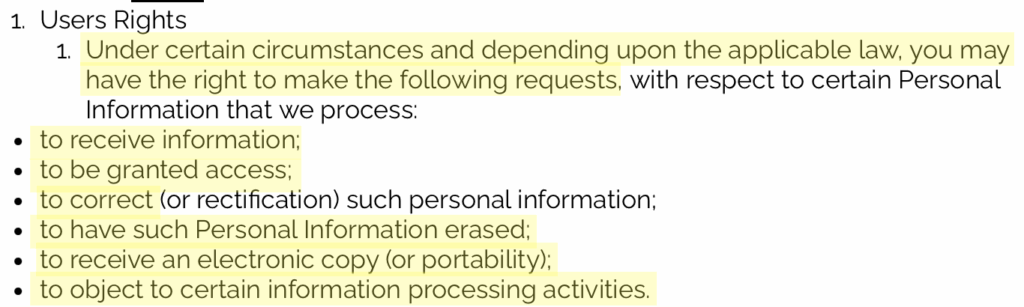
Depending on where you live, you may be able to exercise certain privacy rights, like the right to access your personal information, correct inaccurate information, delete/erase your data (subject to exceptions), restrict or object to certain processing, and get a copy of your data for another service.
To delete payment info stored by third-party processors, you may need to contact those payment providers directly.
Additionally, you have the right to opt out of promotional emails (through the unsubscribe link in these emails), SMS marketing (by replying “STOP”), and certain sharing or usage of your data.
Your data may be transferred to other countries, including the US, Europe, and Israel. Solitaire Smash notes that laws in those countries may give you less protection than in your home jurisdiction.
The company keeps your personal data while you are an active user and afterwards as long as allowed and/or needed by law and for their purposes. When data is no longer needed, Solitaire Smash says they will delete, destroy, anonymize, or aggregate it.
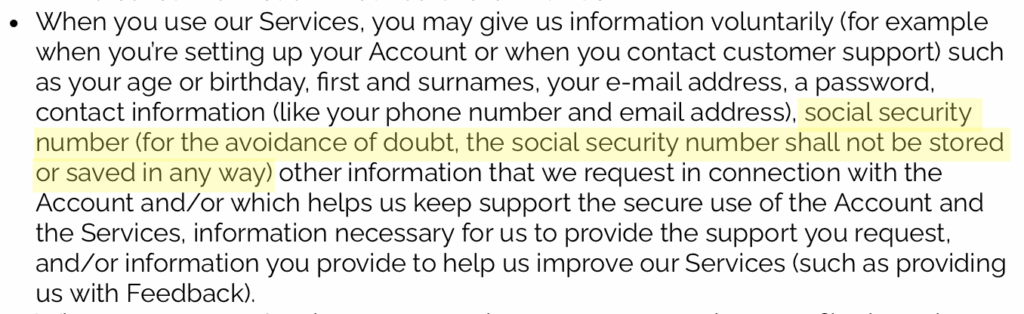
Though it may collect your Social Security number, the company says it does not store it or save it.
The privacy policy and your relationship with Solitaire Smash are governed by the laws of the State of Israel. Any disputes must go to the courts in Tel Aviv, Israel.
So, Should You Play Solitaire Smash?
Depends.
If you like Solitaire games, Solitaire Smash can be a good option, but only if you’re comfortable with heavy data collection, limited legal protections, and the real risk of losing money.
How to Play Solitaire Smash Safely and Privately
- Don’t share too much personal information in your Solitaire Smash profile and chats. The company’s privacy policy says that anything you post in your player profile, chats, forums, message boards, comments, and public gameboards is treated as public and is visible to other users and potentially the entire internet. To keep your privacy, use a nickname instead of your real name, and don’t share personal details like your phone number.
- Only fill out the required fields. Don’t give out extra information in support messages unless absolutely necessary. If they ask for very sensitive information (like your Social Security Number), consider whether you really need the feature that requires it and whether you’re comfortable with that, even if “not stored.”
- Don’t log in via third parties. If you do, Solitaire Smash can collect additional personal information about you, including your name, profile picture, user ID, email address, birthday, age range, location, and even your friends’ information and activity.
- Limit tracking. Solitaire Smash uses cookies, web beacons, tracking pixels, flash cookies, and Google Analytics, and they track the pages you visit, time spent, device IDs, game actions, etc.
- Control geolocation and push notifications. Solitaire Smash says that you can stop sharing geolocation through your device settings or game’s settings and that you can turn off push notifications via your device settings.
- Reduce the number of promotional messages you get. Click “unsubscribe” in Solitaire Smash’s promotional emails and reply “STOP” to their promotional texts.
- Know who stores your billing information. When you make a payment, Solitaire Smash or third-party processors collect your payment information (name, address, and billing data). To remove billing information stored by third-party processors, you may need to contact those processors directly. If you want your data removed, follow up with the payment provider you see named in your receipts or transaction history.
- Protect your Solitaire Smash account. The company stresses that your security partly depends on how you protect your password and device. Make sure you create a strong, unique password for your Solitaire Smash account and don’t share it with anyone else.
- Take advantage of your legal rights. Depending on where you live, you may be able to access the personal data Solitaire Smash has on you, correct inaccurate data, request your data deletion/erasure (with some exceptions), restrict or object to certain processing, get a copy of your data, and opt out of certain uses/disclosures (like “sale” under CCPA).
- Withdraw your money. In its terms of service, Solitaire Smash says that after 6+ months of inactivity, it can charge a $2 monthly maintenance fee while a balance remains. And after 12+ months of inactivity with no funds, it may close your account.
- Be careful with third-party links and offers. Solitaire Smash says it may feature third-party content, ads, or links, which it doesn’t control. As a result, be extra cautious when clicking ads or external links inside the app. Don’t give out sensitive information (card data and personal details) on third-party pages unless you’re sure who they are and why they need it.
news?

Don’t have the time?
DeleteMe is our premium privacy service that removes you from more than 750 data brokers like Whitepages, Spokeo, BeenVerified, plus many more.
Save 10% on DeleteMe when you use the code BLOG10.