Is Total Adblock a Scam?


Table of Contents
If you’re thinking of using Total Adblock, you need to know whether it’s safe. Is Total Adblock a scam?
Below, we explain whether Total Adblock is a scam and discuss some steps you can take to improve your safety when using this ad-blocker.
What Is Total Adblock?
Total Adblock is a consumer ad‑blocking software and browser extension marketed by Total Security Limited that blocks online advertisements, pop-ups, and tracking scripts while you browse the web.
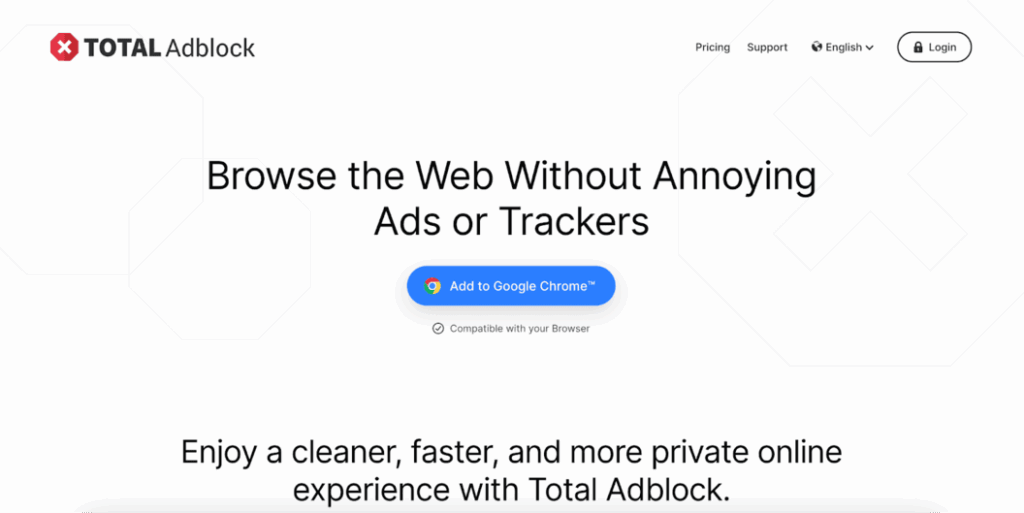
Total Adblock has both free and paid options. Its free plan offers limited ad blocking.
Total Security Limited is owned by System1, an ad-tech/marketing company.
Is Total Adblock a Scam?
No, Total Adblock is not a scam. It’s a legitimate ad‑blocking software.
The ad blocker has been reviewed by several third-party publications and review sites, many of which have rated it mostly positively.
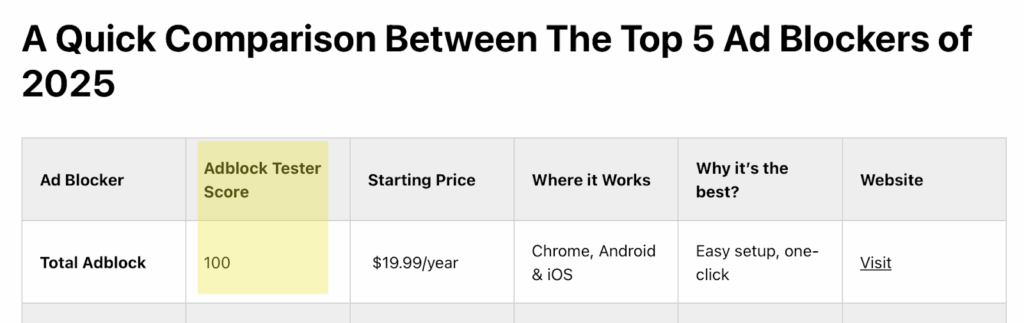
For example, comparisons by AdBlock Tester and Comparitech highlight the program’s strong blocking performance (100/100 on AdBlock Tester) and its inclusion of antivirus software, but they criticize the restrictive free tier and the steep renewal price.
AllAboutCookies gives the product a score of 4.9 out of 5.0 stars and calls it “one of the best ad blockers,” but notes the free version excludes the top-most‑visited sites and frequently prompts users to upgrade.
Cybernews rates it 4.7 out of 5.0 stars, praising its effectiveness on pop‑ups, trackers, and YouTube ads while warning that the free version is limited and cancellation is cumbersome.
VPNPro rates it 9.8 out of 10, noting its cross‑platform performance and ease of use, but criticizing the price increase after the first year and the lack of a Firefox extension.
User reviews of Total Adblock are much more mixed as of this writing:
- 4.4 out of 5.0 stars (from 28,680 reviews) on Trustpilot.
- 4.0 out of 5.0 stars (from 40,513 reviews) on the App Store.
- 2.7 out of 5.0 stars (from 2,932 reviews) on Google Play.
- 1.2 out of 5.0 stars (from 234 reviews) on ProductReview.
- 1.7 out of 5.0 stars (from 1,014 reviews) on PissedConsumer.
Most users praise the easy-to-use interface and effective blocking, but some complain about constant upselling and difficulties with cancellation.
On online forums like Reddit, people report overwhelmingly negative experiences with Total Adblock.
Although some claim it works, others argue that the ad blocker is ineffective, often failing to block ads or even resulting in more ads. Several people also noted they thought they were buying a one-time deal, only to discover it was a recurring subscription.
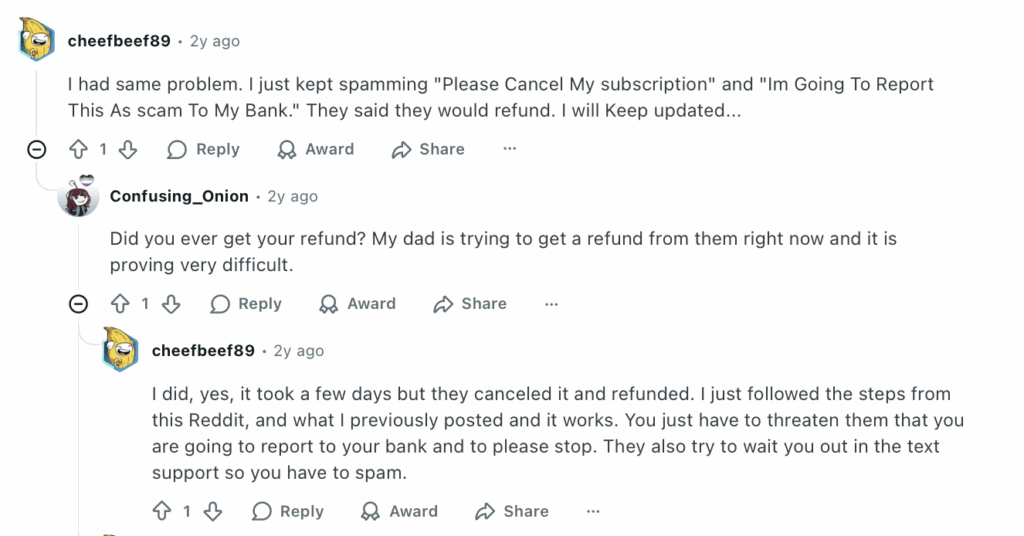
The main complaint, however, relates to the cancellation of the service. Numerous users report being unable to cancel easily, citing links that loop back, verification codes that fail, and live chat that pushes retention offers instead of allowing cancellation.
One person said they had to repeatedly demand cancellation and threaten to report the charge to their bank, which eventually made the company issue a refund.
The discrepancy between professional reviews and user feedback suggests that the software’s core functionality works well, but customer satisfaction largely depends on how users interact with billing and subscription management.
Total Adblock lawsuits
A major class‑action lawsuit was filed against System1, Inc., Total Security US LLC (the company behind Total Adblock), and System1’s subsidiaries in California.
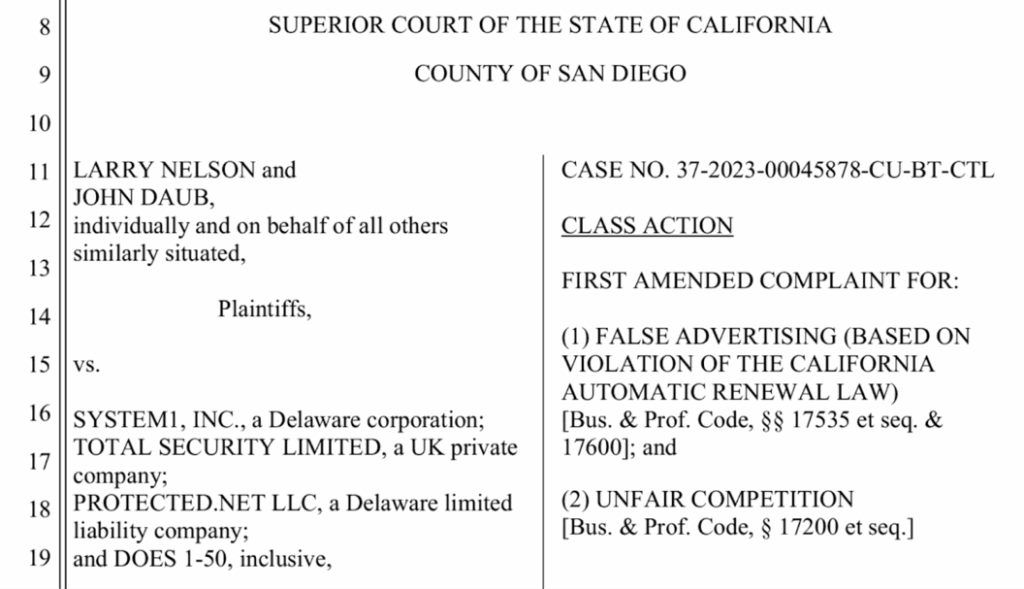
Plaintiffs alleged that the companies enrolled consumers in automatically renewing subscriptions without providing clear disclosures or obtaining consent, thereby violating California’s Automatic Renewal Law and Unfair Competition Law.
The complaint claimed that trial offers costing $1.99 or $2.99 led to recurring charges at higher rates.
The defendants agreed to a US$2.5 million settlement to resolve the case without admitting any liability or wrongdoing, covering California residents who purchased Total Adblock (and related products) between October 2019 and June 2024.
Affected consumers were eligible for a pro‑rata refund if they submitted claims by February 4, 2025.
Total Adblock security
Publicly available information regarding Total Adblock’s specific security infrastructure is limited.
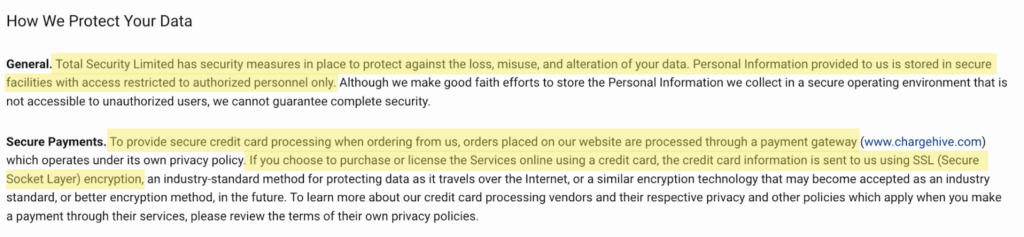
In its privacy policy, it says it has “security measures in place” to protect your personal data, including secure facilities with access restrictions.
In terms of payment security, Total Adblock uses a payment gateway, which has its own privacy policy. Credit card information is sent to Total Adblock using Secure Socket Layer (SSL) encryption.
Total Adblock privacy
Total Adblock explains in its privacy policy the types of data it collects, why, and with whom it shares it.
It collects the following personal information:
- Information you give them, such as your name, phone number, email address, payment information, and password.
- Information they collect when you interact with them and use their services, including information about the services you purchase and information relating to support issues.
- Automatically collected information, such as your IP address.
The company uses this information to provide and manage your account and services, process payments, respond to support requests, improve products and website performance, personalize content and advertising, and send notifications about service updates, account status, promotions, and billing. They also use it to send you SMS texts, but only if you have explicitly consented to this (and you can opt out at any time).
Total Adblock uses cookies to run the site (necessary cookies), track usage and improve performance, remember your settings, and show you targeted ads. Advertising cookies may share your information with ad networks.
It states that it does not sell or share data for third-party marketing purposes. Note that under some jurisdictions (like California), sharing data for cross-context behavioral advertising may be classified similarly to a “sale.”
However, the company may share data with customer support, IT service providers, government, or law enforcement (if legally required), and new business owners if the company is sold or merged.
You have certain privacy rights. For example, you can request access to your data, correct incorrect information, and request deletion of your data. You can also object to certain processing (e.g., marketing), restrict processing under certain conditions, and request your data to be transferred to another provider.
So, Should You Use Total Adblock?
Depends.
Total Adblock suits users who want robust ad blocking with optional antivirus protection and are willing to pay a subscription fee.
How to Use Total Adblock Safely and Privately
- Turn off location sharing. TotalAdBlock may collect location data from your device if allowed. If you’d rather it didn’t, turn off location permissions on your device and browser.
- Opt out of advertising cookies. Total Adblock site uses performance and ad-targeting cookies. When visiting its website, decline or limit cookies in the cookie pop-up if it’s shown, or manually block cookies.
- Opt out of marketing. Uncheck marketing permissions when signing up for Total Adblock. If you already subscribed, click ‘Unsubscribe’ in Total Adblock emails and reply ‘STOP’ to texts.
- Limit what information you share. Use an email alias, don’t provide a phone number unless required, and use PayPal or virtual cards instead of real payment card numbers.
- Turn off “personalized” ads. Turn off Google ad personalization and turn off personalized ads on your mobile device.
- Check app/extension permissions. Only allow Total Adblock to run on sites where you actually want blocking.
- Regularly clear stored cookies and local data. This resets tracking identifiers.

news?

Don’t have the time?
DeleteMe is our premium privacy service that removes you from more than 750 data brokers like Whitepages, Spokeo, BeenVerified, plus many more.
Save 10% on DeleteMe when you use the code BLOG10.