Is Vivint a Scam?

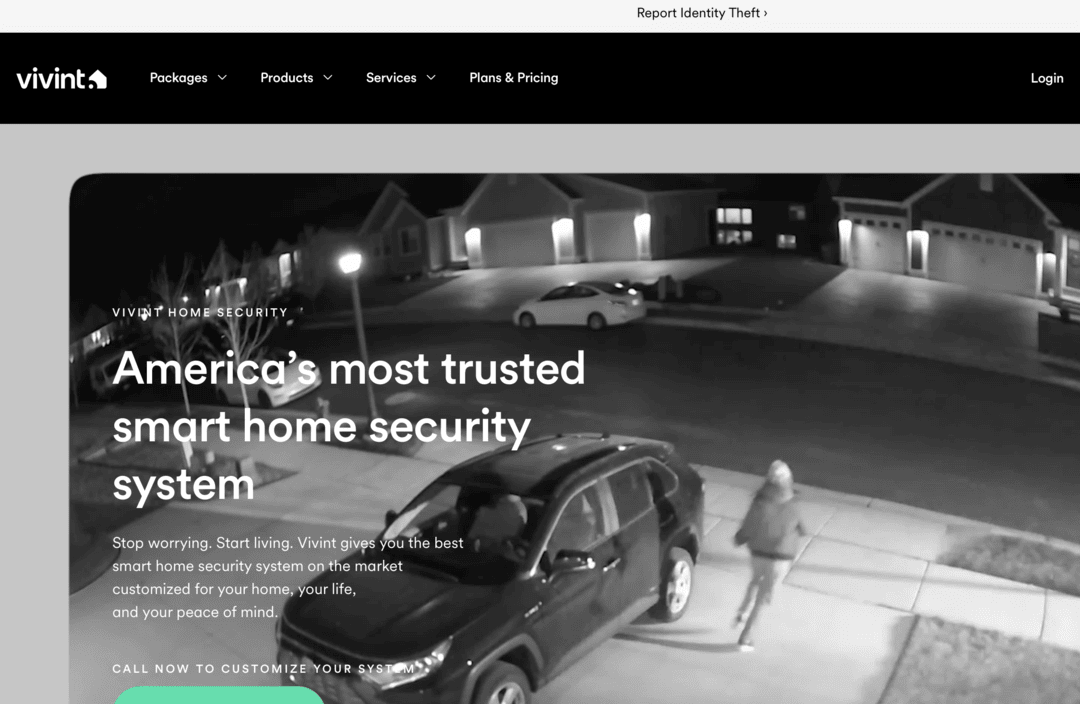
Table of Contents
If you’re thinking of signing up for Vivint, you need to know whether it’s safe. Is Vivint a scam?
Below, we explain whether Vivint is a scam and discuss some steps you can take to improve your safety when using a home security system from this provider.
What Is Vivint?
Vivint is a smart home security system provider.
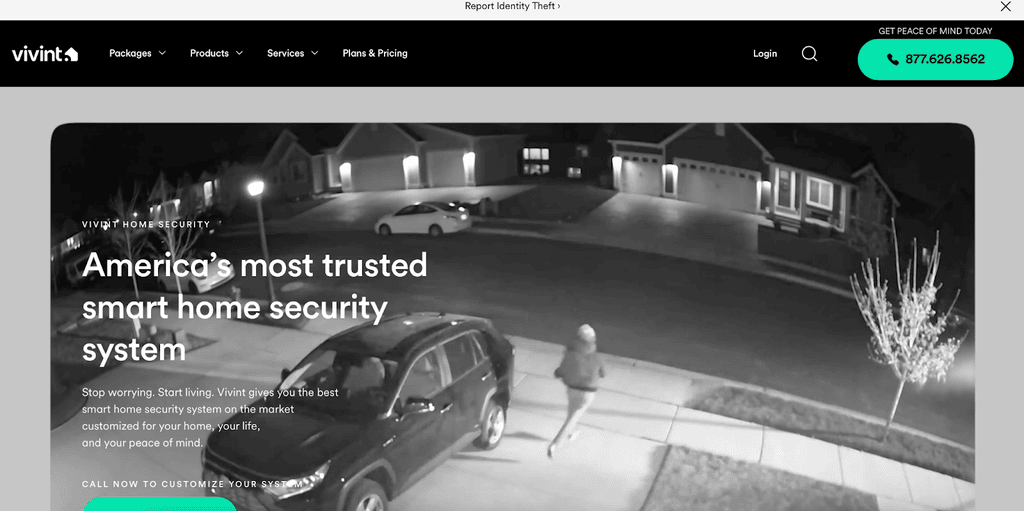
Its systems include security cameras, motion detectors, video doorbells, 24/7 monitoring, and more.
After you or Vivint’s technicians install the system in your home, sensors detect any unusual activity and send alerts to your phone. The company’s monitoring center can call emergency services if needed.
Vivint was founded in 1999.
Is Vivint a Scam?
No, Vivint is not a scam. It’s a legitimate company that provides home security systems.
Vivint has been featured in several third-party publications and review sites, including PC World, U.S. News, CNET, Security.org, and SafeHome.org.
For example, PCMag’s review of Vivint concludes that: “When it comes to professionally installed and monitored home security systems that also offer all the creature comforts of a smart home, no one does it better than Vivint.”
However, user reviews of Vivint are mixed as of this writing:
- 3.8 out of 5.0 stars (from over 58,000 reviews) on Trustpilot.
- 1.1 out of 5.0 stars (from over 2,100 reviews) on Yelp.
- 4.5 out of 5.0 stars (from over 36,500 reviews) on ConsumerAffairs.
- 4.6 out of 5.0 stars (from over 750,000 reviews) on the App Store.
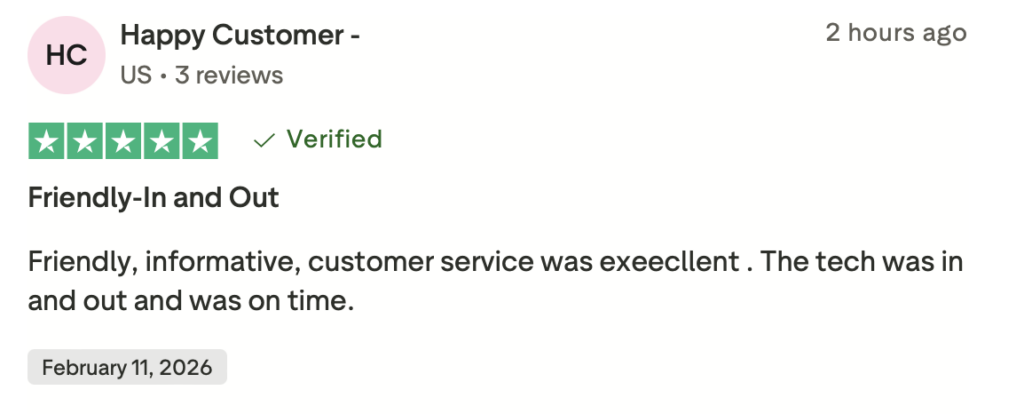
Positive reviews praise perfect and fast installations.
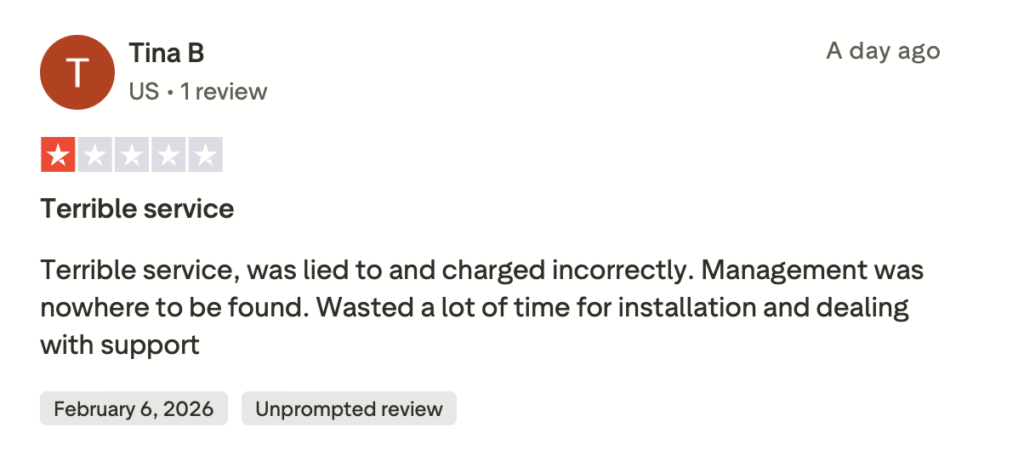
Negative reviews report the system constantly crashing, continuous upselling, and unhelpful customer service. Some users report cancellation issues (including excessive cancellation fees), while others say the technicians don’t check that everything works before leaving.
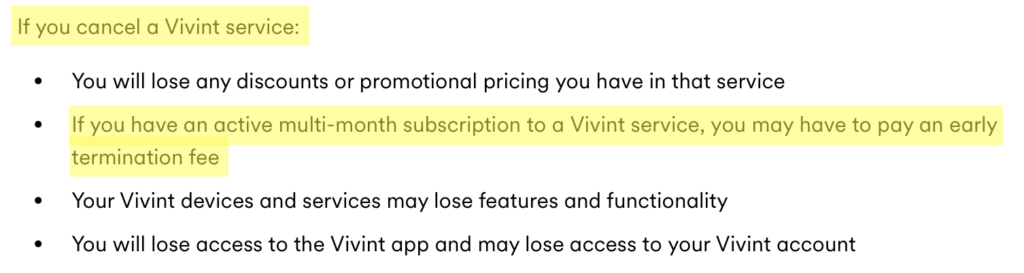
Regarding cancellation fees, in terms of service, Vivint notes that if you have an active multi-month subscription, you might have to pay an early termination fee.
It also says that it may have to pass on additional fees to you, like fees imposed by utilities and government entities, costs to update your Vivint devices, fees associated with private responders, and similar.
On online forums like Reddit, people report varying experiences.
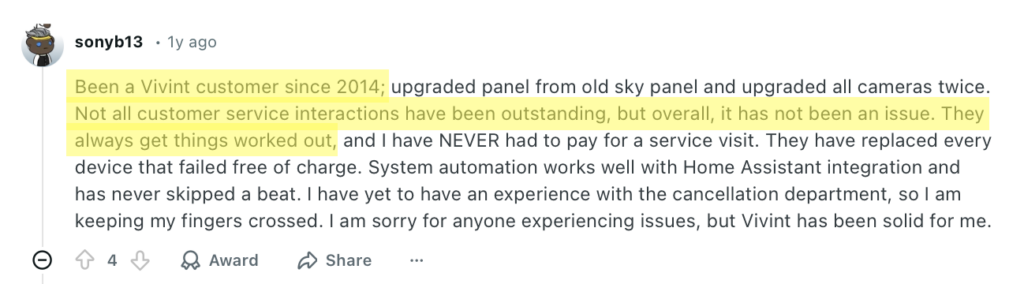
Some people say they’ve been with Vivint for years and have had a good experience.
One person writes that, though not every interaction with Vivint’s customer service has been great, the company always resolves any issues.
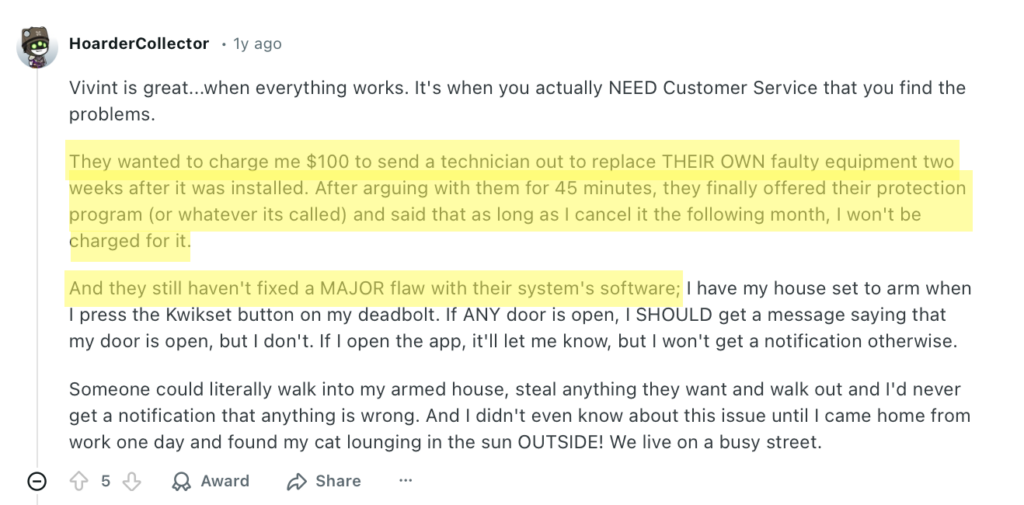
Others say that Vivint is great when everything works, but when it doesn’t, the whole experience falls apart.
One person says:
“Vivint is great…when everything works. It’s when you actually NEED Customer Service that you find the problems. They wanted to charge me $100 to send a technician out to replace THEIR OWN faulty equipment two weeks after it was installed. After arguing with them for 45 minutes, they finally offered their protection program (or whatever its called) and said that as long as I cancel it the following month, I won’t be charged for it.”
Vivint is a Better Business Bureau-accredited business and holds a “B+” rating as of this writing. BBB ratings are a reflection of how the BBB thinks a business interacts with its customers.
At the time of writing, Vivint has received a total of 8,829 complaints on the BBB website in the last three years, 3,335 of which have been resolved in the past 12 months.
Vivint complaints center around poor customer support (especially missed appointments), billing issues, Vivint’s failure to disclose contract terms, service and repair failures (such as cameras that don’t work for months and detectors that go unrepaired), difficulty canceling, and salespeople allegedly lying about free cameras to close the deal.
Deceptive door-to-door sales practices
In 2020, the home and business security systems company CPI Security sued Vivint, alleging that its sales representatives falsely told individuals that Vivint had acquired CPI, CPI was going out of business, and that Vivint had to update CPI’s equipment.
In one reported instance, a CPI customer who was visually impaired was allegedly scared into signing an agreement with Vivint.
Vivint was found liable in the case and ordered to pay $189.7 million in damages. The company appealed, but the appellate court upheld the ruling.
The appellate court noted that 16 state attorneys general had brought enforcement actions against Vivint for its sales agents’ conduct and that the company had previously settled a similar lawsuit brought by ADT.
Vivint FTC settlement
In 2021, Vivint agreed to pay $20 million to settle Federal Trade Commission claims that it violated the Fair Credit Reporting Act (FCRA).
Vivint’s salespeople reportedly used a process called “white paging,” which involved finding unrelated consumers with the same or similar names as prospective customers on the White Pages app and using those individuals’ better credit histories to qualify otherwise unqualified buyers for financing.
If customers who were approved through these tactics later defaulted on their loans, Vivint referred the innocent individuals to its debt buyer, potentially harming their credit and subjecting them to debt collectors.
The FTC sent a total of 470 checks to impacted individuals.
Vivint agreed to the settlement without admitting or denying the FTC’s allegations.
Vivint class actions
In 2024, a class action was filed against Vivint for unsolicited telemarketing calls and texts, even though the consumer’s phone number was on the National Do Not Call Registry. The consumer allegedly had no prior relationship with Vivint.
Vivint security
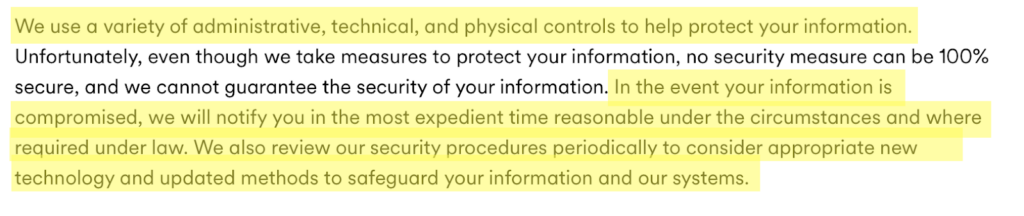
In its privacy policy, Vivint briefly describes its security measures.
It says it uses a “variety of administrative, technical, and physical controls” to protect your data.
The company states that if your data is compromised, it will let you know as soon as possible under the circumstances and if required by law.
It also notes that it reviews its security procedures from time to time.
Vivint privacy
Vivint explains the kind of data it collects, why, and with whom it shares it in its privacy policy.
Like many smart home providers, Vivint collects a lot of device and behavioral data to run its services. If you’re privacy sensitive, you should carefully review the permissions you grant Vivint and turn off any features you don’t need.
Vivint states it may collect the following information about you:
- Identifiers (e.g., name, physical address, email, phone number, account name, date of birth, device identifiers).
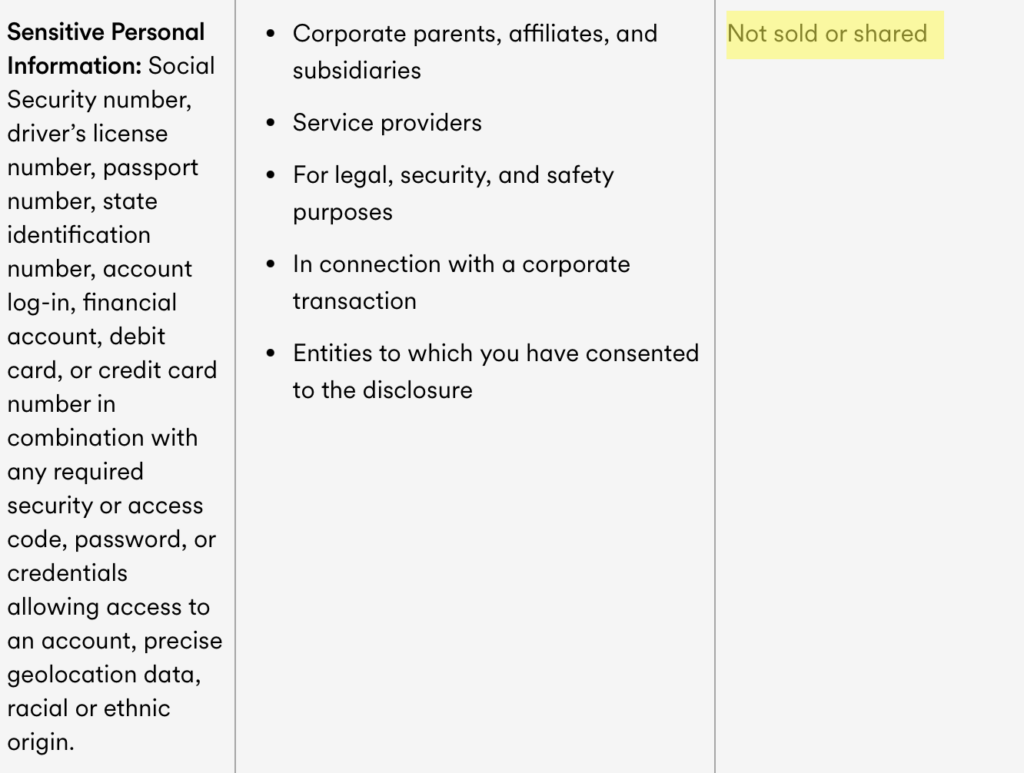
- Sensitive personal information (e.g., SSN, driver’s license/passport/state ID numbers, account login credentials, financial account/card numbers with security codes, precise geolocation, racial or ethnic origin).
- Personal information under applicable state statute (e.g., signature, physical characteristics).
- Protected class and demographic information (e.g., purchases, products of interest, etc.)
- Commercial information (e.g., purchases, products of interest, etc.)
- Customer records (signature, information about your home or property, etc.)
- Internet or other electronic network activity (browsing history, search history, device information, chat logs, etc.
- Geolocation data.
- Audio, electronic, visual, or other sensory information (photos, footage, etc.)
- Professional or employment-related information (job title, employer, income).
- Inferences.
- Device Information (IP address, unique device identifiers, sensor/activity data such as door open, etc.)
Each Vivint device collects its own data. For example, cameras capture video and audio, the Smart Hub logs voice communications, device statuses, and usage patterns, and so on.
Vivint uses this data to provide you with its services (and personalize them), run internal R&D, communicate with you, monitor and record interactions with you, as well as for legal/security reasons, corporate transactions, and marketing.
It may share your information with corporate affiliates, service providers, and business partners.
The company says it sells or shares some categories of data (such as identifiers, commercial information, browsing activity, geolocation, and inferences) with advertising and tracking partners.
Sensitive personal information, audio/visual data, and customer records are stated in the privacy policy as “not sold or shared.”
Vivint uses cookies, pixels, web beacons, session replay tools, embedded scripts, and SDKs, which support analytics, targeted advertising, cross-device matching, and building advertising profiles shared with ad networks.
Users have certain privacy rights (depending on where they live), like the right to know what’s collected, access their data, opt out of targeted advertising and data sales, request data portability or correction, request deletion, withdraw consent, and be free from discrimination for exercising these rights.
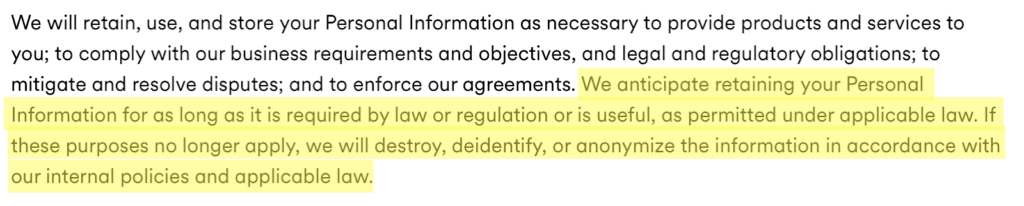
It states that it retains your data for as long as legally required or useful. When it no longer needs your data, it will deidentify it, destroy it, or anonymize it.
So, Should You Use Vivint?
Depends.
Vivint might be a good choice for individuals who want an all-in-one smart home security system and don’t mind contracts (and read them carefully).
It may not be the best option for those who dislike aggressive sales tactics, want month-to-month service, prefer strong customer support, and are privacy-sensitive.
How to Use Vivint Safely and Privately
- Read the contract carefully. Review all terms, cancellation policies, auto-renewals, and equipment financing details before you sign with Vivint to avoid any unexpected fees or long-term obligations.
- Don’t fall for door-to-door pressure. Take time to confirm claims from salespeople and compare offers independently.
- Verify sales claims in writing. Ask for written confirmation of any promotions, free equipment, or pricing promises to prevent any disputes that might arise later.
- Test the system before technicians leave. Confirm that all sensors, cameras, and alerts work as they should during installation to avoid service delays and additional fees you hadn’t budgeted for.
- Monitor your statement. Check your bills for unexpected charges, add-ons, or service changes, and dispute issues immediately.
- Understand the cancellation process. This can help you avoid penalties or continued billing.
- Protect your account. Create a strong password for it and don’t reuse it elsewhere.
- Turn off app permissions you don’t need. For example, precise location access unless you need it for features you use all the time.
- Turn off location sharing. This helps prevent continuous tracking of your movements.
- Manage recording settings. Adjust them so they capture only essential events rather than continuous monitoring.
- Opt out of targeted advertising. Use Vivint’s privacy settings and industry opt-out tools to minimize interest-based advertising and data sharing.
- Limit third-party integrations. Don’t connect third-party devices or services you don’t need to your Vivint system to reduce how much of your data is shared with external partners.
- Exercise your privacy rights. Depending on where you live, you may be able to see what data Vivint has on you, correct it, and request that it be deleted. .
news?

Don’t have the time?
DeleteMe is our premium privacy service that removes you from more than 750 data brokers like Whitepages, Spokeo, BeenVerified, plus many more.
Save 10% on DeleteMe when you use the code BLOG10.
Related Posts