Is Zoosk a Scam?

Table of Contents
If you’re thinking of using Zoosk, you need to know whether it’s safe. Is Zoosk a scam?
Below, we explain whether Zoosk is a scam and discuss some steps you can take to improve your safety when using this dating platform.
What Is Zoosk?
Zoosk is an online dating app and website.
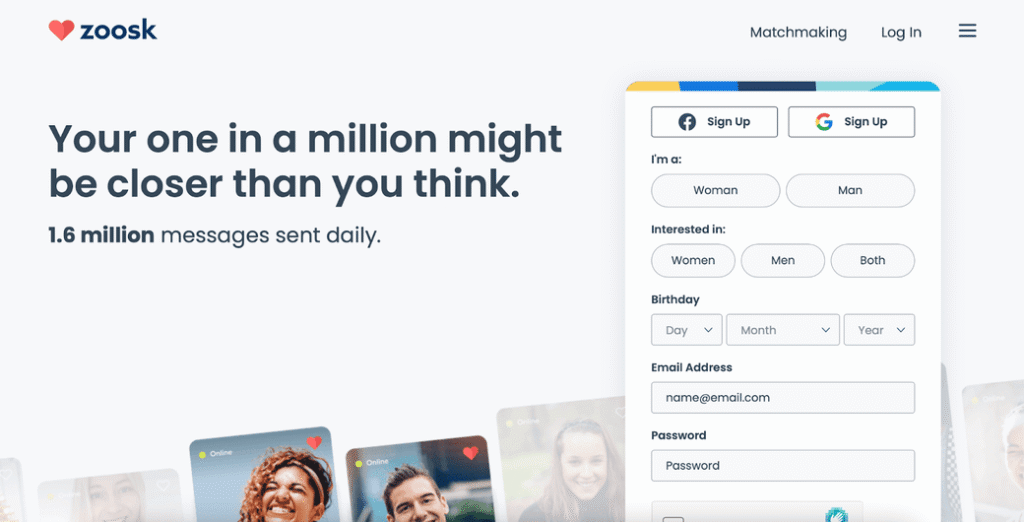
What makes it different from other dating platforms is its “Behavioral Matchmaking” approach, which learns from what you do, e.g., who you like or skip on the platform and who you message, and adjusts the suggestions it makes.
You can browse and create a Zoosk profile for free, but if you want to message someone or see who likes you, you need a paid subscription.
Is Zoosk a Scam?
No, Zoosk is not a scam. It’s a legitimate dating platform. However, its reviews (from third-party publications and users) are not the best.
For example, a 2024 Mashable review of Zoosk gives the platform a rating of 3.0 out of 5.0.
According to this review, Zoosk’s pros include that it’s easy to sign up and the fact that there are many ways to verify a profile. Its cons are that it’s hard to navigate due to a dated design, no compatibility test, spam accounts, and cost (most Zoosk features cost money).
The publication’s conclusion: “Zoosk is outdated and something we’d only use as a last resort.”
User reviews of Zoosk are mixed as of this writing, but lean more negative.
- 1.1 out of 5.0 stars (from over 800 reviews) on ConsumerAffairs.
- 1.8 out of 5.0 stars (from over 2,300 reviews) on Trustpilot.
- 3.1 out of 5.0 stars (from over 1,800 reviews) on ProductReview.
- 2.1 out of 5.0 stars (from over 3,500 reviews) on Sitejabber.
A handful of users say they’ve had a good experience on the platform, and several praise Zoosk’s customer service.
Negative reviews mention random matching, allege receiving messages from fake profiles, and complain about unresponsive customer service. Some users report that they cannot delete their Zoosk account.
On online forums like Reddit, people report varying experiences.
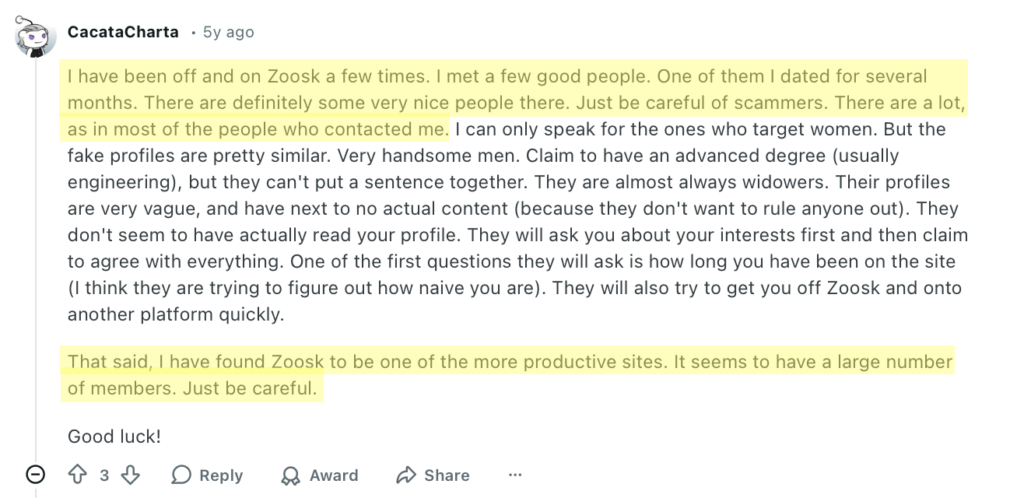
Some say they’ve met and dated people through Zoosk, but warn about fake profiles.
One person writes:
“I have been off and on Zoosk a few times. I met a few good people. One of them I dated for several months. There are definitely some very nice people there. Just be careful of scammers. There are a lot, as in most of the people who contacted me. […] That said, I have found Zoosk to be one of the more productive sites. It seems to have a large number of members. Just be careful. Good luck!”
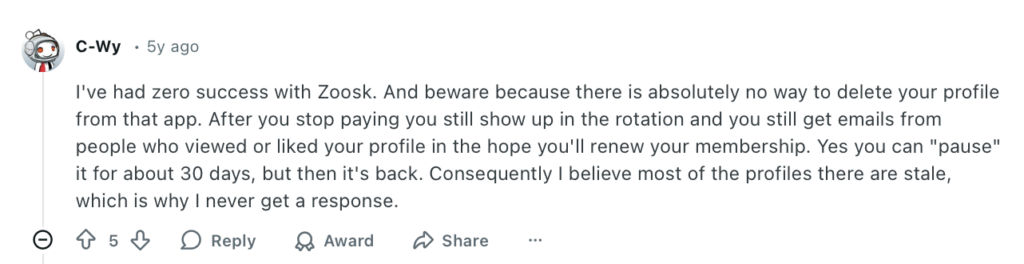
Another person writes that they had no success with Zoosk and were unable to delete their account:
“I’ve had zero success with Zoosk. And beware because there is absolutely no way to delete your profile from that app. After you stop paying you still show up in the rotation and you still get emails from people who viewed or liked your profile in the hope you’ll renew your membership. Yes you can “pause” it for about 30 days, but then it’s back. Consequently I believe most of the profiles there are stale, which is why I never get a response.
The parent company of Zoosk, Spark Networks Services GmbH, is not Better Business Bureau accredited but holds an “A-” rating at the time of writing. BBB ratings are a reflection of how the BBB believes a company interacts with its customers.
Spark Networks Services GmbH has received 178 total complaints as of this writing, 30 of which have been closed in the past 12 months.
People complain about billing and refund issues, account access problems, app quality, misleading practices, poor customer support, and safety concerns (i.e., scammer profiles and a lack of screening on Zoosk’s part).
Zoosk security
The section below looks at Zoosk’s security measures, security evaluation by Mozilla, and security incidents.
Zoosk’s security measures
In its privacy policy, Zoosk briefly describes its security measures.
It says that it has put in place “reasonable security measures” to protect your data, including limiting employee access to it.
The company also notes that it tries to make sure that any third parties it works with has “reasonable security measures in place.”

Zoosk’s security evaluation
In its 2024 evaluation of Zoosk, Mozilla says that it could not confirm Zoosk’s use of encryption or robust vulnerability management processes and concluded that Zoosk does not clearly meet its minimum security standards.

Zoosk security incidents
In 2020, a cybercriminal group known as ShinyHunters hacked Zoosk (and a few other companies) and exfiltrated data for roughly 30 million Zoosk users. The stolen data included names, email addresses, birth dates, demographic data, genders, search preferences, and password details (though these were hashed) and was allegedly put up on the dark web.
Zoosk privacy
The section below looks at Zoosk’s privacy policy and Mozilla’s privacy evaluation of Zoosk.
Zoosk privacy policy
Zoosk explains the kind of data it collects, why, and with whom it shares it in its privacy policy.
It collects the following personal information:
- Information you give it: Contact details, account and profile information (e.g., age, gender, dating preferences, photos), sensitive personal data you share (e.g., sexual orientation, race, religion, political views), login credentials and passwords, and payment and billing information for paid services.
- Information about how you use Zoosk: Pages and profiles you view, your searches, matches, and interactions, messages you send and receive, in-app purchases, and the tools and features you use.
- Metadata pulled from content you upload: Such as when it was uploaded and approximate location.
- Information Zoosk gets automatically: IP address, device identifiers, browser type, operating system, device model, internet service provider, mobile carrier, time stamps, activity logs, and behavioral signals (e.g., mouse movements to detect bots).
- Your communications with Zoosk and other users: Messages you send to Zoosk and other users, and comments or interactions on Zoosk’s social media pages.
- Data from third-party social networking sites: Data from platforms like Facebook or Google, if you connect them.
- Location data: Approximate location inferred from IP address.
- Information from others: Other user reports or complaints about you, referral information, etc.
- Your address book: Contacts you upload or manually enter.
Zoosk uses your data to create and manage your account, match you with other users, let you communicate with matches, process payments and subscriptions, send notifications and ads, improve services, run analytics, prevent fraud, maintain security, and comply with laws and law enforcement requests.
The company sends you marketing emails and texts, but you can opt out.

It also uses cookies and third-party partners for targeted advertising and shares some data with advertisers like Google and Facebook (with consent where required).
It may share your data with other Zoosk group companies, vendors, advertising and marketing partners, social networks (if you connect your account), law enforcement or regulators (when legally required), and buyers or partners if the company is sold or reorganized.
Zoosk requires vendors to protect your data, but notes that some third parties act as their own data controllers under their own privacy policies.
The company may store or process your data in the United States and other countries. By using the service, you consent to international transfers.

It keeps your personal data for as long as needed for business, legal, or security reasons and states that it may keep anonymized data forever for research or analytics.
Users have certain privacy rights. Depending on your location, you may access your data, correct inaccurate data, request data deletion, object to or restrict data processing, transfer your data to another service, and withdraw consent (which may limit service access).
Privacy requests are usually free and answered within 30 days.
Zoosk’s privacy evaluation
Mozilla’s ‘*Privacy Not Included’ project flags Zoosk with a warning, citing extensive personal data collection, data sharing for targeted advertising, and uncertainty over whether all users can fully delete their data.
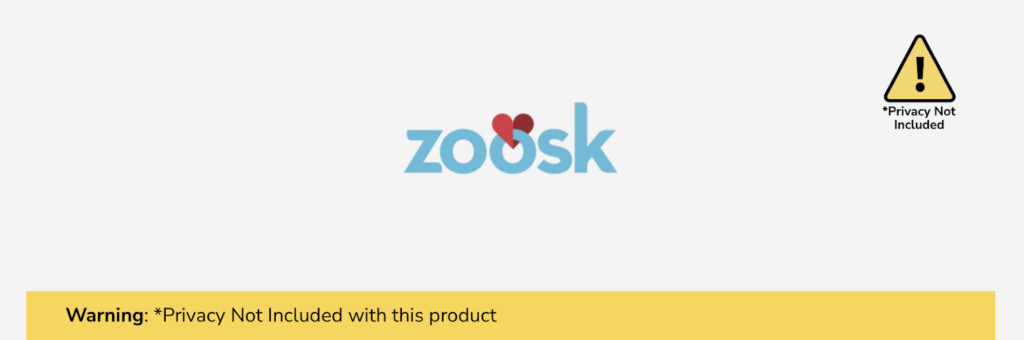
Mozilla notes that Zoosk’s policies allow using profile data to deliver targeted offers and ads across multiple channels, and the app lets users import address books, which can expose contacts who never consented to be associated with the service.
So, Should You Use Zoosk?
Depends.
Zoosk is a legitimate, established business and not a scam. However, with quite a few lukewarm to negative reviews, a history of large-scale data breaches, and a business model that many users find aggressive regarding billing and data retention, it is difficult to give it a high recommendation.
How to Use Zoosk Safely and Privately
- Share selectively. Only include information and photos in your Zoosk profile that you’re comfortable being seen by other users and potentially indexed outside the Zoosk app.
- Limit sensitive information. Avoid entering optional details that may be sensitive (like your politics, religion, or ethnicity) unless they’re really very important to your dating goals.
- Control social logins. If you sign up to Zoosk using your Facebook or Google account, make sure to review and restrict what data those platforms are allowed to share with Zoosk.
- Be photo-smart. Upload only photos you’re okay with Zoosk scanning, analyzing, and using for matching and detecting fraud.
- Message mindfully. Assume messages and shared content may be reviewed for moderation, safety, or legal compliance.
- Watch your location. Zoosk infers your approximate location, so don’t reference precise addresses or routines in profiles or chats.
- Verify before engaging. Only talk to people who have profiles with consistent photos, bios, and messaging behavior.
- Assume some profiles are fake. Especially those who try to “love bomb” you too soon into the relationship.
- Keep chats on-platform. Don’t go to email, WhatsApp, Telegram, or SMS until you’re really sure that the person you’re talking to is real and genuine.
- Never send money or gifts. Asking for gifts or money is a classic romance scam.
- Monitor billing periodically. Regularly review charges and cancel subscriptions early to avoid unexpected renewals or billing disputes.
- Use reverse image searches. If you’re not sure if someone is real or not, you can check their profile photo with a reverse image tool to see if it was stolen.
- Manage marketing settings. Opt out of promotional emails and texts if you don’t want your data used for ongoing marketing.
- Check cookie controls. Review cookie and ad-tracking settings to minimize how much targeted advertising you see.
- Avoid contact uploads. Don’t upload your address book unless you’re comfortable with Zoosk storing and using your contacts long-term.
- Think long-term regarding data retention. Assume some data (especially fraud or security-related) may be retained indefinitely even after account deletion.
- Review regularly. Periodically revisit your Zoosk profile, privacy settings, and connected apps to minimize unnecessary data exposure.
news?

Don’t have the time?
DeleteMe is our premium privacy service that removes you from more than 750 data brokers like Whitepages, Spokeo, BeenVerified, plus many more.
Save 10% on DeleteMe when you use the code BLOG10.