This Week on What the Hack: Online Scams
This Week on What the Hack: Online Scams
Online fraud isn’t just annoying; it’s a national crisis. Last year alone, it may have siphoned $158 billion from the U.S. economy. This episode features AARP’s Kathy Stokes, who reveals how fraud has morphed into a sophisticated, global operation and what’s being done to fight back against this evolving threat.
Episode 210
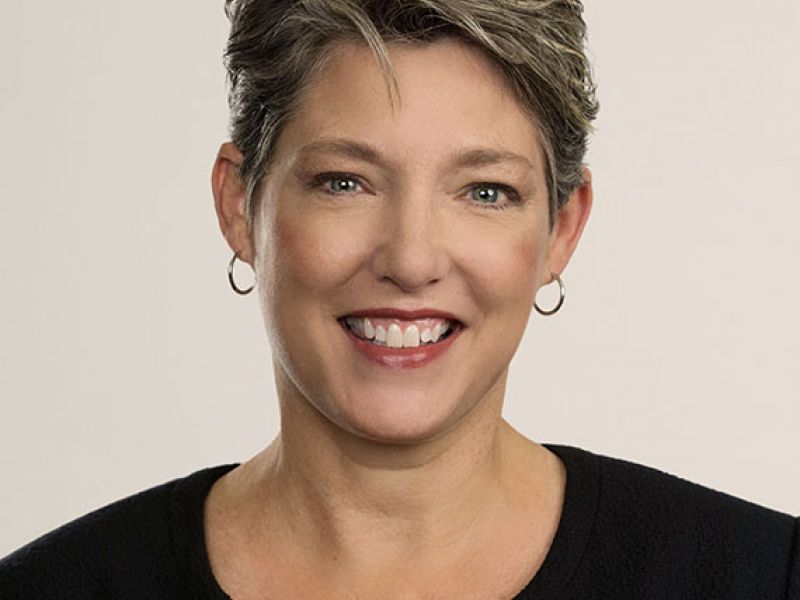
Ep. 210: Cracking the Code of Fraud with AARP’s Kathy Stokes
Beau: You might think online scams are just some guy in a hoodie in a dark room trying to get you to send gift cards.
Kathy: These are victims of sophisticated, complex crimes.
Beau: And it’s not just the occasional unlucky person falling for a phishing email. This is a crisis. And it’s costing a lot of money.
Kathy: As much as $158.3 billion left our economy.
Beau: So why aren’t we hearing more about this on the news as much as we hear about ransomware and national security issues?
Kathy: The biggest gap is that it’s not looked at through the lens of organized crime.
Beau: This week we talked to AARP’s Director of Fraud Prevention, Kathy Stokes, about why the usual solutions aren’t working, and what it’s going to take to stop the fraud tsunami currently hitting the United States of America. I’m Beau Friedlander. This is What the Hack, the show that asks, in a world where your data is everywhere, how do you stay safe online? Kathy Stokes. Hello. Welcome back.
Kathy: Thank you for having me again. It’s good to be here.
Beau: Kathy Stokes is the Director of Fraud Prevention at AARP, which just launched a brand-new YouTube series called Fraud Wars. It’s all about helping you and your loved ones stay one step ahead of scammers by telling stories and giving some teachable moments to you. She’s a great friend of the pod, and we’re really glad to have her back. A lot has happened since we last spoke, but you’ve been doing anti-fraud work for a very long time. The AARP’s Fraud Prevention Programs have gigantic reach in this country. Recently you described, I believe, to a U.S. House Financial Services Committee, the current situation in the United States as a “fraud tsunami.” Before we get into the current state of fraud in the United States, I’m just curious for our listeners, what drew you to this work in the first place?
Kathy: I’ve had this path that I actually didn’t realize was a path until I looked back. So it’s a story that sort of created itself, but in my early professional years I was in public policy and in health and then in pensions, and I found that pension and retirement income security and retirement policy was fascinating. I went and got my master’s from Johns Hopkins and wrote my thesis on retirement income security because of all the paradigmatic changes of losing the old pension and replacing it with a 401k and requiring people to know enough to be able to save and have a good retirement. Many things happened in between, but sort of on that same course, I had my own business for 10 years and AARP was a client. It was communication consulting, but around retirement issues and consumers. And I ended up taking a full-time job at AARP in 2016 simply because I had to. I didn’t want to go back to full-time employment; I wanted to do my own thing, but I needed healthcare coverage. And so I went and I took a job there. And I’ll tell you, for the first two years I was like, “What am I doing here? I can’t understand this organization and I’m not making any impact.” And then in 2018, the organization rethought the work that they were doing in the fraud space and decided to move this thing they called the Fraud Watch Network. And I became the interim lead of that work and it changed my life.
Beau: So you started actually years ago working with people in financial planning and it sounds like you worked a bit with older adults then. AARP is focused on the older adult segment of the population. And now you are focused on protecting the money that you helped them save, it sounds like.
Kathy: That’s the story. Yeah.
Beau: Yeah. So Willie Sutton once said, as you know, I’m sure you’ve heard this before, Willie Sutton was asked, “Why do you rob banks?” And he said, “Well, that’s where the money is.” Older adults are the most targeted group in the United States.
Kathry: 50 plus. 50 and over.
Beau: As we get older and we have to think about how we’re going to persist through years and years of not earning anymore, that money that we captured back in the day matters a lot, and scammers know that.
Kathy: Yeah. We just produced something we’re calling Fraud Wars where the victims that we end up working with quite often decide that it’s time for them to tell their story because they want to help other people, and so our first edition if you will came out last Friday and the woman is Judith Boivin. She lives in Maryland, she’s in her 80s, lived her life as a caregiver, social worker, nurse. Was made to believe that her accounts and her social security number were being used illicitly by a particular gang in Mexico who were harming children here in the United States. She ended up talking to someone from the FBI, and she’s like, maybe this isn’t right. Maybe this isn’t true, so she goes on the FBI’s website and finds him. It’s the guy that she’s talking to is from the FBI, so that allays her concerns, and over a period of months, she was directed to take all of her money out of all of her accounts, convert them to cash, and give them to someone literally putting it in the back of a truck. All the while, she’s believing that she’s protecting children, and in the end the loss to her was over $600,000, and it was a months-long scam; kept her in that space, made sure that they were very, very clear that she couldn’t talk to anybody about it or it would risk the entire process, and here she is in her 80s with a husband with Parkinson’s. All that money is gone, and now she owes money to the IRS because it was from pre-retirement plans, and it’s deemed income even though she doesn’t have it anymore.
Beau: So she’s on the hook for over $100,000 in taxes probably, or something like that.
Kathy: Yeah.
Beau: So how do you go about educating people to protect themselves and their hard-earned money?
Kathy: For, let’s say, the last 20 or 30 years, any focus on someone, there’s a scam and they lose money or they lose personal information, the assumption has always been it’s an older person who’s in cognitive decline or is too nice to hang up the phone or isn’t tech-savvy. And we’ve allowed ourselves to assume that it just happens to them over there. And because of that, we’ve just kind of not done anything about it. The reality is fraud affects everybody. And if you look at what data we do know, the Federal Trade Commission has told us for years that more younger people report being defrauded than older people. However, it’s where the money is, as Willie Sutton said, right? If you get the older adult on the hook, you have a much bigger payout. So there’s much more activity going after the money, and that happens to be where the older adults are. It doesn’t have anything to do with the tropes that we’ve allowed ourselves to think. It’s not because they’re not tech-savvy or they’re experiencing cognitive decline. If cognitive decline and tech savviness were issues, it wouldn’t just be older people that we’re thinking about as the potential victims.
Beau: Right.
Kathy: I’m in education. I’ve been in education since 2018, and I’m the first person to say we can’t educate our way out of the fraud crisis. It’s a really important element and we do it really, really well, as do other nonprofits and institutions that are really trying to get in on that. We need a whole-of-society solution to this. This is a crime. I think it was probably in 2020, so maybe two years in, where I started looking at all of the things that we tell people, you know, “Report it to the Federal Trade Commission. The police can’t really do anything about it.” And I’m like, “Wait a minute, this is a crime, right?” This is like a violent crime or a property crime. It’s a financial crime. I even talked to friends at DOJ and the FTC and I’m like, “Why aren’t we talking about this as a crime?” And they were kinda like, “Well… I don’t know.” And the FTC person told me, she’s like, “Well, I think we used to tell people to report it to the police, but nothing ever happened, so we just don’t really say that anymore.” And it was such an eye-opening experience for me, and I’m like, “We have to use the brand of AARP to open hearts and minds to help people understand what’s really happening here.” These are victims of sophisticated, complex crimes. It’s not the guy in the hoodie in his mom’s basement anymore. Of course he’s there, but this is the space of transnational organized crime. They’re super sophisticated. They’ve got the tools to scale, they have the tools to perfect. The susceptibility comes from how the human brain works, and it’s worked the same way for 300,000 years, right? If you are faced with an imminent threat, your brain is designed to go past logic and into action, and the criminals know that, and they use a playbook that gets us there. So it’s less about who you are. It could be more about how you are. Maybe it’s because you partied the night before. Maybe it’s because you just lost a spouse and you have so much cognitive load dealing with that, or a job loss or some other thing in your life. It’s less about us sort of falling for it and much more about the criminals being that good and being able to take advantage because they can hit us in any possible channel.
Beau: Absolutely. And, you know, when it comes to being targeted by a scam, it’s happened to me. I mean, I was hit with an email bomb scam where I got something like 2,000 emails in the span of a minute. And the whole point? To distract me so I wouldn’t see that my credit cards were being used.
Kathy: Yeah.
Beau: And the more we talk about this, the more it really sounds like we’re talking about organized crime. Is that what it is?
Kathy: Absolutely, without a doubt. Nation-state actors even. And our lack of a meaningful law enforcement response has a lot to do with jurisdictional challenges and lack of understanding of the crime. But the biggest gap is that it’s not looked at through the lens of organized crime. So when you hear a grandmother somewhere in North Dakota who was made to believe her grandson was in trouble and $10,000 later, she realizes it was a scam, that’s not just one scam. That’s part of thousands of people being manipulated, made to believe that, and having that money stolen from them. If we’re able to look through the whole thing as organized crime, then we can start connecting what’s happening in North Dakota to what’s happening in Kansas to what’s happening, and it becomes a threshold-busting investigative package for federal law enforcement. So you need to get over a hump of a million dollars, let’s say. Looking at a case as $10,000 a case is never gonna go anywhere, but if it’s wrapped up into a million-dollar-plus case, then federal law enforcement can do something with it.
Beau: You’d said, “We cannot educate our way out of the fraud crisis. Industry cannot mitigate or engineer our way out of it. Policymakers cannot regulate our way out of it, and law enforcement cannot arrest our way out of it.” I would argue that we can take on practices that mitigate it somewhat, but at the end of the day, the problem is bigger than what any one of us can do. What is the scale? What scale are we are talking about right now?
Kathy: If you were to listen to the formal reports that come out of the Federal Trade Commission, you would believe that last year, $12.5 billion left our economy to fraud, which is a mind-blowing number.
Beau: Mind-blowing.
Kathy: If you looked at the FBI in the same year looking just at cyber fraud, they said they saw $16.5 billion. So already there’s something wrong there. For the past two years, the Federal Trade Commission has gone back in the fall looking at what they’ve said in the spring was the loss from the prior year. And they looked at 2023. At the time that was around $10.5 billion reported, and they said, “Let’s lay over what we believe to be the underreporting problem.” And we all know that we have a big underreporting problem. Using their extrapolation, they believe in 2023 alone as much as $158.3 billion left our economy through this crime, and of that, $61.5 billion came from the savings of older adults. It’s just, you can’t even wrap your brain around it. And we don’t even know if that’s it, but it’s a much better number, a much better assessment of the problem than what we’re seeing in the formal data.
Beau: Well, the truth of the matter is, and I know you know this, we’ve talked about it, the real number is astronomically higher than the number that’s being reported because the last thing many victims are going to want to do when they’ve lost a hundred thousand dollars, $200,000, their everything, and they’re now living with their kids, the last thing they want to do is talk about it.
Kathy: Sometimes they aren’t even telling their kids, and they’re left to social safety nets. So many stories we have from our helpline where people die of suicide. It’s just too much to bear.
Beau: And that truly underscores the profound human cost of this crime. When we come back, I want to pivot to what organizations like AARP are doing on the activist front by providing crucial services and fighting back against this devastating web of fraud we all face. We’ll get into that after the break. Kathy, AARP offers a number of different services, all under the umbrella of fraud prevention. I’m a member and I get the emails and I’m actually trying to volunteer, as you know, and I’m willing to jump through all the hoops to provide my help for the hotline. Let’s start there. You have a hotline.
Kathy: It’s a helpline. Hotline would suggest that maybe it’s available 24/7, so I only say it for that reason.
Beau: Oh, okay.
Kathy: We have about, I think 150, 160 trained volunteers (we call them our Fraud Fighter Volunteers from around the country) who are on this helpline helping people every day. Sometimes there are 400 or 500 calls in a single day. Last year was a hundred thousand calls that came in, and I think about 40% of them were where someone had actually had money stolen or sensitive information. And the rest of the people are calling to say things like, “You know, I got this letter from Publisher’s Clearinghouse. It says I’ve won $2 million and a Mercedes-Benz. Please tell me this is true.” And they get connected to one of our trained specialists and they talk them through why it’s a scam and how to look, you know, how to identify these things. Sometimes it’s just, “Someone just tried to tell me that I owed a toll and I know it was a scam and I wanna report it.” And we send that over to the Federal Trade Commission. But yeah, it’s been around for a really long time, but focusing specifically in this space probably since about 2015, but it was in 2018 when we did a sort of a reframing that we put a lot more resourcing behind it. So we went from back then about 18,000 calls a year to now 100,000 calls a year.
Beau: So the helpline is one resource that people can use, but from where I’m sitting, Kathy, if I’m calling a helpline, I’m halfway home. Right? You know, that’s like, “Oh, I think I’m being scammed.” But that’s not the only kind of call you’re getting. You are getting calls from people who have been scammed.
Kathy: Yeah.
Beau: Is that right? And pretty serious ones too. What happens there?
Kathy: Yeah. You know, I wish I could say that we had the tools and the resources to help them get their money back, and we can’t. Nobody can, at least right now. But we can tell them what things they can do to address the issue in that very moment. And sometimes this just happened and we get them in touch with their bank or other financial institution. Sometimes if the scam involved making people believe that they could pay some obligation with a gift card, we will tell you, flip that gift card over and make a phone call using that number and see if they can freeze what’s on there, so you don’t lose it all.
Beau: And that’s the other part of this that really stinks is like when they get someone on the hook, they’re merciless. They will shake the tree until there’s nothing left on it. So these scams can involve identity theft, criminal identity theft being used in aid of other parts of the scam so that when you pull a thread it looks legit. How do these scammers create these airtight worlds they don’t let their targets out of?
Kathy: I would say fraud-as-a-service. This is a model now where you as the criminal or the criminal enterprise don’t have to know the nuts and bolts of every part of the scam that you wanna take on, right? You can buy lead lists that have not just phone numbers and email addresses, but also anything they found on social media about that person to suggest that that person’s history may have been she lived in Mexico for a while.
Beau: You’re talking about an enterprise, a criminal enterprise that is selling a tool for scamming people that includes actual material that they can use to do that.
Kathy: Without a doubt. It’s happening every day on the dark web and on Telegram.
Beau: And what kind of money are we talking about? How much does it cost to get into the scamming people business?
Kathy: That is so cheap now. And the cost of entry just keeps getting lower. You know, we talk about organized crime. They’re very well funded, but even a new person sort of sitting on the sidelines and going, “You know, I could probably do that.” You get someone who knows how to create a website that looks completely perfect in a matter of seconds using generative artificial intelligence, and you have the basis for your fraud.
Beau: Now, I am an older adult. I have no side hustles at the moment ’cause I’m pretty busy. But we’re talking about a side-hustle amount of effort for a huge amount of gain, so anyone can get involved. Basically, just so long as your morals are not anywhere in evidence, you can do this.
Kathy: And what is probably the cherry on top for them is nobody’s coming after them.
Beau: And why is that?
Kathy: Law enforcement has not played much at all of a role in going after these criminals. And a lot of it has to do with things that just come with the territory of competing jurisdictions, complexity, the fact that so much of this emanates from overseas and makes it that much more difficult, and it hasn’t been prioritized. So quite often, even when somebody will report it to local or state police, they may take the report, but more likely they’re just like, “You know, we can’t do anything about it. Sorry.”
Beau: And I think law enforcement has the same problem all of us have, which is we’re looking at this fraud tsunami as you put it, and you know, it’s just, we’re inundated with a problem that doesn’t appear to have an immediate solution. Now, I continue to think that it’s programs like the AARP’s Fraud Prevention Program that make the hugest difference because awareness is very important. I’m not saying that anybody can be fraud-proofed, but we can do some work. AARP has a Fraud Watch Network.
Kathy: The Fraud Watch network itself is much broader than the email. It is an ecosystem. We have 53 state offices, and in each of those offices, I include the territories there, have trained volunteer fraud fighters who are out in the community doing presentations, working with partners, whether from a federal agency or a state agency, to get out this message that here are the scams that are happening and you need to know about them, and we need to be talking about this so we normalize the conversation and protect ourselves. We also have a podcast as part of the Fraud Watch Network. It’s called The Perfect Scam, and it looks at these crimes from victim impact. So it’s really, really powerful education. We have this watchdog alert that goes out, which you were talking about, every other Wednesday, either by text or email, and we take one scam and just break it down. You don’t have to click out on anything. It’s just a message within an email that says, “Here’s the tech support scam. Here are the things that you should know about it. This is what you should do about it.” So when you say awareness is key, it is, but we need more fraud control so these scams aren’t getting to us to begin with.
Beau: The Fraud Network, though, that you described sounds pretty intense. How, like what does it look like in my neck of the woods? Like are there programs? Are there talks? How does it work?
Kathy: So AARP does have state offices all around. And so in Virginia we have an AARP State Office, AARP Virginia, and they have a staff and they draw volunteers. AARP kind of runs on volunteers. I think we have like 60,000 volunteers when we add it all up, and probably about 2,000 of them are fraud fighters. And they take their own time and effort to get out there in the community and help people be able to spot and avoid those scams, whether it’s an event at a coffee shop or, you know, a sit-down and let’s talk for an hour or some sort of fun event to engage people on the conversation, on the topic.
Beau: Follow-up question for you with regard to AARP services. Fraud doesn’t just drain bank accounts, right? It has a huge emotional and psychological impact. It can cause homelessness, housing insecurity. How do you support people after they’ve been scammed?
Kathy: So about four or five years ago, we piloted a program that we developed with Volunteers of America for small group support sessions on Zoom. We have a trained facilitator that’s trying to help people sort of integrate what’s happened to them from an emotional perspective so that they can begin to heal and move on with their lives. We hold six or seven sessions a week, and we’re hoping to grow that. We get maybe 10 people or even less on a Zoom call for an hour to talk about what happened to them, to help them understand two very important things. First, it’s not their fault. They’re a crime victim, and they’re not alone. And we kind of thought it would be a one-and-done. You’d come, you’d hear the session and begin your own journey for healing. And what we’ve found is people keep coming back week after week because it’s so healing for them, and they’re beginning to help the people that are now joining with their journey toward healing. And then we get to a point where the volunteer is like, “Okay, I understand the value of telling the story. So AARP, help me tell my story.” So we’ve had those victims on the Hill testifying. We have them in our new YouTube series, Fraud Wars. They’re on the podcast, The Perfect Scam. They go to conferences and it’s that storytelling at that sort of visceral “this is what happens to a human being” level that we find the most impactful.
Beau: So this isn’t just a call center or a newsletter, it’s a full-on grassroots network powered by volunteers who are out in the world helping their neighbors recognize the signs and stay ahead of scams. But even with that kind of effort on the ground, the scope of this problem is massive. It affects all of us. So what happens when someone hears all this and thinks, “Well, that’s terrifying. Are we just doomed?”
Kathy: I think that more of us by the day are getting that worried, because it’s so ubiquitous. And I hate for people to walk away from this thinking, “Oh my God, there’s nothing I can do, and we’re all doomed.” We’re not. I actually think we’re at an inflection point. There’s an effort that’s been undertaken by the Aspen Institute that is bringing all sectors together, over 80 organizations, to develop the first-ever national fraud strategy. And that’ll come out, I think, in the fall. And one of the recommendations is going to be, “Yeah, we need a fraud czar.” We need someone who will coordinate across all the agencies that are already doing a lot in this space, but also with the private sector and to liaison with countries who are years ahead of us, like the UK and Australia and Singapore. They all have fraud czars. They all have a front door for reporting the crime that goes right into a law enforcement space. They’re looking for a fraud czar here and we don’t have one. We need that, at a minimum.
Beau: Tell me about some recent wins, legislative, local, whatever you want, that give you some hope that we’re making progress.
Kathy: There are some things that are happening at the federal level, at least with the introduction of bills that are getting bipartisan support, like one’s called the GUARD Act, and it’s G-U-A-R-D. It stands for something, who knows? But its intent is to give local law enforcement the training they need and the resources they need to go after these scams, which I think is huge. We really do need to do a lot more in that space. At the state level, AARP, again, with our state offices, we also have advocacy leads and they have led the charge in this last year or two of doing something about these virtually unregulated cryptocurrency ATM machines that you see popping up everywhere. Does that ring a bell to you?
Beau: Well they do, and whenever I see them it rings an alarm bell for me because they look so fraudulent.
Kathy: Well, in our experience with our victims, we know that that is sort of the hotspot right now. “I’m gonna call you. I’m going to develop a relationship with you. I’m gonna make you believe,” like they did with Judith Boivin, “that you need to take money out of your account and get it to me or get it to the authorities.” They walk people through how to use a crypto ATM to convert cash into Bitcoin and then to send it to an electronic wallet, which they believe is to help with the problem. They’re sending it to the federal government or something, and the money goes all over the blockchain, many hops, and then it becomes the criminal’s money. Pretty unregulated, no signage that suggests that, you know, “If you’re being told to be here and sending money to someone, it’s a scam.” So a lot around that has to do with, 13 states that have passed it have generally said, “Okay, if you’re a first-time user and there’s $3,000 that you’ve just put into this machine, not only are you getting that $3,000 back, but you’re also getting the exorbitant fee that the crypto ATM machine charges to even use it.” And then if you’re a second-time user, it’s a lesser amount. But trying to help people understand like, “Alright, cryptocurrency ATM owner, make it harder for these criminals to convince people to use these, or those transactions aren’t going anywhere. They’re gonna get their money back.”
Beau: Well, so 13 states are making it possible for people who live near those machines to forego making a sign on a piece of cardboard that says, “Be careful if you’re using this machine. There may be a fraud afoot.” Which is what I would do if I saw one. I would go make a sign and they’d be like, “Would you stop?” I’d be like, “Nope, we’re gonna put another one up tomorrow.” What else? What else is going on that gives you hope?
Kathy: I just think that there’s more interest at the state level and at the federal level to actually start doing something. I think a lot of that just comes from the ubiquity of the problem. You know, members of Congress are getting calls in their district offices daily from victims and I think they’re finally, as a whole, sort of turned a corner and are understanding this from a societal problem space, looking at it as a national security threat. Would you be surprised to know that the Mexican cartel, I think it’s called the Jalisco New Gen Cartel, that is pushing fentanyl and meth over our southern border is paying for that in part by what’s called the timeshare resale scam, where they’re targeting Americans, older adults who have timeshares, who wanna get out of them, but they don’t have an opportunity to sell it or give it back? They’re targeting those people and saying that they are an investor or they represent people who want timeshares and convince them that they’re selling their timeshare for upfront fees, and $70,000 later that poor timeshare owner is out that money and still has the damn timeshare. And they’re doing that at scale, going after timeshare owners and reaping millions and millions and millions of dollars so that they can keep shoving fentanyl down our throats.
Beau: It is incredible. And it does speak to the octopus-tentacle problem of these crimes because I think for a long time folks have thought that fraud, the kinds of fraud that we encounter online, are a different category of crime, but they are actually just a department in an organization, much like the AARP has a fraud prevention program. You know, your local Tony Soprano has a crypto scam program and a timeshare program. And that to me is the most alarming thing, that we have not yet gotten our arms around the situation with law enforcement to really stem the tide of what’s happening because it seems out of control. But what you just said, if I heard you correctly, is that we may be hitting a tipping point.
Kathy: I believe we are, and I also do wanna give a lot of credit to financial crimes investigators in the public sector as well as in the private sector. They’re doing amazing work, you know, a case at a time trying to go after this. I’m an advisor to the executive committee of this international group called the International Association of Financial Crimes Investigators. And these people, so much of what they do is in this space and they’re trying, but you know, it’s one in a million, right, that they’re able to even deal with. They’re out there and they’re trying, even those that are the unsung heroes are out there and they’re trying, but there’s just too much and not enough coordination on the law enforcement end. And there are many, many people in law enforcement that, they’re devoting all of their time and all of their effort and their blood and sweat, and you know, it’s an uphill battle. But if we coordinate and we start looking at this through an organized crime lens, and we start going after the people in the United States that are aiding and abetting the transnational crime gangs and are spawning their own scam gangs here in the United States, arrest them and give them real time, and it’s been proven that you can begin to disrupt the fraud business model.
Beau: So, we’ve worked with some secret service agents and one of them I can’t name because he’s undercover in South Africa. We call him Mark, if you want to listen to the episode featuring Mark, who is not Mark. Another guy who though was very public about it on LinkedIn is Andrew Frey, and he has been a party to some very big crypto confidence scams seizures, seizures of funds. And so it’s true; that to me, if I had to think about a ray of light in this cloud bank, is that law enforcement is starting to claw back some of these ill-gotten gains.
Kathy: They are. And a lot of people at the beginning of all of this, when crypto was becoming such a big investment scheme and people were losing billions of dollars, the default was, “Well, you know, it’s crypto. We can’t trace it.” Well, a very, very brilliant and I will say strong-willed district attorney out of Santa Clara County, Erin West…
Beau: I knew you were gonna say Erin.
Kathy: …began saying, “Look, people, it’s blockchain, it’s public accounting. We can find this money and get it back.” And she started working with the companies that have those skills and training law enforcement all around the country. She’s since left and has created a new international nonprofit called Operation Shamrock, going after this specific issue.
Beau: So how do we start to fix this problem? I mean, laws are one thing, but that’s not going to, it really isn’t gonna solve a problem that resides in the human heart, which is, you know, we all care. And when somebody comes at us with a situation that requires immediate attention, many of us will rise to the occasion. And that’s where scammers get us. So, it’s about awareness, but what else?
Kathy: We owe it to each other to talk about this. We have this tendency, I do it myself when I’m talking to my mom, like, “Hey, mom, don’t answer any calls if you don’t know who it is. Don’t click on that link.” We’re not giving them context. And what we need to be saying is, “Mom, there’s this rash of fraud happening and all of us are at risk. Here’s an example. You might get a call from your bank that says X, Y, Z, and what do you think about that?” This is happening to everybody and we have to help each other. So let’s talk about it regularly. The more we talk about it, the more we bring it out of the shadows, maybe the more reporting we’ll get because people will understand that it was a crime and it wasn’t their fault. We need a national conversation. I was talking to a woman whose parents lived really far away and her dad had experienced several scams. She was telling them what not to do, but they were doing it and she was really frustrated. And I asked her, “What context did you put this in?” And she’s like, “Well, what do you mean?” I’m like, “Well, did you talk to them about the tech support scam? That that’s what had happened to them?” And she’s like, “Oh no, that didn’t occur to me.” So she decided that she was signing up for the watchdog alert and her father was as well. And every other Wednesday she said she was gonna pick up the phone and have a conversation with him and her mom about the latest scams.
Beau: About what they read. And I think that’s the key to it. And the best way to help is to be a part of the solution by talking.
Kathy: It takes a village and it’s a mighty big village that we need to involve with this.
Beau: Kathy Stokes, director of Fraud Prevention at the AARP, thank you so much for joining us. The series coming out on YouTube is Fraud Wars. It’s a five-episode series. Gotta watch that. Definitely check out the podcast and all the rest of the good work from AARP. Thanks so much for joining us.
Kathy: Thanks for having me.
Beau: And now it’s time for our Tinfoil Swan, our paranoid takeaway to keep you safe on and offline. So what do you do if you have a family member or a friend who has become addicted to their scammer? This does happen. It happens most often with romance scams. Why does it happen? Because they’re lonely. What do you do with this person? You cannot reason with them. They will not listen. What you can do if you are a friend, a true friend or a family member, is connect in a way that the scammer can’t. And this is super important. The opposite of addiction is connection. Addiction isolates. Your job is to connect with the person and get to a place where they might be able to listen to you, but more than anything, provide the comfort and company that’s missing. Another thing that we often see in crypto scams especially is the sunk cost fallacy, where someone thinks, “Well, I’m already in it for x amount of dollars, and I can see the pot of gold at the end of the rainbow, so I’m going to just stay in and keep going,” and it’s not going to work. So what can you do to get that person to see they’re being scammed? Well, again, connect. Sit down with them and show them online that the app they’re using for that investment, it’s not real. You’re going to find stories about this online, and you can show them, but again, it’s about connection. So the solution to this problem if you are experiencing a friend or family member who’s being scammed and doesn’t want to hear about it is, let’s call it the three Cs: Connect, communicate, and care. Or maybe it’s care, connect, communicate, or maybe it’s…anyway, it’s the three Cs, and if you do that, I think you’ll find that a lot of the times you can get through to the person. So that’s our Tinfoil Swan for this week. Stay safe. What the Hack is brought to you by DeleteMe. DeleteMe makes it quick and easy and safe to remove your personal data online and was recently named the #1 pick by New York Times’ Wirecutter for personal information removal. You can learn more if you go to joindeleteme.com/wth. That’s joindeleteme.com/wth. Stay safe out there.
Learn More:
- Learn how to find out whether the site you’re using is an online scam
- Learn how to keep your information safe so you can be a tougher target for scammers
- Read more about the AARP’s work in combating fraud

news?

Exclusive Listener Offer
What The Hack brings you the stories and insights about digital privacy. DeleteMe is our premium privacy service that removes you from more than 750 data brokers like Whitepages, Spokeo, BeenVerified, plus many more.
As a WTH listener, get an exclusive 20% off any plan with code: WTH.