This Week on What the Hack: Photography and Privacy
This Week on What the Hack: Photography and Privacy
Christopher Anderson has spent thirty years in high-stakes situations—war zones, sinking boats, the current White House. What he’s learned about the information people don’t know they’re giving away is the privacy lesson you need to hear.
Episode 245
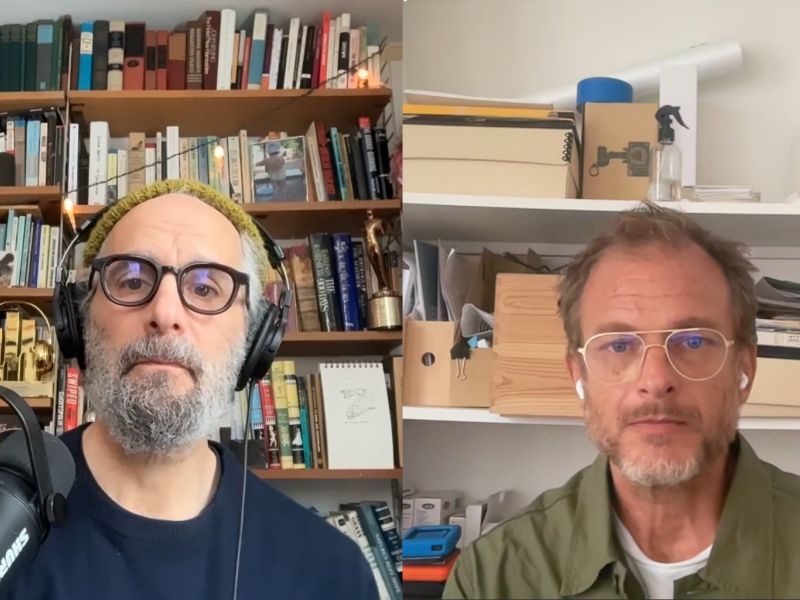
Ep. 245: “A Professional Noticer of Things”
“What the Hack?” is DeleteMe’s true cybercrime podcast hosted by Beau Friedlander
Beau: Today we’re going to the White House. But before we go there, we’re going to do a quick pit stop at Jeffrey Epstein’s place in New York City.
Christopher: I took a picture of this email on his desk. I didn’t know who he was at the time.
Beau: That’s Christopher Anderson. You may recognize his name from Magnum Photo. He’s a celebrated photographer who’s known for his high-stakes photojournalism in conflict zones. Maybe you remember his 1999 pictures of Haitian refugees on a sinking boat which put him on the map and earned him a Robert Capa Gold Medal. He made news recently with a shoot that he did for Vanity Fair at the White House.
Christopher: I was walking into offices and there were papers out on desks that clearly I should not be looking at. It was kind of sloppy.
Beau: He’s basically a professional spy whose targets welcome him with a smile.
Christopher: Vance in this whole scenario was the hardest one to photograph because he was the best chess player, so to speak. He was the one who was able to conceal whatever it was he wanted to conceal the best.
Beau: This week, privacy, surveillance and photography. Seems obvious. It’s not. I’m Beau Friedlander and this is What the Hack, the podcast that asks, In a world where your data is everywhere, how do you stay safe online? To understand privacy, you have to understand it’s opposite: surveillance. Privacy is all about what it means to see, something, someone, and what it means to be seen. The people who understand this best are the ones with the most to lose. When a production team shows up for a photo shoot, that’s a serious security and privacy event for a potential target. Some photographers have a skeleton key to the halls of power, the rich and famous, because they’re good at what they do. And that can be a real problem if you don’t know how to play the game you signed up for. This week we’re talking about the unintended surveillance that happens when a camera enters any situation with a photographer. But we’re talking about it with photographer Christopher Anderson. Christopher, welcome to What the Hack.
Christopher: My pleasure. Thanks for having me.
Beau: Okay, so let’s start at the beginning. You were a Magnum photographer. You’ve been all over the world shooting celebrities, migrations, conflict zones. How did it start?
Christopher: Of the of the first stories that I did for a magazine that kind of in the journalism world or the photography world put me on the map was I took a boat with Haitian refugees trying to reach America. It was a small, handmade, wooden boat. It had no motor, no navigational equipment. And we wound up sinking in the Caribbean and a Coast Guard cutter stumbled on us by pure chance in the middle of the night as we were sinking, and we were all saved. And those photographs and that story were a New York Times magazine cover story. And that story, that set of pictures, you know, launched my career in many ways.
Beau: You went from a sinking boat to war zones and covering migration to what you do now. At what point did you decide that was enough or enough was enough? Did becoming a father have anything to do with your migration to celebrity photography?
Christopher: After September 11th, I was in Afghanistan. I covered the war in Iraq. I covered Gaza for, over the course of eight years. Following at the beginning of the second Intifada, I did a book about Venezuela, which at the time was like a war zone. Caracas at the time was the most danger- It was more dangerous than Baghdad at the time. Yeah, I mean, I was part of this roving, small, relatively small band of people who called themselves war photographers, who kind of made our living like a small family traveling circus going from conflict to conflict. It’s true that in 2008, my first child was born and there was a hard break then. I went to to Iraq for the last time and realized that I couldn’t do this anymore. But it had been building for a while. Not just because I was having a child, which obviously for me was the big motivation to quit that line of work. But I think creatively I was already moving in different directions. I think spiritually I was conflicted internally about, you know, it’s hard to pick up a camera and point it at someone’s suffering and make a photograph of it, even though I believed in that mission at the time. Personally, I was having a harder time reconciling this idea of what it meant for me to make those pictures. And so creatively I’m going in different directions, spiritually I’m conflicted about what I’m doing, and feeling heavy because the work takes a toll on you. So all of those things came together and it was like, okay, I can’t do this anymore.
Beau: So when I’m looking at your pictures, if I see a sign, I know I’m supposed to be noticing it. There’s an implicit commentary, even poetry in the way you shoot. Talk about that.
Christopher: I always thought of what my job is, and what my strength is as a photographer is to notice things. I’m a professional noticer. I also like to think there’s a certain emotionality that I’m picking up on in the subject that I’m trying to infuse in the image or communicate through the image. So it’s that thing that I’m sort of hunting down. Yeah, all those details are extremely intentional and I am aware of all those things that end up in the photograph or get excluded from the photograph. Let me… for instance, I also have this post about Jeffrey Epstein because I happened to photograph Jeffrey Epstein years ago.
Beau: There’s photographs in there where there’s like a picture of his reading glasses, but just above the reading glasses, there’s a printout of something that looks pretty damn sensitive right there for you to photograph. And also just like the weirdness of him up against a gold wall. When you’re in there shooting, like, why were you there and how is it possible they don’t realize that you are taking pictures of stuff that could be sensitive?
Christopher: I didn’t think about it at the time. And now, I didn’t know who he was at the time and which is the other weird thing to me. Why did I have the presence in mind, photograph those details? Because they wouldn’t have been interesting to me at the time. And it was going, when I discovered that I still had these pictures fairly recently, and I went back and looked at ’em, I was like, wow. I took a picture of this email on his desk and then I remembered being left in this room for a while to wait for him. My mind starts playing it back through the fog of memory of why was I left in this room and why would a guy like that have left me in the room alone with potentially sensitive information? I don’t know. It doesn’t make sense. Your mind kind of starts building up conspiracy theories around it. Like did he know I would photograph it? Did he want me to photograph it? Why? I don’t know.
Beau: It probably speaks more to hubris though, where they are actually just, you dare question the great and powerful Oz? I think it’s more just a power trip that they can’t, don’t see themselves as that kind of target. For a person who’s been on dangerous migrations and on sinking boats, I don’t think that it occurs to you as readily as it does to most people, which is like, if I take a picture of the emails on his desk, if I take a photograph of something in the White House that might be a little sensitive, they might make my car run off the road.
Christopher: Yeah. Well, yeah, like, but at the time, like I said, at the time I didn’t know anything about Jeffrey Epstein, so I was, all I knew is it was at a time when I was like three days of the week, I was running off for New York Magazine to photograph somebody. I knew he was kind of like… because of his connections to rich and powerful people, and because he was rich and powerful himself, he’s not somebody you wanted to mess with. That said, I also didn’t think I would ever show that picture. That’s why I don’t remember why I was… maybe it was just the journalist instinct in me to like, oh, I have some time in this room. Hmm. Let me photograph this. But I don’t know why I did it at the time. And, I certainly wouldn’t have thought, oh no, I better be careful of that because I never thought, oh, I’ll show that picture. And I didn’t have a reason at the moment to be afraid of him.
Beau: Now we’re heading to the White House, which is why we’re here. You recently photographed JD Vance, Susie Wiles, Karoline Leavitt, Marco Rubio, Steven Miller, Dan Scavino, and James Blair for Vanity Fair.
Christopher: These White House shoots for Vanity Fair have a history. I’ve photographed people in the White House. I think I’ve been in the White House for three different administrations now for different reasons. You know, I did a portrait. I photographed Trump at the beginning of his first administration, I photographed Obama, Biden. Vanity Fair, the magazine has a history of doing these photographic portfolios of the inner circle of whatever administration. And because most of what I do now is photographing celebrities and celebrity portraits, I thought when, when Jen Pastore, when the creative director of Vanity Fair called me and asked me about doing the shoot, my first thought was, oh, she’s asking me to go and be a celebrity photographer. There’s no way I was gonna be able to do that. And so I refused the assignment. Well, she called me and said, no, no, no, no. That’s not the job. That’s not what we’re asking you to do. We are asking you to put back on the journalist hat and go do what I do maybe in my personal work and my other work, certainly in my journalism work, which was to go and be a clear-eyed observer and witness this place with a skeptical and honest but critical eye.
Beau: Mm-hmm.
Christopher: I thought, I could do that. I mean, I’ve photographed a lot of politics including for New York magazine. I did a whole book about politicians during the 2012 campaign. And I spent a year photographing politicians on both sides on the campaign trail. And at the time the book I had done, I did these very tight portraits of all these politicians. And it was my sense of wanting to get past the stage-managed image that they want us to make, the theater of politics. I wanted to find a way to pierce that bubble or toward the…. but I thought of it as more like, you know, trying to jump the guardrails basically of what it is they wanted to present to me. And so I came up with this idea of cutting out all context and getting at these faces, you know.
Beau: And was your setup such that they could… would have any idea that’s what you were doing on your side of the camera?
Christopher: Well, when I’d done it before, it was all in all different contexts, both from sitting portraits to, you know, at the DNC or the Republican Convention, that kind of thing. Or on the campaign trail. In this case going into the White House, you know, one reason I get in the door, maybe I’m sort of a Trojan horse because they can roll me through the door as celebrity photographer. But knowing that my brief, for me at least, is to go and see what I see and witness it. So I felt this enormous… well, a pretty unique opportunity, first of all. But l also saw it as an enormous responsibility to go and sort of be the eyes for the public. I hope that I… I don’t want that to sound too grandiose, but it’s like, okay. I’m gonna be doing this for a major magazine and going in and seeing these people that we’re seeing on TV and being able to portray them in what I thought was a more truthful way. And especially this administration, which I particularly feel like has been treated with kid gloves visually. And we’ve kind of get this sense of them being sort of supreme beings that are all powerful and they’re presented as visually speaking in a very, like, yeah, with a sense of strength and power. So one thing I know about being, having been in the White House before, is the place is actually… It’s small and it’s a little bit shabby. So I wanted to, my first thought going in was, well, I’m going to do that, but I’m gonna be a little bit subversive with this, but I thought it would be subversive in a more subtle sense. You know, showing the place for what it is without making it look grandiose. Not using the techniques of Annie Lebowitz, but being kind of more direct in how I saw things. Obviously not retouching things ’cause I’m gonna shoot it like a journalist. And putting the subjects physically in context of the details of the place so that you kind of see them in relation to those details, if that makes sense. You know, a lot was made about the light switches on the walls and the things like that. I wanted that to give you a sense of scale and size, that no, these people are not super human beings, but they’re a little more like middle management in a tax firm, you know? And then also do these close up portraits, which going in I thought, I’m gonna make these closeup portraits like I’ve done in my previous work, but I never really imagined that Vanity Fair would have the goal to publish them like that, which to my great surprise they did.
Beau: Yeah, I’m just, I’m just trying to pull up some of the images that, that were really striking for now, or just for- oh my God. Some of these pictures are so epic. So that was a really genuine response to a photograph. If you’re listening and you know photography and you’re like, oh, I get what he’s doing, he’s doing a Martin Schoeller-type closeup — no. That’s not what we’re talking about. That’s not hyperrealism, that’s still hyperplastic. The most striking thing for me in terms of the hyperrealism that a lot of coverage focused on wasn’t the skin texture of JD Vance or Marco Rubio. It was visible injection marks from a dermatological procedure.
Christopher: Yep.
Beau: And when you were, she, I mean, that would suggest that… was there a groomer on the set? Like were they just being shot in the wild?
Christopher: No, she had her groomer on set, a person that she works with a lot.
Beau: Uh-huh.
Christopher: And I don’t- the poor groomer, I don’t want to…
Beau: We don’t need to name the person.
Christopher: It is not even about naming her. I don’t want to throw her under the bus because she did her job. If you were gonna be shooting Karoline Leavitt under the soft lights that they have placed in the White House briefing room to sort of maximize the glow around her face and shoot her from a certain distance and all that kind of thing, if you were gonna use all the tricks that normally a photographer might use to make someone look better than they do, the makeup- the groomer did their job. But I think what would surprise most people about the pictures is how lo-fi my setup was. You know, you mentioned Schoeller does a thing with, you know, the lighting. It’s very kind of, you know, technical. And what I did was kind of old school and very lo-fi, which kind of added to the rawness of it. I shot film.
Beau: What about light?
Christopher: Yeah, it was a little bit different every time, but it was kind of a… I was working with my assistant Ben Coppola, who I have to give a lot of credit to. He’s a master. We had a sort of a very handheld flash setup that involved like an umbrella, a soft box. And we would kind of go in and, you know, depending on the room and how much space there was and what we were doing, we would kind of very quickly work out a little game plan for lighting. But that was generally a lighting that would be kind of a more direct lighting, very, you know, kind of even direct frontal lighting. And every, you know, your photographers out there will know that that is not always the most flattering light. But I wasn’t there to go and do flattering beauty pictures. I wanted it to be a little bit- the lighting to be, you know, direct and contrasty. But that said, I don’t, I wasn’t going in there intentionally to make- I say I do that direct and contrasting not to go in because I was gonna make everybody look stupid. That was not, the intention was to… I wanted it to be as sort of egalitarian as it could be, the light. That’s why I went with more frontal and more direct and a more kind of straight-on light. And let me just say something about Karoline Leavitt too. I didn’t go, I’m not passing judgment about facial, cosmetic procedures that people do. I don’t really have an opinion on about lip injections or anything like that. I don’t think it’s something that she shouldn’t do or whatever, but it’s something she does and the photograph reveals that. Make of that what you will. But I didn’t think, oh, I need to conceal that thing, because the whole point was to reveal as much about this person and the choices they make and how they present themselves and who they are and what it looks like or feels like to be standing in front of them.
Beau: Another shot that actually jumped out at me is a picture of Marco Rubio, where he clearly did not know he was being photographed. He made it his profile picture for a second. He looks like he’s mid-motion possibly, or confused. It’s dark, it’s not well-lighted. And when I saw that picture, I thought, what else did Christopher Anderson shoot? Because that like was basically a spy shot.
Christopher: Okay. Are you talking about the one of him looking at his shoes? Is that the one?
Beau: Is that what he is doing?
Christopher: Yeah. Well, if I’m honest, that is the one of all out of all the pictures, including the Karoline Leavitt picture that I feel is perhaps the most unfair picture.
Beau: Oh, it is. By a long shot. By a long shot.
Christopher: Because it is a picture that I made while… I told him to stand there and while he was kind of finding his position to stand there, which is why he’s looking down at his shoes, I took a picture. And in that sense, it’s not really fair because he’s caught in a moment of doing something that I asked him to do.
Beau: It’s a behind-the-scene shot.
Christopher: It’s behind the scenes, but going in and observing every one of these characters, I wanted to show what it was like to be in their presence. Now, each one of them had sort of a different thing that I was noticing. And Mark Rubio, I actually spent the most time with him. He was as if he were somewhere else. He was the most distracted or just not present. His face was vacant. So that’s what the tight picture I have of him, he’s kind of looking off to the side. And to me that captured what the experience was like that I had with him. ‘Cause he just seemed completely vacant. Now, maybe he was having a bad day. He’s the Secretary of State. He’s got a lot of things on his mind I would think. So who knows what was going on behind the scenes that I don’t know about him, why he was vacant. But that’s was my experience that day and I was trying to kind of honestly capture that sense that I had. And that picture of him, like staring down his shoes, somehow it captured that sense that that’s kind of, even though that particular moment he was doing something I asked him to do, he was kind of like that the whole time I was with him, a little bit staring off into space, a little bit like, you want me to stand here? Yeah. Should I look over there? And just like, you know, not engaged. While many of the others were super, you know, Stephen Miller was extremely kind of nervous about how he was gonna look. Should he smile? Should he not smile? If he leans back, will it look like he slouching? And what would that mean if he looks like he’s, you know, like, really bizarre, kind of. I was surprised to have Steven Miller so concerned about, preoccupied with how he might come across in a photograph.
Beau: And it comes across in the photograph too.
Christopher: Yeah. I think so. There’s this sense of, there’s a little bit of a chess match that I’m playing, which is, I’m trying to get the subject to reveal something about themselves. And they are either trying to not let that thing be revealed, or maybe they’re trying to play the type or play against type or whatever it is. And it was curious. The curious thing for me was that Steven Miller in this chess match, which actually became verbal because we discussed it, should he smile? Should he not smile, decided to go with, I’m gonna play to type and seemed to really like the idea that he might look like a villain in the picture. He didn’t say that out loud, but clearly that’s what he gave me in the pictures.
Beau: But that’s still reporting. What you did is still journalism. You’re still in the room. You’re having, and as let’s just say a senior journalist, a person who’s been doing this for a while, you have every right to let your you seep into the story
Christopher: Yeah, I think that’s kind of part why I was there to be honest. And that’s also the reason why like Vance was… Vance in this whole scenario was the hardest one to photograph because he was the best chess player, so to speak. He was the one who was able to conceal whatever it was he wanted to conceal the best.
Beau: Concealment, that’s interesting because of course the subject is willingly there with a camera pointed at them. That’s a different kind of surveillance. The word kind of tells you a lot. It basically means look at from a vantage point, surveillance, above, looking. There’s a connotation of authority. But there’s another thing going on. Have you heard the old saw that photographers steal people’s souls?
Christopher: Oh man, this is, we can go in a deep dive about what that is to what it means to photograph someone and, you know, Richard Avedon also talked about the idea that a portrait of someone reveals more about him than it does about the person in the picture. Yeah, there is a truth to that. In the situation of the White House, for instance. Like I said, I’m going in and I’m really trying to be aware of what I am seeing in order to best communicate what it is that I’m seeing and what it feels like to be there. And in doing so, I may be reading into a lot of things, but still, what else can I do except portray it the way that I see it? You know, I may be getting it wrong, but I’m still trying to have that picture reveal something about, more than anything, what does it feel like to stand in front of that person and what would be the thing that you would notice if you were standing there? That’s what I want the picture to do.
Beau: You’d been to the White House before. What was different about this visit?
Christopher Unlike the White Houses, the administrations I’ve been in the White House before, when before everything was really buttoned up, this time I was walking into offices and there were papers out on desks that clearly I should not be looking at. It was kind of sloppy.
Beau: And you, but you did not-
Christopher: I didn’t.
Beau: Please don’t tell me that you did.
Christopher: Yeah, no, no. I didn’t photograph them. Also, because knowing-
Beau: Don’t want my tape confiscated.
Christopher: Yeah, that… I know better than that. That would be the kind of thing that would get me in trouble. And I know better not to do that, but I was kind of surprised, like, man, this is not something I should be seeing.
Beau What was the reaction to the shoot like? Did the news push back at you?
Christopher: Amazingly enough, the news didn’t push back at me that much. Well, that’s not entirely true. I saw… people were sending me clips of like Megan Kelly’s show and stuff where she was, you know, going off on me. The resident MAGA foil, the talking head on CNN went after me. But surprisingly, I thought I was gonna wake up to like death threats in my Instagram feed. And it was relatively… I didn’t open up Twitter. I haven’t in about a year and a half now, but I assume that, Twitter was probably… they were feasting on me, but no, from the social media that I saw, overwhelmingly positive. There were a few voices that were upset in very predictable ways. I was kind of surprised at how muted the outrage was.
Beau: But you didn’t hear anything from the White House? Nothing.
Christopher: I heard nothing from the White House, but I kind of didn’t expect to. I thought maybe there would be a funny tweet from Trump, which I was kind of crossing my fingers for. But there was no… the White House, but I kind of didn’t expect them to, you know, to go publicly bitch and moan about your pictures not making you look nice.
Beau: Yeah. Yeah.
Christopher: I think they’re smart enough to know that’s not a good look and would…
Beau: It’s not the second-day coverage you want. No.
Christopher: Yeah. And it also just draws more attention to the fact that, you know, that, which I don’t think that they were… genuine, they were upset about the article, which also did not put them in a good light.
Beau: Now, we’ve talked about the unintentional surveillance part that happens as a result of the work you do. But the access you have, I’m guessing it must put you in the crosshairs for actual surveillance. There must be people who target you. We did talk about bots when I first reached out to you.
Christopher: I get a lot of stuff that’s like people making comments. And if you look at the profile, it’s clearly a bot. But they’re commenting on something that is meant to sometimes let me know that they… try to convince me that they know enough about me or about what I’m doing that they…that can’t be automated. And also, much more sounding like someone making a reasonable argument about something, but yet trying to undercut things in a way that brings up questions.
Beau: Did any of this get personal? Did anyone try to use your information to come after you — to scare you, steal your accounts, run a scam?
Christopher: That I get all the time. All the time, but usually it’s kind of phishing stuff.
Beau: Is it any of it good? Is any of it like decent?
Christopher: Oh yeah, yeah. I get some stuff that’s very sophisticated. And that’s what I was trying to think of specific examples because I get stuff that I feel is clearly designed to let me know that somebody knows who I am and knows a lot about me.
Beau: Well, but everybody knows who you are and a lot of people can go on YouTube and find out a lot about you.
Christopher: Yeah.
Beau: Not everybody, but you know what I mean.
Christopher: Yeah, but somebody that I don’t know is talking to me in a way that not only do they know a lot about me, I get the sense that they want me to understand that they know a lot about me.
Beau: Okay. Tell me about that. What does it feel like? Forget what, you know… specific, like what kind of things are we talking about?
Christopher: In the war photography time, when you’re in a place like Baghdad or in war zones, you run across a lot of people who are spooky. You know, you run across a lot-
Beau: Spy, spooky?
Christopher: Spy, spooky. Yeah. You run across a lot of that. And so it becomes, in my nature of work, I kind of have always lived with, that’s why I’m not good at coming up with these examples, because it’s something that I’ve always felt around me of people who are there and they sometimes wanna let you know that they’re there and that they’re watching, not because they’re trying to threaten you or make you particularly feel threatened or scared. It’s just that it’s about just making sure the general crowd has a sense that eyes are on them.
Beau: Okay. And what does that do to you as a photographer when that happens? Now, obviously you don’t have typical scare buttons in you, like it doesn’t seem like you scare easy. But what does it do to you?
Christopher: Well, like I said, part of it, because it was always… the reason why I was talking about this always being there and why online it’s, I feel it there as well. It doesn’t scare me most of the time. I go, why would they bother with me? You know, like, I don’t really pose a threat to anybody. So why would an intelligent service or any sort of organized party waste their time with someone like me? And fortunately I haven’t encountered the people who are really scary, which are just the nutsos, you know-
Beau: With a gun.
Christopher: Somewhere with a gun.
Beau: Yep.
Christopher: And fortunately I had, you know, even with the White House stuff, I didn’t have those people coming after me. At least I have to, let me rephrase that. I didn’t see any of it. There was a moment that White House thing got so crazy that for about five days my message box was… my DMs were coming at me so fast that I couldn’t even click on them to read them because the page was, it was almost like the page was scrolling.
Beau: Wow. And what were the messages about?
Christopher: Most of them, like, good job. Thank you for finally doing to these people. You’re a national hero. This kind of weird stuff, pats on the back, but it, you know, mixed in with that there could have been some weird stuff that I missed. I have to say, but in my sampling of it that I read, I didn’t find anything that was any direct threats. That really surprised me, ’cause I thought there would be, at least half of it would be that way. But I get weird things that to me feels more like, and I would say feels more like intelligence of some kind watching me because, and I, you know, if I were to say maybe foreign government stuff, there’s so much foreign government bot stuff that’s happening that you sense is trying to sway opinions, inject confusion or uncertainty or doubts about anything out there. There’s so much of it that happens. I mean, we all see the Russian troll bot stuff.
Beau: Or the accounts that look totally normal and then out of nowhere it’s like, yep, that’s Iran or China. Were you getting Instagram DMs, like fake support messages, verify your account, that kind of thing? People trying to take over your accounts?
Christopher: It ticked way up during that time, but I always get a fair amount of that.
Beau: And back to the spooky people or the professional spooks. There’s another angle here, which is that knowing where you are, given what you do, can be extremely useful to someone. Especially when you’re walking into the White House. Has anyone ever approached you like that? Mr. Anderson, I understand you’ll be at the White House on Friday — bring this matchbook and leave it in the bathroom.
Christopher: Yeah, not as clumsy as that. Nothing happened about going to White House this time. But yes, things have happened to me where someone clearly knew about where I was going and what I was gonna do, and therefore I had an encounter with someone. In both cases, I’d scratch my head going, what was that about? Why would they be bothering with me? I don’t think I can help them. Maybe I’m too naive.
Beau: The question, the first thing that occurs to me is because if you’re shooting, do you always shoot film when you’re shooting?
Christopher: No, I shoot digital as well.
Beau: To me, that’s why it starts to become interesting to somebody who is doing surveillance. Because if you’re shooting digital and they have access to your network or your Dropbox or wherever you store stuff digitally or your cloud, you become… they have your whole role. They don’t just have the pictures, your selects. They have the picture of the desk with the email.
Christopher: Yeah. Yeah. I had never, yeah, obviously I didn’t think about that.
Beau: I hadn’t thought of it either until you started talking and I was like, oh, you are actually a target. And maybe what I want to think about is the kinds of surveillance that top creatives face because they’re heading into sensitive situations.
Christopher: Well, and I may be jumping off-piece here again, but I used to work a lot in China.
Beau: Uh-huh, one of the most advanced surveillance states in the world.
Christopher: Yes. And for a time, I had a 10-year working visa to go to… multiple-entry business visa. So I was definitely someone on the list of, whenever I came in, I assumed I was being watched. Sometimes I would go in with a production, like shooting for Nike. I’d be picked up at the airport by the production company and it was always clear that there was at least one person on the production company who was there to kind of like watch things. And that was obvious and it wasn’t openly talked about, but everyone kind of knew that that’s the way things run. But weird things would happen. Like, I used to have two iPhones, one with my New York number, one with my French number. And I remember as soon as I got to China, they would both start acting up in the exact same way. And like, I couldn’t turn them off or I couldn’t turn them on. Or sometimes they would come on by themselves and start glitching in a weird way, like in the middle of the night. My computers, I tried to not connect my computer to the internet because the computer would start doing weird things. One time as I was copying my images off of my camera onto the computer, the whole thing seized up in a way that it’s never done before, as if something reading the information as it’s coming in, as it’s being ingested, which, probably was, be naive to think that wasn’t happening.
Beau: It would almost be naive to think that it’s not still happening. It’s just no longer glitching.
Christopher: Oh yeah. And I was in China only just a few months ago, and like my computer, I just got my computer outta the shop a couple weeks ago because the thing crashed. And, you know, they couldn’t figure out anything that was wrong with it. None of the… it crashed as if the logic board had gone down. But when they got it, they got it booted up. Everything looked like, they couldn’t figure out why it had crashed. There was nothing. And my only thing is I’m sure there’s something going on, someone’s looking around in the thing or some kind of something that has been installed into my computer is making it act weird.
Beau: Tell me about making art when you know you’re being surveilled. How does that effect you?
Christopher: I tune it out. I think that I have to, because I also kind of think like, why am I worth it to whoever it is that’s surveilling me? Except for the weird guy in the basement with a gun. But I also am not gonna live my life in fear of that because I grew up in Texas around guns. And that was always a threat no matter what you were doing, whether you were making art or not.
Beau: Whenever surveillance comes up these days, anyway, I think about something called the Hawthorne Effect. The most common version involves putting a video camera over a work area. The Hawthorn Effect is that when you do that, workers perform their jobs better supposedly. Other studies call bullshit, finding that what actually happens is the death of creativity. Workers take fewer chances, like the kind where you end up on a boat in the Caribbean that’s sinking. You’re an outlier. You can switch off the noise and focus on what you wanna look at. I’m curious to hear your view about the Hawthorne effect, since you don’t seem to have the usual fear buttons.
Christopher: Yeah, I mean, you’re right. I don’t, and maybe I should. Let me put it this way. In the job, in the profession that I did for 16 years and to some degree in what I do now, there are hazards that come with the territory. And you at some point decide, if I’m gonna do this job, I’m gonna accept this risk. And you have to go at some point even further than that, where it’s not… you don’t become unafraid. It’s not like you don’t have fear anymore, but you’re able to compartmentalize it where it becomes like another one of the obstacles that you need to overcome in order to do the job, like fatigue and like access or like being hungry or uncomfortable. One of those obstacles is risk. And so you kind of are able to objectify that and put it in a box and deal with it. It doesn’t mean that it goes away, it doesn’t make you brave or anything like that. It just means like, okay, that is an assumed risk in order to do my job. I worked covering a war in Lebanon in 2006, and I knew that Hezbollah was always following me doing what I did. You know, at one point, they picked me up. What you’re talking about, surveillance, like the official kind of surveillance The weird thing about the world we live in is the fact that everybody has an iPhone. A friend of mine sent me a video of me walking down the street the other day that a friend of theirs that I don’t know had made of me and sent it to them and they sent it to me. And that was kind of weird. And I assumed that maybe that happens even more than I know. Like we are surveilling each other. What are we gonna do about it at this point? Am I gonna live in fear of that now? I don’t think there’s anything that I can do at this point in the world we live in to not be under surveillance of some sort.
Beau: I feel so lucky to have talked to you because I have no question that you’re an outlier. I mean, your spine is made outta tungsten steel. Not everybody’s built that way, but it is really fascinating to hear. And I really appreciate you taking the time to talk to me today, Christopher Anderson. Thank you so much for joining me.
Christopher: Thanks for having me.
Beau: Now it’s time for the Tinfoil Swan, our paranoid takeaway to keep you safe on and offline. Do you know about GEOGuessr? It’s not actually spelled “guesser,” it’s just “ssr” at the end. But anyway, it’s a geography game that drops you into a random Google Street View location and challenges you to pinpoint your exact position on a world map using only visual clues like road signs, vegetation, shadows, architecture.
Geoguessr Clip: These trees are super common in the south , plus kind of the pine and just the stop sign is very U.S. with a [unintelligible]. We also have a transformer on the southern pole, which if we’re gonna get in the weeds here is pretty common in the U.S. and Canada.
Beau: When I was prepping for this episode, I watched a video that included B-Roll of Christopher going home. There was no street sign or address visible, but I knew the building because I used to run by it everyday. Total happenstance. But there’s a whole gaming community out there that can tell you exactly where that place was, right? It’s time to think about what you want to share with the world about where you live and what you do. Think about the information available in the pictures you post. If you’re not alone, you may be on camera. Somebody might be shooting you from across the street, like, oh, there’s you. If you listened to the first two episodes of our Surveillance in America series, you know about the ubiquity of Flock Security cameras and door-bell cameras and why that can be a problem. What do you share? I’m not just talking about the camera on your smartphone where geotagging absolutely MUST be turned off. I’m telling you something different. I want you to check all your apps. Do it over whatever, however long that takes you to do, but do it. The one you use for recipes does not need your location information. You need to manage that before that data goes walkabout. So check each one and shut them down one by one, and if you’re wondering what’s out there about you, go to joindeleteme.com/scan and do the free scan there. You’ll be surprised what you find. And don’t tell anyone but if you use this code, you’ll get a 20% discount for a year of privacy with that free scan. Just go to joindeleteme.com/wth. Just do that instead of going to wherever it says join or wherever. Just go to the one that says /wth because it’s better for the podcast and you like the podcast, so do it. All right. That’s it for this week. Stay safe. This episode of What the Hack is produced by me and Andrew Steven, who also did the editing. What the Hack is a production of DeleteMe which was picked by the New York Times’ Wirecutter as the #1 personal information removal service. You should be using it already. If you’re not and you want to, well, you can. Here’s what to do. Go to joindeleteme.com/wth. That’s joindeleteme.com/wth and get 20% off. I kid you not, 20%. 20% off. That’s joindeleteme.com/wth.
Learn More:
- See where your data is exposed with our free scan.
- Learn more about data brokers and how they misuse your data.
- Read Beau’s blog post that covers this episode, photography, and privacy in today’s surveillance landscape.
news?

Exclusive Listener Offer
What The Hack brings you the stories and insights about digital privacy. DeleteMe is our premium privacy service that removes you from more than 750 data brokers like Whitepages, Spokeo, BeenVerified, plus many more.
As a WTH listener, get an exclusive 20% off any plan with code: WTH.