This Week on What the Hack: Army Romance Scams
This Week on What the Hack: Army Romance Scams
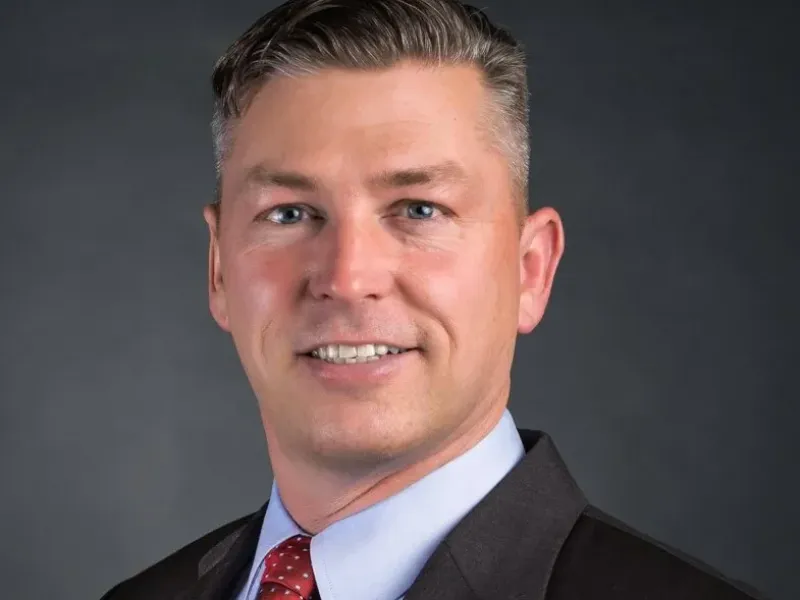
A retired Army Colonel becomes the unwitting face of thousands of army romance scams. Bryan Denny has been breaking the hearts of people he’s never met for years. What do you do when hundreds of crime rings are using your face?
Episode 256
Ep. 256: “The Colonel and the Catfish”
“What the Hack?” is DeleteMe’s true cybercrime podcast hosted by Beau Friedlander
Beau: Bryan Denny’s wife has a folder. It’s not a physical folder. It’s just what she calls it in her head, a place she puts the messages. Once a week, sometimes more, a woman she’s never met reaches out to tell her that her husband is in love with them.
Bryan: “Hey, I’m in a relationship with your husband. I think you’re a terrible person. I want you to die. I want you to give him a divorce.”
Beau: Bryan’s wife has learned to skim them. She knows what they’re gonna say before she reads them. She also knows something the women sending these messages don’t know. Her husband has no idea they exist. I’m Beau Friedlander, and this is What the Hack, the show that asks, in a world where your data is everywhere, how do you stay safe online? A few weeks ago, I sat down with Ethan Merritt, a younger guy, Army National Guard, who came home from deployment and found that scammers had lifted his photos and were using them to run romance scams out of Nigeria. Ethan actually tracked them down. Catfished the catfisher, found the house. The bait bites back is the name of the episode. I think it’s funny. If you haven’t listened to that one, go back and listen. It’s a great story. But while I was talking to Ethan, I kept thinking about an earlier conversation that we had in an earlier avatar of this show with Adam and Travis back in the old days. Someone I spoke to a while back, well, we did, who has been living inside this problem for years. Former U.S. Army officer Bryan Denny unwittingly became the face of thousands of romance scams. Bryan, welcome to the show.
Bryan: First let me say thank you for allowing me to be on today. I’m always happy to talk about romance scams and what I know of them. I really learned the hard way through my exposure with romance scams.
Beau: You are a colonel as I understand it.
Bryan: Yes, sir. That’s correct.
Beau: Okay, that is a big deal. It’s our first colonel.
Bryan: I appreciate that. I appreciate the recognition. I always like to… I’m really just a soldier.
Beau: Bryan spent twenty-six years in the military. Think about that. You go in at twenty-two, twenty-three. You don’t really know who you are yet, and the Army answers the questions for you. Here’s who you are. Here’s what you wear. Here’s how you’re addressed. Here’s you address people. Here’s what you’re for. And there’s something genuinely clarifying about that. I must say, I always wanted to do it and I never did. My grandfather was in both World War I and World War II, go figure. This idea that your identity isn’t something you have to construct is interesting though, especially for scams, right? So, it’s given to you. It’s conferred. But here’s the thing about an identity that’s conferred. It can also be taken, and I don’t mean metaphorically. I mean your name, your face, the story people tell about you, all of it. It’s more portable than you think, more detachable than you’d want. Bryan Denny spent twenty-six years building his self inside one of the most identity-rigid institutions in the world. Sorry, but that’s how I see it. And when he got out, he did what everybody does. He made a LinkedIn, put up a photo, wrote a little bit about himself, put himself out there for the first time as a civilian, as just a person. He had no way of knowing that someone not awesome was waiting for exactly that.
Bryan: I was updating my LinkedIn profile as a lot of people do. I’d never had one. And so I got a contact very quickly from a lady in Canada. She said, “Hey, I’d like to talk. I’m looking at your profile.” And I was naive enough still, so I said, “Yes.” I said, “Here’s my phone number. If you’d like to talk, give me a call.” And I really, quite frankly, I just assumed it was all about a job or something they were looking for an Army guy to do. And she reached out and said, “Hey, you know, I think we’ve been, we’ve had a conversation over the last couple of weeks.” I was like, “Nope.” I hadn’t been talking to anybody and I asked her to explain, and she said, “Well, you and I have been talking, and I’m gonna send you some pictures.” She sent me several pictures that I recognized as me off of Facebook and some Army photos that the Army had taken of me when I was deployed. And then she said, “I’m gonna send you a pair of tickets.” She sent me plane tickets that had my name on them where I was flying into Montreal. She said, “You’re supposed to be in Syria right now.”
Beau: Plane tickets, his name, Montreal. A woman in Canada who thought she’d been talking to him for weeks, and somewhere out there, another version of Bryan Denny was at work. Same face, same name, same photos. Telling her he’s in Syria and he needs help getting home, and you know from Ethan Merritt that that’s never going to happen that way. So anyway, he’s standing in his kitchen or wherever he was holding evidence of a life he didn’t live, a relationship he wasn’t in, a trip he never took. So the thing about this moment, and I’ve heard a lot of scams and stories, is that this isn’t really just fraud. Something stranger than that. Someone has been out in the world being him, making promises in his name, building something with his face that he had no part and no knowledge of. That’s something different than identity theft. It’s more like identity occupation. It’s invasion of the body snatchers, kind of.
CLIP: People are being duplicated.
CLIP: How do you know my name? I didn’t tell you my name.
CLIP: It looked right at me.
CLIP: You’re looking at it as if it was human. It was not human.
CLIP: Now, the classic fear begins to grow. Invasion of the body snatchers.
Bryan: I think she was trying to put the pieces together. I think she had been told by her daughter, “Hey, this isn’t real. You’re not talking to this guy.” And her daughter went on LinkedIn, found my image and said, “This is the guy that you’re talking to, that says he’s talking to you, but I’m sure it’s not that guy.” And she reached out. In fact, she was quite decent about it. She quickly came around to the, “Yep, I’ve been scammed,” without a lot of evidence, without me having to go to some strong lengths to explain that to her, and a lot of people don’t get there that quickly. But yeah, she put it together pretty quick and she said, “Go to Facebook, put your name in your, in the search bar and see what happens.” And I did, and there were double digits of my pictures and fake profiles that came up.
Beau: So it was your picture and your name.
Bryan: Exact spelling, same picture. I mean, not…different pictures of me, but the exact same picture and my name came up. Again, double digits. And at that point it’s like, “Okay, what’s going on? What’s happening? What is happening here?”
Beau: So is that, what is your understanding of what happened, Bryan?
Bryan: You know, I’m a guy in a uniform. I’m a guy with a son in his Scout uniform. And then it’s me and my son with our horses in North Carolina. And really from those three pictures, this guy, and I say this guy, but it’s really not a guy. It’s teams of guys. It’s organized criminals. It’s guys working in an internet cafe, across the ocean in a place like Lagos, Nigeria, that this is a full-time job for them. But if you get these three pictures, it’s easy to build a story about a guy who’s in the service doing great and wonderful things, truth, justice and the American way and all that stuff. You know, recognized credibility in the Army, and he’s got a boy, and he’s a widower, and his son’s at boarding school. And all of a sudden now, you know, his son’s been injured in a horse riding accident, and you know, he needs money to help him because he’s overseas. He can’t access his funds. And from that, those three images, you can spin a pretty good web.
Beau: A man in uniform, a father, a widower with a son at a boarding school and horses back home in North Carolina. I mean, you can write the story yourself. That is not just a scam. It’s creative fiction. It’s a fully realized, emotionally loaded character designed to resonate, the loneliness, the fantasy of someone good, someone solid, someone who has already proven he can sacrifice for something bigger than himself. Perfect, right? Bryan didn’t build that character. He just lived his life and put some photos on the internet. Someone else took them and then made a story that really worked.
Beau: Have you been able to figure out exactly how many profiles there were out there that used your pictures?
Bryan: So when Facebook still responded and talked to us, they had said I was in the top three most replicated profiles on social media. I can tell you, it is not something that you want. Unfortunately, it’s me and I don’t like it. And I find that, you know, people that I’ve worked to defend and protect, you know, now being taken advantage of with my image and my uniform and my credentials are being used to hurt people, and that bothers me. And so I want to do something about it. I wasn’t trained not to fight back, and the Army did a pretty good job. And my folks and grandparents did a pretty good job in North Carolina, raising me and teaching me to fight back, and to stand up for myself and that’s kinda what I’m doing.
Beau: You said you talked with Facebook. What happened?
Bryan: It was really an interesting relationship. Did not get very far in terms of reporting the profiles. What we did get was a sit-down meeting, three sit-down meetings that ranged from, “We’ve never heard of romance scams,” to, “Yep, this is happening. Wow okay.” And at the end of the day, even when I would report profiles, at best, we only ever had a 33% or so deletion rate where they would take profiles down, that I reported with my images.
Beau: Bryan has been to Facebook. And Facebook, a company worth, I don’t know, at the time of these meetings, somewhere between hundreds of billions of dollars or more, whatever, with more engineers than most countries have soldiers, managed a 33% success rate on removing fake profiles of a guy who was sitting right in front of them and showing the evidence that these were fake. 33%. Pretty crappy. That’s a failing grade in school, right? Look, we’re gonna get into why that is, what’s actually broken in the system, and what, if anything, can be done about it. But before that, while Bryan has been fighting this institutional war, the meetings, the reports, the deletion requests, out in the world, completely separately, something else has been happening. There are women, real women, who have spent weeks or months or, in some cases, years believing they were in a genuine relationship, making plans, sending money. And then there’s people in scam compounds who are forced, trafficked to perpetrate these scams. And there’s Bryan and there’s Ethan, the people whose identities have been used in these scams. In a scam like this, it turns out almost everybody is a victim.
Beau: How does it affect a life like yours, for instance, where your profile’s just out there?
Bryan: I would say I’m lucky to a degree. I mean, most of the time, this does consume a chunk of my life. I mean, no doubt about it. I’m a bit resentful of the people that do this and have used my image to abuse people. I get really upset when I think about the number of people that have lost I mean, and as you go through and kind of look at it, you realize people have given away money they don’t have. People have given away their life savings. People have given away, you know, their parents’ money, their inheritance. I mean, they’re, they forfeited everything to be, you know, involved in someone that they’ve never met. And that’s tough. It’s only been in, like, the last really six months or so that I realized the toll that actually is taking on my kids and my wife. You know, my kids get messages like I do in the messages from people you don’t know column. They get those, you know, on a regular basis going, “Hey, I’ve talk- I’m talking with your dad. I’m in a relationship. I want you to ask your mom to divorce him.” And this kind of thing. And my kids are 16, 19, 21, and 23, and so they get this. And they have been in- they know what’s going on. But my wife gets on a weekly basis the, “Hey, I’m in a relationship with your husband. I think you’re a terrible person. I want you to die. I want you to give him a divorce. Stop taking his money. I’ve talked to your kids, and they love me, and they want me to be their new mommy.” And my wife deals with this. I mean, I wish I could tell you I’m exaggerating this, but I’m not. My wife deals with this every week from someone who says, “I’m in a relationship with your husband.” And my wife will go, “Oh, when was the last time you saw him?” And the answer is, “Well, we’ve never actually met.” And it goes from there. And she, God bless her, tries to say, “You’re with a scammer,” and it’s always, “Hey, I know. He said you would say that.” And so, you know, and there’s really, once people are committed to this, it’s really hard to make a difference. I will tell you, it is hard to talk someone out of that relationship. I’m the lucky one. I get the, “Hey, I’m just trying to confirm. I think I’ve been scammed. I think I was talking to somebody that was using your image.” Those are the easy ones. I mean, it’s tough. And eventually, you know, and I do find myself, you know, you’re breaking up with somebody and telling them, “Yep, I’m sorry this has happened to you.” But my wife really gets the venom-filled ones that are really terrible, and she deals with that. Fighting this is a part-time job for me. I say I’m retired, but I do work. I’ve got a number of different activities, but this is my most significant part-time job is trying to stop this. But for the guys that I’m fighting against, there are groups of guys. This is their job 24/7. This is what they do every day. This pays the bills. And so… And they’re good at it. They’re good at manipulating people. They know what to say. And, you know, they’re gonna send out 100 emails to people. Of those 100, they may get 25 that actually respond back to them. Of the 25, they may be able to establish a conversation with maybe 10. Of the 10, two will give money. Two or three will give money, and that’s all it takes.
Beau: Yep. How widespread is this across the armed forces? Have you met other service members? I mean, probably obviously maybe not with as many; you seem to be the star of that particular situation, but are there other ones?
Bryan: So I have met, yeah, a number of guys across the military, people that I know and I’ve worked with. I know a half a dozen guys that have had this happen to them in similar way, shape, form, or fashion. The images have been used and they’ve spoken out about it and tried to do something about it. But it’s almost like the number of guys that come forward and say anything is almost like the number of ladies or, you know, or people or victims that come forward and say anything because there are male victims on both sides as well. I mean, people are embarrassed by it, and I was embarrassed by it. I didn’t talk about it for six months after it started happening to me. I just didn’t want… I mean, I couldn’t believe my images were used in something like this, and I was mortified. I was horrified. I was embarrassed. And then when you do decide to do something about it, what do you do, you know, that could make a difference? And you start to look at your options there and go, “Wow, this is gonna be a really frustrating fight that will never end.” You know, and I love it when I meet people and go, “Hey, is that still going on?” It’s gonna happen. It’s gonna go on for the rest of my life. The images won’t change. The pictures won’t change. As long as people give money to those images or pictures, this will be a successful con, a successful scam long after I’m gone. There is no end date to this.
Beau: So Bryan, you know, what I’m reminded of here, oddly, are all the people who find images of themselves becoming memes. You know what a meme is. So you, you know, it could be, you know, “I’m having a bad day,” and it’s just a person having a really unique facial expression. And one thing that you have in common with some of these memes is they didn’t sign up to be memes, but their image is being used over and over and over again. And yet… And, and you’d think there’d be legal recourse. I have a friend whose daughter was three or four, and she was on a swing and looking very grouchy, and it turned into a meme. It really blew up. It went viral. And to this day, I think it’s an issue for them. The difference is maybe even negligible because some people have experienced serious stress, anxiety from being out there in that way, and you can’t get that toothpaste back in the tube once it’s out there. There are efforts, and I’m sure you’re familiar with them, right now, between Meta and OnlyFans, which is an adult content creator website. There are these venues that are trying to at least tackle revenge porn and the use of imagery of minors, and they are tagging them, and they’re able to track that. Is there anything like that happening with the FBI or any other law enforcement with regard to someone in your situation?
Bryan: I don’t believe so. I certainly think, you know, that what’s happened with my images and other people that are used like this goes well beyond what we would call fair use, right? If you post something out on the internet, in there, it’s fair use. It’s just like a stock photo. But most of the time, stock photos aren’t meant or aren’t used to conduct fraud, to impersonating individuals with the intent to fraud, commit fraud, and this kind of thing. So when I was having a dialogue with the FBI investigators that opened up my case, the term fair use came up a lot. And it’s not like Facebook hasn’t been warned or told, “Hey, you know, this is enough. This is this guy.” So you know, we-
Beau: It’s not fair use. It’s a garbage argument. It’s not fair use.
Bryan: Yeah, exactly.
Beau: Do you know why there isn’t any legal action? I mean, what’s the problem? What is it going to take?
Bryan: So basically the social media giants, dating sites, Facebook, Google Meets, everybody can hide behind the Decency in Communication Act, and it’s in Section 230 which basically holds the guys and gals that run these large bulletin boards, you know, they’re not liable for what gets posted on the bulletin board. They are not responsible. And so they can hide behind that. And that, this was made in the ’80s. It was to support the standing up of the internet, and this kind of thing. So, you know, they didn’t want to tarnish the creativity there and keep people from being able to stand up the internet and wonder what people might post, and here we are in 2023 and it’s still in effect, and you can’t hold the social media giants liable for what gets posted on their platform.
Beau: At some point, you know, the scam will age out. This one, the Bryan Denny scam will age out because you’ll be able to post a picture of yourself in 10 years and say, “This is what I look like now,” and you’re being sold a guy from 2016. Good luck with that.
Bryan: I honestly, I would love to think that’s a true statement, but I don’t think so. If it’s so hard to talk to people now, and they, I’ve, I mean, I’ve done any number of podcasts and videos and stories. I post, like, “Hey, this is my wife. These are my kids.” And still, like, the last lady who talked to my wife, the first thing she said was, “Yes, I know there’s scammers that use his identity. He’s already told me all about this.” And so, okay. They have all the evidence, they have all the pieces there, and if they still don’t buy it, you could recycle old pictures of me or whoever, you know, as long as there’s pictures to be posted.
Beau: This goes to the idea that I was getting at before, and it, you are actually kind of a meme, but in the romance scam column. And you really, it doesn’t sound like you can get the toothpaste back in the tube. Now, I do believe the technology exists to do it. There’s not the impetus to do it. To tag photos and say, “This is a scam, and the likelihood of this being a scam is high,” could then be something that’s passed on to dating sites and to social media sites, and they can say, “When this image occurs, we automatically delete it because we know it’s a scam.” And they’re not doing that.
Bryan: You are exactly right. Those two things, you’re exactly right. Two very important things. The technology exists. In fact, Facebook, halfway into our relationship with them said, “Hey, give us the pictures that are most used in scams and we will identify them in our system and we will prohibit accounts from being opened using those pictures.” And we did that, and we saw no degradation in the number of fake profiles. And we saw fake profiles with those pictures still being used. And they were like, “Well, if you shade it or change it or manipulate it, you know, the algorithms don’t pick it up.” And so we built a couple of fake profiles using those same images, and every time we did it, the algorithm still said, “Hey, this is Bryan Denny, and this is his suggested friend group.” And it was all, you know, people that I don’t know, but people from Lagos, Nigeria. They had it completely– The algorithms were smart enough to still identify the pictures even after we black and whited them or shaded them or manipulated them. It still knew who I was and it based a recommended friends list off scammers that had used my images to produce fake pages. I mean, so yes, the technology absolutely exists to do what you’re wanting to do, prohibit fake profiles from being started, but it’s up to those dating sites, as you said, that want to not have fake profiles on them. It’s up to sites like Facebook that say, “We don’t want fake profiles. We’re going to eliminate them by ensuring our algorithms do this.” And there’s no impetus to do that.
Beau: Facebook removes fake accounts constantly, hundreds of millions of them every quarter. In just the first three months of 2024, they took down six hundred and thirty-one million fake profiles in one quarter. That’s not a small operation. They have the technology. But why is Bryan Denny still reporting that thirty-three percent success rate? According to documents reviewed by Reuters, Meta’s finance and safety divisions have known for years that fraudulent ads, and by extension, fake accounts that run them, represent a revenue source. In its 2025 internal presentation, executives explicitly discussed the trade-off between what they called violating revenue, money from illegal or deceptive activity, and the cost to enforce it. Violating revenue, that’s their term, not a critic’s term, not a regulatory term, their own internal language for the money they make from scammers. Meta’s own systems reportedly identify fifteen billion scam-related ads every day, and the company continues to serve them because internal projections showed that roughly ten percent of Meta’s 2024 revenue, around sixteen billion, came from prohibited or fraudulent sources, and that revenue far outweighed any expected fines. Sixteen billion dollars. Now, Facebook will tell you, and they do tell you, it’s on their website, that they prohibit fake accounts, that they prohibit fraud, that they prohibit romance scams specifically. Their community standards say that they aim to protect users and businesses from being deceived out of their money. They aim to. I aim to be a billionaire. It has not happened yet. I actually don’t. I don’t want to be a billionaire. Seems like a waste of time. Anyway, there’s also Section 230 the law that says that platforms aren’t legally responsible for what users post. It’s a problem. It’s been a problem since the very beginning, but they didn’t know it was a problem because the things that were making it a problem didn’t exist yet. It was written in the 1990s to help the early internet get off the ground without being crushed by liability. Courts have repeatedly found that even when Meta fails to remove fraudulent content it knows about, Section 230 shields it from consequences So when Bryan sits in these meetings with Facebook, all three of them, and walked away with a 33% deletion rates, that wasn’t incompetence. It was the system working exactly as it was designed to work. The fake profiles generate engagement. Engagement sells ads, and the law says nobody has to clean it up. Bryan knew this, and that’s why he went to Capitol Hill.
Bryan: So I think one of the things that I’ve tried to do is, one, work into start a not-for-profit that talks about this. I do interviews, I do the podcast, I do, you know … Again, I realize it’s a double-edged sword. The more I put my picture and my voice, you know, I realize it’s probably gonna be used by nefarious people to create more products to scam folks by. But the other side of that is I’m sure, I’m confident, I’m positive that we’ve kept people from being abused through this kind of scam by talking about it, providing information about it, by sharing what we’ve learned, by starting a site. We’ve been to the Hill three times now to talk to congressional representatives about romance scams just to make sure, hey, this affects the constituents in your district to the tune of, you know, this kind of dollar sign. It’s a national problem to this kind of dollar sign. And so you’ve gotta start thinking about, you know, how do we stop it? How do we slow it down? And if social media giants supported guys like me, and most all the, most social media giants rely on people reporting fake profiles. And if they took action on those fake profiles, we could get rid of a lot of the little fish, I mean, just by me going, “Fake, fake, fake,” take action on it. That would allow the federal government to look at the bigger fish and target them.
Beau: The problem though is there’s almost nothing people can do other than limit as much exposure as they can on anything public, which most people don’t do. And even if you as a person try to limit your exposure, that doesn’t mean that all of your friends and family members don’t find ways of posting pictures and everything else about you online.
Bryan: It’s, you know, I watch my four kids and their technique in dealing with this. One, my youngest daughter doesn’t have a, isn’t allowed on social media, so that’s pretty easy. My 23-year-old kid, my son, is not on social media at all, doesn’t care for it. One daughter, nationally ranked equestrian, into college, into horse riding. She has a profile. She is very savvy and very suspicious about things, and so she does good. My middle daughter, nothing on social media, not into it. So they’re either really smart about how to handle it, or they have ditched it completely. And for kids in their early 20s, I’m surprised to find kids that can cut it off and just not have anything to do with it. My kids have seen enough and they just cut it off.
Beau: So you have your nonprofit, you’re taking meetings on Capitol Hill. You’re talking to the social media companies. What advice do you give us, just everyday people?
Bryan: Well, I can say I don’t post a lot of stuff on Facebook anymore. I don’t share so freely, this is what I’m doing, this is what my family’s doing, you know, that kind of thing. I’m definitely close-hold about that kind information nowadays. I just don’t share it with people anymore, which is, you know, unfortunate. It’s really not about protecting me. I know that every interview, every podcast, every time I’m doing something to talk about this, there’s more exposure to me, which is good in terms of helping people who get involved in romance scams. But I also realize that snippets of anything I say, pictures or, of any video that I do also can be used and used again to go back and voiceover and take advantage of people by the scammers. One of the very first times in DC, talking to congressional representatives about romance scams, we took a picture in front of the White House. Within a week, that picture was used to start a fake profile, talking, you know, again, another fake profile, looking to make contact with people and take advantage of people.
Beau: So the bigger problem nowadays is gonna be that somebody listens to this podcast and takes a recording of it, feeds it to an AI voice generator, and you will find sometime in the future, Bryan, I don’t doubt it, your wife being forwarded a voicemail from you that isn’t you. Your voice, it’ll be your voice, but it won’t be you. It may already be happening. It just is, you know, your voice has, is on the record in podcasts, as you were saying, and on other media, and that can be grabbed, and then all a scammer has to do is change the words and have AI say, “Hey, honey, I’m really looking forward to seeing you in New York, but I don’t have money for the tickets right now. Can you send me some money?”
Bryan: It’s as simple as that.
Beau: So, your organization advocating against romance scammers. How’s that going?
Bryan: Really well. You know, I say really well. I could say that because it provides us an outlet to talk about what we’ve learned about romance scams and we get a lot of people that log on. You can google Advocating Against Romance Scammers. We’ve got a Facebook page. I mean, if the bad guys are on there, why aren’t we? And we’ve got a lot of good input going into the site. The FBI agent that opened up the case on me, started the case for me, is on our board, and we’ve got a number of other board members who are dedicated to really bringing awareness to romance scams. So we do a lot of work. There’s a couple of resources in terms of how to report romance scams and things like that. But and it’s really a page where you can get information and kind of talk to other people who have been through the process here. But again, our number one thing that we can do is spread the word and talk about it. Everything else from, you know, bringing justice to some of these folks to changing the 230, those are goals that require a lot more work. But, quite frankly, getting on and talking about romance scams is a pretty easy thing for us to do at this point and sharing the information about what happens. And what we like to do is have the victims, provide an outlet for them to talk. I’m kind of convinced that there’s certainly not a lot of these crimes that are reported, which is unfortunate, so that metric never really gets the recognition that it ought to get. I think it’s embarrassing to people, like a lot of these crimes might be, and so people, victims don’t report it. I think reporting it helps draw the attention to it that we really need, and reporting and talking about it is often very therapeutic to kind of get it out on the table and move on.
Beau: When Bryan and I first talked, going to Capitol Hill felt like shouting into a very large, very expensive building, but in 2023, Americans reported losing $1.4 billion to romance scams. That’s according to the FTC, and the median loss per person was two thousand dollars. Here’s the thing about that number. It’s almost certainly wrong, not because the FTC made it up, but because sixty-four thousand people reported romance scams in 2023 in a country of three hundred and thirty million people. People don’t report this. They don’t. They’re embarrassed, or they just have their process and get over it. In June 2025, the House of Representatives passed something called the Romance Scam Prevention Act, HR 2481 if you’re curious. Passed by a voice vote, meaning essentially nobody stood up to object. Bipartisan. Quiet. Really not a lot of headlines. So what does it actually do? It requires online dating platforms to notify you if someone you’ve been messaging has had their account suspended or banned for fraud, specifically fraud. That’s it. If the app finds out the person you’ve been talking to for however long is a scammer, they have to tell you. They have to include the banned user’s profile name, a statement that they have been using a false identity, and a warning not to send them money. Failure to comply gets treated as an unfair or deceptive practice under the FTC Act. Is this a sweeping overhaul of Section 230? No. No. It’s not doing very much. The bottom line is you’re talking about psychology here, right? Bryan told us something about the psychology of these scams, about how the scammer prepares the victim in advance. He said, “If you ever talk to my wife, she’ll deny it. She’ll say it’s a scam. That’s just what she does.” The lie is preloaded to survive the truth, and one of the reasons it works so well is because the platform itself never says a word. The account just disappears. No explanation. The scammer opens up a new one, and on it goes. The victim is left wondering what happened, and sometimes the scammer reaches back out from the new account with a new story about what happened. It just keeps going and going. They might even claim it was a scam. But here’s what I keep thinking about what Bryan said. The images won’t change as long as people are giving those images money. He said it like it was a statement of fact, not despair, not self-pity, just, “This is the world we live in.” His face is out there, and it’ll always be out there. Somewhere right now in an internet cafe somewhere, or scam compound, someone is using it to tell a woman in Germany or Ohio or New Zealand that he loves her, and that he’s coming home, that he just needs a little help. Bryan can’t stop anyone from doing that. In fact, no law can stop that. What a law can do, what a notification requirement can do, what transparency can do, what a podcast can do, is make it a little harder, make the lie a little less comfortable to live in and a little less believable. Okay, final coda here: if people wanna learn more about advocating against romance scammers, where should they go?
Bryan: So you could just Google that up, just like it sounds, AARS or Advocating Against Romance Scammers. We’ve got a website, we’ve got a Facebook site, and, you know, you can sign in there and kind of see what we do and see what we’re about. If you’ve been scammed or wanna talk about your experience, have a loved one that’s currently being scammed, I mean, we’re happy to, you know, provide information and get you going down the right road there.
Beau: Thank you so much.
Bryan: Thank y’all.
Beau: Okay, this Tinfoil Swan, our paranoid takeaway to keep you safe on and offline is extremely simple: if you are in an online dating environment, I don’t care which one it is, stay in that dating environment. Do not go to WhatsApp. Do not go to Signal. Do not go to Telegram, and do not meet them right away either. Spend some time. Kick the tires. Poke around. Make sure you’re actually talking to – not only that you’re talking to a real person, but do the regular stuff too, because if someone seems to be too good to be true out of the box, oh my gosh, you now what it’s going to be like in week three. Come on. We don’t want the barbie doll or the ken doll version of romance, and at the end of the day, we want all the human imperfection, so this week’s Tinfoil Swan is, lean into the human. Date somebody who might suck a little bit but is pretty good otherwise. Don’t go after the person who says everything right, because they’re probably wrong or even a scammer. Okay, that’s it. Stay safe. Have a great week and we’ll see you next week. Thanks. What the Hack is produced by Beau Friedlander (that’s me), and Andrew Steven who also edits the show. What the Hack is brought to you by DeleteMe. DeleteMe makes it quick and easy and safe to remove your personal data online and was recently named the #1 pick by New York Times’ Wirecutter for personal information removal. You can learn more about DeleteMe if you go to joindeleteme.com/wth. That’s joindeleteme.com/wth. And if you sign up there on that landing page, you will get a 20% discount. I kid you not, a 20% discount, so yes, color me phishing, but it’s worth it.
Learn More:
- Learn more about army romance scams and other types of romance fraud.
- Listen to the recent episode with Ethan Meritt on military romance scams
- Read more about common online threats in 2026 and how to avoid them.

news?

Exclusive Listener Offer
What The Hack brings you the stories and insights about digital privacy. DeleteMe is our premium privacy service that removes you from more than 750 data brokers like Whitepages, Spokeo, BeenVerified, plus many more.
As a WTH listener, get an exclusive 20% off any plan with code: WTH.
Listen to Recent Episodes


This Week on What the Hack: Surveillance, Flock ALPRs, and the Panopticon