This Week on What the Hack: Aaron Parnas Talks Data Privacy and Safety Online
This Week on What the Hack: Aaron Parnas Talks Data Privacy and Safety Online
Aaron Parnas is the Walter Cronkite of Substack. He has millions of followers who follow him on every platform to get his just-the-facts reporting, but even the most trusted voice on TikTok has some thoughts when it comes to our collective privacy.
Episode 261

Ep. 261: “Aaron Parnas on the Firehose of Our Digital Here-and-Now”
“What the Hack?” is DeleteMe’s true cybercrime podcast hosted by Beau Friedlander
CBS – First Cronkite: Good evening from our CBS newsroom in New York on this, the first broadcast of network television’s first daily half-hour news program.
Beau: That was Walter Cronkite on September 2nd, 1963. It was the first time the evening news went from a 15-minute blip to a half-hour program.
CBS – First Cronkite: In Alabama today, Governor Wallace ringed a public school with state troops to delay integration ordered by a federal court, and in turn, the local Alabama School Board threatened defiance of the governor. At his summer White House in Hyannis Port on Massachusetts’ Cape Cod, President Kennedy today talked with this reporter of many things, including the political repercussions of the integration battle.
Beau: And that night, the most trusted man in America interviewed President John F. Kennedy. The topic that night was the civil rights movement, broadly.
CBS – First Cronkite: How seriously do you think this civil rights situation is going to affect your chances, assuming you’ll be the nominee of the Democratic Party next year in 1964?
CBS – First Cronkite: Well, obviously it’s going to be an important matter.
Beau: Brown versus Board of Ed had passed nine years earlier. Three years after that, Governor Orval Faubus famously deployed the Arkansas National Guard to stop Black youth from attending Little Rock Central High School. You’ve seen the pictures.
AARON IG CLIP: In a huge blow to the Save America Act, Lisa Murkowski, Republican senator from Alaska, has come out today, in the past couple hours, and said under no circumstances will she be voting for it, arguably putting an end to Donald Trump’s marquee voter suppression bill.
Beau: That’s TikTok influencer Aaron Parnas talking about something similar. Nearly 63 years later, civil rights is still a polarizing issue.
AARON IG CLIP: Here’s the thing. To pass the Save Act, Republicans need sixty votes in the United States Senate. They don’t even have all of their own Republicans willing to vote for it. They wanna go through a process called reconciliation, which means they’re gonna attach Save Act to funding bills. Well, if they’re successful in doing that, which I don’t think they will be because the Save Act is not a spending bill, they could only afford to lose two senators. They just lost one of them, and well, we know Mitch McConnell. Who knows where he is? But in any event, major blow to Donald Trump, major blow to Republicans. The Save Act is all but dead once again this afternoon. As always, I’ll have more updates for you soon. Spread the word and follow along, stay up to date on all the news you need to know about, and I just recorded in the mirror, so featuring my growing bald spot.
Beau: Now, just bear with me if you’re thinking, “What the heck is What the Hack doing right now?” I’m gonna get there in a second. We’re going somewhere. Aaron Parnas does the news in short videos, often many rapid-fire posts a day. His updates have the feel of wartime reporting sometimes.
AARON IG CLIP: Explosive diarrhea cases in the United States are, well, exploding, and Michigan health officials may have found the cause, at least potentially, of this cyclospora outbreak.
Beau: The powers that be take him seriously.
AARON IG CLIP: The Department of Justice and I are now fighting on social media over the Epstein files.
Beau: He verges on Truman Show significance for his followers.
AARON IG CLIP: All right, everyone. I am going to bed for the night.
Beau: Yep, his bedtime is news. Aaron Parnas is huge online, like millions of followers huge. I’m thinking eight. I don’t know. I mean, I counted. There’s figures and then there’s figures. Maybe 10 million huge actually if you kind of think about actual reach. He’s been called the Walter Cronkite of his generation. He’s been featured on the front page of USA Today. He was on Forbes 30 Under 30 list, and he got there doing something simple. He reads the news. He curates it a little. I mean, but, you know, if you think HuffPo or Drudge, oh my gosh, on overdrive. In today’s news cycle where the sheer volume of information that comes at us every day is impossible to take in, Parnas offers daily lessons on how to drink from the fire hose of what’s what in the world. But like Cronkite, Parnas comes with a worldview. He does. He’s unabashedly kind of centrist, but on the left of the political spectrum. That’s why I said, you know, just chill. We’re gonna get there. There’s a reason for this. And before half of you go berserk, literally, that’s not why he’s my guest this week. He’s here because, like all good journalists, he’s got a clear-eyed view of a topic that matters to people on both sides of the aisle and from either side of the culture wars.
Aaron IG CLIP Cities move closer to putting cameras on garbage trucks: An American city is actively placing AI cameras on garbage trucks to scan your front yard for possible code violations in what many residents are saying is a dystopian violation of their privacy.
Beau: I have yet to meet anyone on the right or left who loves the idea of anyone spying on them, much less for-profit companies essentially stealing facts about their existence using cameras and selling what they learn to third parties. It’s just creepy. It’s the kind of thing Walter Cronkite would’ve called out in an organized way. Did I mention that Parnas is also a lawyer?
Aaron IG CLIP Cities move closer to putting cameras on garbage trucks: The city at issue is Cape Coral, Florida. And before you say, “Oh, this is just what happens in Florida,” it could be the test market for other cities across the country.
Beau: Just last week, an envelope arrived at a house in Newport Beach, California from the legal affairs division of a surveillance company.
Aaron IG CLIP Cities move closer to putting cameras on garbage trucks: It’s not just in Florida. Dallas, Texas approved a pilot program for this.
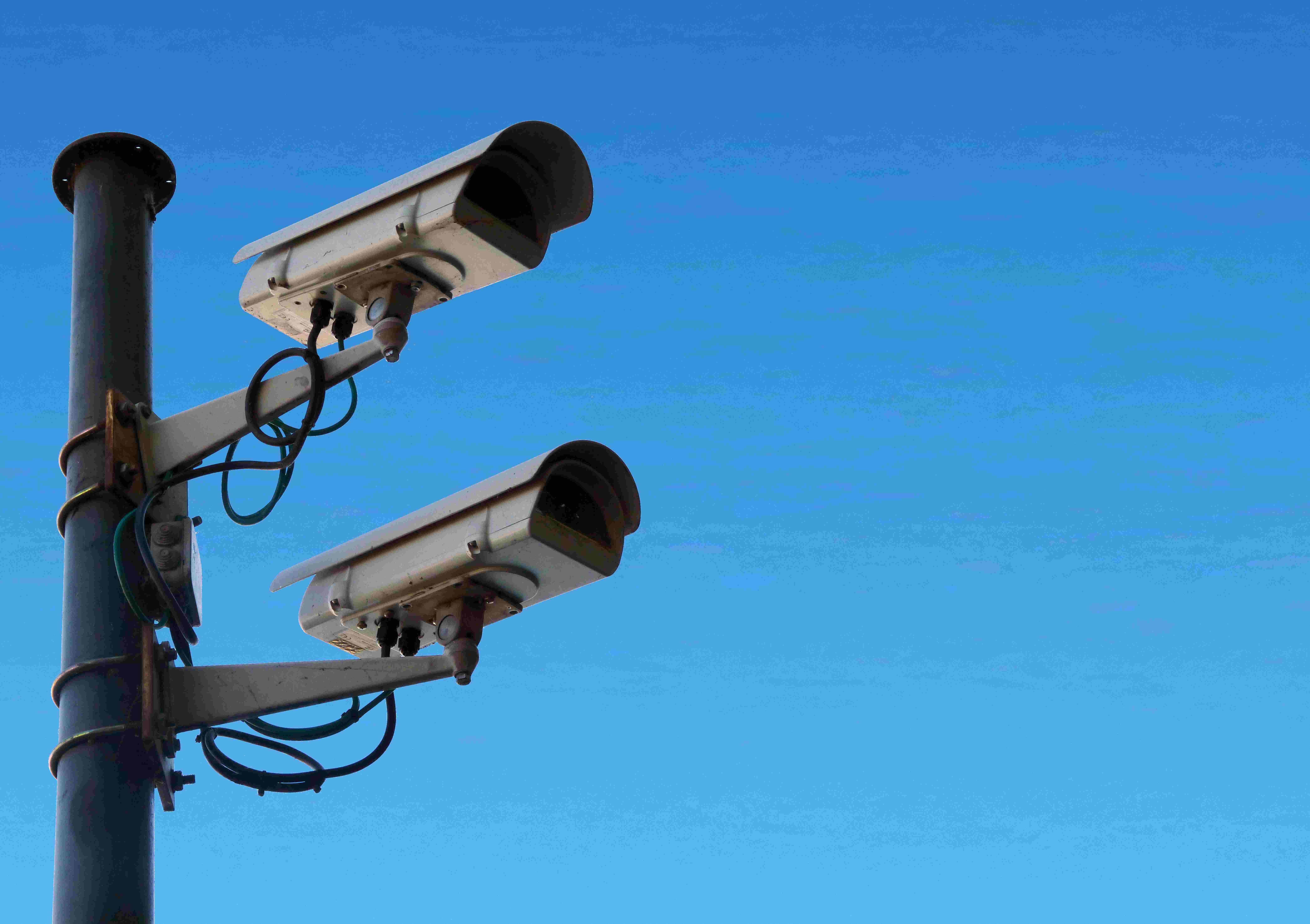
Beau: The house in Newport Beach hosts a salon, a discussion group. People in a living room talking about law, diplomacy, philosophy. Lately, they’ve been talking about cameras. Well, a certain kind of camera. Some of them fall into the category of license plate readers. Others are straight-up surveillance devices powered by AI. This letter, the letter they got told them to stop talking about the cameras.
Aaron IG CLIP Cities move closer to putting cameras on garbage trucks: You might be next too.
Beau: This generation’s Walter Cronkite has me thinking about another newsman, older and admittedly fictional, and a lot closer to how I’m feeling at the moment.
Network Clip: We know things are bad. Worse than bad. They’re crazy. It’s like everything everywhere is going crazy, so we don’t go out anymore. We sit in the house and slowly the world we’re living in is getting smaller, and all we say is, “Please, at least leave us alone in our living rooms. Let me have my toaster and my TV and my steel-belted radials and I won’t say anything. Just leave us alone.”
Beau: Smart TVs know what snack foods you like and how your marriage is going. You know this on some level. And the TV was so cheap. So you’re okay with it? I mean, I’m sorry, but that is the logic. They have cameras and microphones, these new TVs. New. They’re not so new anymore. That’s why they’re so cheap. The real money is in what that TV can learn about you by being in your house and transmit to the company that manufactures it and then can be sold. What do you do when “just leave us alone” becomes, “I want that TV”? When “we need to stay safe” turns into a business model that sells cheap cameras, telephones, TVs, and then all that stuff gets turned against you? It’s all out there. It’s all deployed. And it’s all defended tooth and nail by the best lawyers money can buy.
Network Clip: I want you to get mad. I don’t want you to protest. I don’t want you to riot. I don’t want you to write to your congressman because I wouldn’t know what to tell you to write. All I know is that first you’ve got to get mad.
Beau: Okay, that’s Howard Beale, right? Fictional character played by Peter Finch in the 1976 Sidney Lumet film Network. This week, we’re talking to someone who embodies the spirit of an earlier time when the news changed minds. Someone who can incite people to change, to throw their windows open and shout.
Network Clip: I want you to get up right now and go to the window, open it, and stick your head out and yell, “I’m as mad as hell, and I’m not gonna take this anymore!”
Beau: I’m Beau Friedlander, and this is What the Hack?, the podcast that asks, in a world where your data is everywhere, how do you stay safe online? Aaron Parnas, his Substack, The Parnas Perspective, is the number one ranked news Substack out there, and he really might be as influential as Walter Cronkite nowadays. And Aaron’s followers include a huge cohort of people who remember seeing the most trusted man in America. They actually saw him on TV. They remember when he stopped doing TV. We no longer live in a country where that title is possible, kinda, as a result of the cultural balkanization that’s been dividing the country since the civil rights movement. Balkanization just means it’s the Balkans, right? Yugoslavia, Syria, the Croatia fractured. Anyway, regardless, Aaron Parnas may be the closest thing we’ve got. Aaron, Welcome to “What the Hack?”
Aaron: Thanks so much for having me. Super excited.
Beau: Now, you’ve written a book, you have enough followers to win an election. If a network came to you right now and said, “You can have a show,” what would your answer be and why?
Aaron: I would say number one, it depends on the network. Number two, it depends on what the show is. Number three, it depends on how much ownership I have over the show and over my platform still and over myself. I would never foreclose the opportunity to have a nightly show on a network. I think I wanna reach as many people as possible. But I won’t only have a show on a nightly network. I still want my Substack. I still want my social media platforms. I still wanna develop this independence. And so it’s not a no, it’s just a let’s figure it out.
Beau: So we played a clip in the beginning of you announcing you were going to bed. What are your hours? It seems like you’re on 24/7. You and your wife have a new baby. I mean, congratulations.
Aaron: She’s three and a half months old, yeah.
Beau: I have two children. They’re all grown up now, but I remember what it was like. So honestly, how on earth do you keep up and what are your hours?
Aaron: My hours are 24/7. I mean, it’s whenever the news is breaking. Those are my hours. And there’s some days that are slower, some days that are longer. Some days I only have to record 10 videos. Other days I’m recording 25 videos. And so it just depends. I’m always online, but it’s not like I’m sitting at a desk all day working. That’s not really the job. It’s more of just like, I can be out having ice cream or watching a movie with my wife and my daughter, and if something pings on my phone, I’ll run out, record for a few minutes, and then come back and continue being with them. So it’s being on the clock 24/7, even if I’m not necessarily working 24/7.
Beau: You weren’t always associated with liberal causes. As a law student, you interned at Greenberg Traurig, the former law firm of Rudy Giuliani. You were a Republican until 2020. Your dad made big news not so long ago, really big news. Lev Parnas was a prominent figure in the Trump Ukraine scandal and other pressure things that happened in that neck of the woods. You cited a personal health scare and visits to underfunded classrooms as being pivotal in your shift to more progressive views. In your videos, you don’t always skew, obviously, to the left or the right, but sometimes you do. What’s your goal when it comes to the way you present the fire hose of news pointed at us today?
Aaron: I don’t really have a goal other than educating folks. That’s really the only goal I have.
Beau: Well, and that’s attracted a ton of attention. I can’t imagine all of it’s been positive, though. Do you have people coming at you? I mean, trying to come at you? Hackers or stalkers?
Aaron: Yeah, for sure. All the time. Every day I get death threats. Every day I get people attacking me.
Beau: And how do you balance that? You’ve said you are a new father. You go to the movies. These are all little facts that people can piece together to find you. How do you manage your private life when so much of your time is spent getting the news out?
Aaron: Yeah. I mean, listen, I think that balance to me is a fallacy. It really is. I don’t need balance, nor do I necessarily want balance. I just wanna do the best job that I could. I firmly believe that if you wanna be the best in whatever you’re doing, balance doesn’t exist. Work, like the idea of work-life balance is not a thing to me, nor should it be in a lot of ways if you wanna be at the top of any field. Just do the job and do it well, and if that requires you to be online 24/7, then so be it. I mean, that’s just what I chose as a career, so it’s the nature of the beast of being so high profile and being so public.
Beau: I don’t usually talk about my own career, but I was the editor-in-chief of Air America Radio, which was a liberal news source back in the day, before Huffington Post and as a result of some of the stories that I’ve done, the worst email I ever got was an email with a picture of me walking my children to school saying, “This is you, right?”
Aaron: That’s terrifying.
Beau: It was horrifying. So I think and have thought about my privacy and what I’m putting out there for a long time. And I imagine for you, that’s a thousand times more the case. How do you manage your privacy?
Aaron: I think at the end of the day, I wanna try to protect myself and my family as much as I can, and so I am very careful in where I record and how obvious I make it seem of where I live, of the places I go, the places I travel. I think at the end of the day, I wanna try to protect myself and my family as much as I can, and so I am very careful in where I record and how obvious I make it seem of where I live, of the places I go, the places I travel. I also use programs like DeleteMe to wipe my information off the internet because I think it’s important. I mean, with data brokers trying to obtain and sell information every day, it helps at least in one part keep information off the internet, so that’s a good part of it. But overall, it’s a multitude of techniques, right? It all kinda comes together to help protect me and my loved ones. So like the other day, a few months ago, I was walking down the street in Washington, DC and someone tried to take a picture of my baby. And I was like, “Oh, you could just stop and say hi, and you don’t have to be weird about it and pretend to be on the phone and take a… Whatever.”
Beau: What did you do in that moment? ‘Cause that is pretty shocking. So someone actually kind of walked up and like shady style—
Aaron: Yeah, you can tell when they’re trying to take a picture of you. So yeah, I mean, like I didn’t do anything. They just walked away. And I think in other respects when you build an online platform like mine, you build kind of parasocial relationships with your followers, and so oftentimes I would get questions of like, “How come… Like, what’s your baby’s name?” Or like, “How come you won’t share your wife’s name?” Or like, “More about your relationship.” And in each of those moments, it’s kind of like I wanna keep some semblance of privacy.
Beau: Aaron Parnas, as we’ve said a few times now, has been compared to Cronkite. Rolling Stone said it first, and then half the internet repeated it. We all want that, right? We’re all waiting for Superman. That’s a different thing. Anyway, it’s about his reach, I think, but it’s also about his impartiality, just the facts. 30 seconds or a minute or whatever, no opinion, next story. And it’s meant as a compliment. The highest one journalism has really, right? The most trusted man in America reborn in a TikTok feed.
Aaron: I just try to provide the facts to people. I don’t really share my opinion much on my Substack at all, which is my primary platform. I really think one of the biggest problems in American society these days is the fact that civics, ethics, and media literacy aren’t taught in schools across the country. And so young people are growing up in a society where they’re not taught how to find accurate news, how to decipher what is true from what is not. And so if I can kind of bridge that gap just a bit for folks, then I’m doing my job.
Beau: So when you report on roving surveillance cameras in people’s neighborhoods, I mean, literally roving on garbage trucks. I mean, they’re not there yet, but whatever. People are definitely gonna listen. Same with the explosive diarrhea. I get it. Now, but here’s the thing. We don’t often get to catch shooting stars on this particular podcast, nascent stars. So I don’t think I’m alone in wanting to know a little bit of the nitty-gritty, like how you actually work. What’s the Parnas newsroom like?
Aaron: The way I kinda operate is I have in my house multiple screens up. One screen is a ticker of every single Truth Social post, Twitter post of every member of Congress, every world leader that I’m constantly getting notified about. So that’s part of it. Then the second screen has C-SPAN running 24/7, so I’m constantly watching what’s happening on Capitol Hill, various campaign rallies. That’s another part of it. I’m a lawyer, so I have access to Westlaw, PACER, all of these legal research platforms. I constantly am tracking that. That’s another part of it. And then I have my investigative places where I go regularly. ProPublica does really great work, so I read ProPublica every morning to see what stories are out there that I can help amplify. And then the final thing is, folks email me tips all the time, and so I get thousands of emails all the time of tips from inside the government, inside agencies, inside corporations, outside the government, that I vet and I try to put out where applicable. So that’s kinda how I curate. As far as the stories I choose to cover, there are times where I feel like if I’m reporting on doom and gloom for 10 straight videos, and I come across a story that’s like, oh, Taco Bell’s removing certain ingredients because of fears of explosive diarrhea. Like, I know that’s gonna get good engagement. It’s a funny story, and it is news, and so I share it, just to get some lighthearted moments every now and then as well.
Beau: Aaron has found a way to put the news together that rivals Taco Bell’s science of craving, is it crunchy and salty and whatever, fatty, minus the bad lettuce that causes explosive diarrhea. And people are listening, and he’s a lawyer, and he used to be a Republican, and now he’s not. But he’s not a raving anything. He’s a news guy. He’s a 24/7 guy. He’s a really smart guy. And I know this because sometimes he shows his cards. And recently, when he did just that, I knew he was an ally for the work we’re trying to do on What the Hack. It was when he started talking about that garbage truck. Now, back to Newport Beach, that house I told you about. It belongs to a group called The Saturday Salon, which is a private group in America that meets regularly in America to talk about things that matter to them, some of them happening in America. They’re not activists or hackers. They’re a salon in the really old sense. Not a hair salon or a nail salon, but an 18th century or 19th century group of people who like to think. Chairs, maybe comfortable chairs in a circle. I have no idea. I’ve never been there. Big questions, probably small questions, too. Drinks, maybe. I don’t know. Maybe they don’t drink. Friends, an intellectual speakeasy of sorts. Sad we live in a world, a day, and an age when intellectuals or just people who think need to hide out to do said thinking. But anyway. A few weeks back, the topic was privacy, the rise of government surveillance, license plate readers, and other even more invasive AI-powered cameras going up in cities all over the country. We’ve talked about this scourge on our collective privacy several times on this podcast. Well, so as I mentioned earlier, a letter arrived soon after they started talking about license plate readers and AI cameras. So there was a mole, I guess. Just like in the civil rights movement. There was FBI, always FBI agents at the cool civil rights meetings. Anyway, the letter demanded that they stop. Crazy, right? Stop. It’s so abstract. I mean, to me, to this Constitution-aware podcaster, not trespassing, not hacking, not breaking anything, just, “Hey, stop analyzing. Stop discussing. Stop speculating.” Those are the letter’s words, essentially. Essentially. Go ahead, you can call me out. They told this discussion group that they should stop thinking out loud together in a group about how surveillance companies operate, or at least this one in particular. Now, I’m reminded of R.D. Laing’s three rules of a dysfunctional family and like, okay, what’s the dysfunctional family now? I don’t know, maybe our society. So the formula was really simple. Rule A, these were rules to protect a dysfunctional family or system. Now remember, Flock Safety sent a note saying, “Don’t.” What? Don’t. Don’t talk about us. Do you know how insane that sounds? Well, R.D. Laing was a shrink, so I guess he knew how insane it sounded. Rule A: Don’t. Rule A1: Rule A doesn’t exist. Rule A2: Do not discuss the existence or non-existence of rules A, A1, or A2. I’m sorry, but I don’t want to live in that world. No thanks. But I do want to live in a world with a person like Aaron Parnas who doesn’t take sides. He just says what’s happening. And what’s happening is weird.
Beau: Last year, reporters at 404 Media found that a Texas police officer had used surveillance cameras and same company to run a warrantless nationwide search for a woman.
News 4 San Antonio Clip: These devices can scan thousands of license plates every minute, usually for things like solving motor vehicle theft crimes or missing persons cases. Now, police departments across the nation can use each other’s license plate readers, but they have to give a reason. And after this latest incident, experts say those reasons are gonna become a lot more important. Illinois leaders say a sheriff’s office near Dallas tapped in to more than 83,000 license plate readers nationwide looking for a woman they say had a self-administered abortion in Texas.
Beau: The surveillance company’s CEO called the reporting, quote, “unequivocally false,” close quote, and said her family had asked the police for a welfare check. Welfare check, well, ’cause she’s crazy, right? Two statements. That’s a fact. Both were delivered with total confidence. One of them’s completely false.
News 4 San Antonio Clip: Flock Safety says they would support legislation that would guide compliance expectations, statewide audits, and privacy. The company tells me they’ve revoked the ability for several departments to search through Illinois’ license plate reader system, and they’ve also blocked some of those illegal searches. Later this year, the rest of the nation will get access to a tool that will alert them if there are suspicious searches.
Beau: So who’s telling the truth? And what is the truth? What’s misinformation? One person’s disinformation is another person’s I guess misinformation or truth. I think I know how your reporting plays into this situation because we’re at a moment where everything is fake news and alternative facts. And so your just the facts approach is really refreshing.
Aaron: The reason I started doing this work was because I had family in Ukraine when Russia invaded Ukraine, and at the time, I felt as though there was simply just wasn’t enough accurate information coming out in terms of telling the story of my family on the ground. And so I wanted to share their story as best I could, kinda combat some of the misinformation that was going on regarding what Russia was saying online and what Russia was saying regarding Ukraine and NATO and all that jazz. And so to the extent that I was able to do that, that’s why I started this work.
Beau: And how does that misinformation— I mean, that is still a big part of your work. I see often you’ll come on and say, “Here’s what people are saying. Here’s what we know.”
Aaron: Yeah. I mean, listen, I think it’s interesting. Nowadays, I don’t try to combat misinformation or disinformation. I don’t believe that’s necessarily my job. For example, when the president of the United States comes on Truth Social and says something, I report that he said that. The fact that he said it is true. Whether or not what he says is true is immaterial to the fact that he said it being true. And so if someone comes on my platform and says something, do I try to combat misinformation? If it’s blatant and obvious, yes. But oftentimes these days, it’s a slippery slope. What one person describes misinformation as someone else may not. And so I try to not get on that slope and slide down if I don’t have to.
Beau: I know you don’t like doing commentary, but I’m curious to know, like, you must have a thought about where…Section 702 is a great example. We’ve done a lot of coverage about this particular law. It’s part of the FISA framework. If you wanna go back and listen, you can listen to the Surveillance in America series, specifically part four, No Warrant Required. Where do companies fit into the framework of our right to privacy in this country when you have this complete loophole to the Fourth Amendment where law enforcement can just buy information about people they’re interested in from a for-profit company?
Aaron: Yeah, so, the loophole is a problem. But I think for me, Section 702 of FISA is less about the loophole and more about kind of balance between ensuring national security versus privacy. You don’t have, in the United States of America, a complete and absolute right to privacy. You don’t. No court has ever held that. That’s not what the Fourth Amendment says. That’s not what the United States Constitution provides. You have a right against unreasonable searches and seizures. That’s what the Fourth Amendment says. And so, the question is whether or not using 702 would constitute an unreasonable… A, whether it is a search and whether it is a seizure. That’s step one. And then number two, whether that search or seizure is constitutional under the Fourth Amendment. I think the question is not should we get rid of 702, but rather the question is we should provide more transparency into the FISA process and to the FISA court, especially for those going through it. So for example, right now a US attorney can impanel a grand jury outside of FISA, just a regular grand jury. A grand jury can conduct operations in complete secrecy. You’ll never know you’re being investigated. They can subpoena your phone records from telephone companies. They can do all of that. They can get a judge to sign off on a traditional warrant. You will never know in a lot of cases you’re being investigated until they come knocking on your door to arrest you. FISA’s very similar. Now, the only difference with FISA is that oftentimes the warrant isn’t for your communications, but rather the communications of a foreign national, and your communication gets swept up in it. And that right there is the problem. I think that if you have a stronger FISA court, or you have more transparency into the process where Americans can go and know when their communications… if there’s a way that they can know when their communications are being sought out, and can challenge that legally, then I think we have a stronger process. I don’t think you do away with 702 completely because it does provide an important part of our national security apparatus. I just don’t like any scenario where the government can just say, “Oh, we’re not gonna disclose something because of national security reasons.” No, you gotta give more transparency in my opinion.
Beau: Does FISA fall into that category of like, how do you keep a nation safe from the kinds of threats that FISA was designed to protect us from without in that same dragnet, bringing in some people who don’t belong in the dragnet? The argument is like, well, we have to keep safe, and so the price is yes, we’re gonna be looking at all your emails and phone calls and texts. It seems unreasonable to me. It seems to me like we’re farther along than that.
Aaron: That’s why you gotta instill more transparency into the FISA process. And I think that if you’re going to get an American’s data and information as part of it, then it needs to be covered by the traditional Fourth Amendment protections. But you can’t just get rid of FISA completely because then that takes a critical… And I’ve spoken to FBI agents about this, current and former, who all say that FISA’s a necessary tool in their, for example, transnational human trafficking cases, right? If you’re investigating an Epstein situation, you need FISA in a lot of ways to get critical evidence. And so there has to be a balance and that’s up to the Congress to figure that out.
Beau: So I’m guessing you can see why I wanted to talk to Aaron. He is the Walter Cronkite of Substack. But because of that particular kind of celebrity, he has attracted attention from a lot of people, including threat actors. He’s become the sort of person we talk to all the time on this show, a target, and someone specifically who has been targeted.
Aaron Clip: We have some news this morning. I woke up to a ton of messages this morning and realized that there are MAGA accounts creating fake AI-generated content of me spreading complete misinformation, and I need your help to spread the word.
Beau: We talk about deepfakes all the time because it’s a very real threat. Deepfakes are used for a lot of things, to extract ransoms, trick employees into compromising their place of work, destabilize society through disinformation and worse.
Aaron Clip: I have some serious news, and I need your help spreading the word. There is a video circulating on here and other platforms, an AI-generated video of me claiming that Iran has taken more than a hundred American troops captive. That is not my video. I never made that video. That story is not real. And yet there are people on this platform spoofing my voice, making it seem like I am making videos about news stories that aren’t real, don’t exist, and it is very, very scary.
Beau: Okay, of course, Aaron Parnas was targeted.
Aaron Clip: I was just tagged in an AI-generated video of me claiming I’m a doctor giving medical advice, and it is terrifying because some people believed it.
Beau: And of course, he would’ve been targeted even if it wasn’t something allowed by Meta’s terms of service. Yep. The problem we talked about with for-profit surveillance companies applies a gazillion-fold to opt-in volunteer, “Me, me, me” surveillance companies like X and Meta and TikTok, the ones many of us, me included, I’m included in that cohort, engage in every time we log into a social media platform and interact with the content there. A like here, a comment, whatever. Post content there, the stakes are even higher. You posters beware. Ages ago, in digital time, maybe a couple of weeks ago in reality, Meta announced a new feature that would allow people to use an AI tool to make fake images from other users’ images on Instagram.
NBC Bay Area: Meta calls its new product Muse Image. It’s a tool that lets other people use your images, if your Instagram is public, to create their own content.
Beau: In a simple AI chatbot, you could tag an account on Instagram and use the content from that person to create AI-generated or altered content, period. AI-generated images. Okay, so Aaron Parnas was targeted. He will always be a target. But the problem with the here and now of our digital lives is that we are all, all of us are targets, whether or not we’re famous or influential. Bottom line. Nothing illustrates that more than the most recent debacle at Meta. Almost as soon as the Muse AI whatever, the thing that allowed you to tag someone and do the stuff was announced, it was canceled because everyone got scream-y about it. Oh, everybody. The backlash was huge. All Howard Beales. And as of today, it’s no longer available. Pretty cool. But the thing that was super-duper creepy about that whole thing was that Instagram users were automatically opted in by default. It meant that anyone with a public account could have had this happen to them without their knowledge and without their permission. It doesn’t matter. That thing, that win, that Meta backed down, it’s all happening one way or another, which is why I’m always banging on about using DeleteMe and lowering your online profile and making yourself as hard to hit as possible. But, and this is the part that would make Howard Beale get up out of his chair: while Meta was apologizing instead of asking for permission for Muse, saying they missed the mark or whatever, they were developing something way worse. Yep. Say hello to the prototype Meta calls super sensing. An ugh, a new thing for their glasses with cameras in them, the smart glasses. They don’t need to wait for you to press a button or say a wake word to record. They’re just on, taking a photo every few seconds, like that TV that was so inexpensive, recording audio continuously all day so that you can later ask your glasses what restaurant that was you went to or what your coworker said when you were only half listening. Sound familiar? Yeah, it’s your TV set. It’s your toaster. It’s your smart toaster. It’s the garbage truck cameras that Aaron was talking about at the top of the show, and the license plate readers that we’ve been talking about for months. Just closer to your face and as Aimee Mann, the singer-songwriter if you don’t know her, said so well, “It’s not gonna stop till you wise up.” Currently, Meta’s glasses have a little white LED light that’s supposed to get activated whenever the camera’s on. The only privacy safeguard they’ve actually defended out loud, that little light. Reportedly, executives don’t want that light on this super sensing feature. Super sensing, which means the device built to remember your entire day—well, the platform built to remember your entire life and everyone you’ve ever known and their entire lives and how they intersect, and now this thing that’s remembering your day and everyone standing near you in it, which is their way of being your telephone in your pocket. Remember, stuff is happening. There’s redundancies to the way you’re being exposed. Anyway, it might do it without a light, no LED, without a signal, nothing to tell the person across the table they’re being recorded. Fun, right? Aaron Parnas might be the second coming of Cronkite, calm, credentialed, just the facts, the most trusted man in your feed. But it’s impossible for that guy to be completely Howard Beale-free, and that’s what I dig about him. There’s a part of him, even when he’s calm, that has to be the guy losing it on live TV telling us to be mad as hell. I mean, after all, they’re putting cameras on garbage trucks. Ugh. Cronkite got to be Cronkite because there were three networks and everybody agreed on the weather more or less. But voice is voice. Beale lost his mind because nobody was agreeing on anything anymore, and the only way through the noise was to yell. Aaron’s stuck doing both jobs at once, if you ask me. Deliver the news straight, no opinion, and also stop everything to tell you personally that somebody built a fake version of him holding a fake version of his daughter and put it in front of millions of people before he’d even had coffee. Which is just another way of posing the question this show asks every week. In a world where your data, your face, your voice, your kid’s face is everywhere, and companies keep building faster ways to use all that data without asking, how do you stay safe online? Aaron’s answer isn’t a settings menu or a piece of legislation. It’s to stand and deliver. Keep showing up. Keep saying what’s true and what isn’t, even when the guy in a video lying about him is wearing his own face.
Network Clip: I want you to get up now. I want all of you to get up out of your chairs. I want you to get up right now and go to the window, open it, and stick your head out and yell, “I’m as mad as hell, and I’m not gonna take this anymore!”
Beau: Aaron, it was a pleasure to have you.
Aaron: Thanks so much for having me.
Beau: And now it’s time for the tinfoil swan, our paranoid takeaway to keep you safe on and offline. Now, besides giving people dirty looks if you think they’re wearing those Meta glasses, which you should do, which by the way, are very annoying additionally because some people seem to think they make great earphones, which, you know, they don’t actually play in your ear. So if you happen to be listening to something next to me, I’m listening to it too, and I’m almost certainly not gonna like your music. So, ugh. Anyway, Meta is no longer forcing you into the slaughter chutes data-wise when it comes to that unwise AI play they failed to foist on all of us. But did you actually change your settings to protect yourself? When the news was correct and Muse was still there and they had already opted you in without asking you, and you were just open to legal social media malfeasance, I would call it. Well, if you didn’t, follow these instructions right now. I mean it. Like go to your Instagram account, go to your account, and then go to the hamburger menu at the top right-hand corner. That’s the three lines that are stacked. It’s called the hamburger menu. And then go in there and you’ll see a bunch of stuff. At the very top it’ll say Accounts Center. Ignore that. Saved, ignore all that stuff. Who can see your account? Ignore that. How others can interact with you? That. You’ll see something that says Sharing and Reuse. Now, click through that. Now, if you did follow the news last week, you already think you did this, right? So you turned off the AI stuff. You can see there’s all these options for how to share. It’s very privacy oriented, and this is something you might want to think about. But I want you to look at the one that says, “Allow people to create with and reuse your original audio on Meta AI.”
CLIP – Tecnologia: Technologia!
Beau: Okay, you’ve probably heard that particular sound happen before on Instagram or TikTok. It’s a meme. It’s a sound meme, right? It’s just audio that you can pick up. But it was a video that originally was just some dude posted on Instagram and that audio became available to anyone who wanted to make content with it. That’s this setting. It’s Reels. Turn it off. It says right here, “When this is on, anyone can create with all or part of your original audio on Meta AI apps and websites,” and you can turn it off at any time. Okay. In the land of people stealing your stuff left and right, just turn it off. Be a privacy protector when you can and we’ll talk to you next week. What the Hack is produced by a bunch of people. I’m one of them. Andrew Steven is another. And Sarah Huard helps out enormously from time to time. We’re available wherever you get your podcasts. If you are a regular listener to this show, and you don’t use DeleteMe already, I wanna tell you, you should. If you’re not and you want to, here’s what to do. Go to joindeleteme.com/wth. That’s joindeleteme.com/wth and get 20% off. I kid you not. 20%. 20% off. That’s joindeleteme.com/wth.
Learn More:
- Discover why digital privacy protection matters, especially for public figures.
- Read up on how cybercriminals use open-source intelligence against organizations and individuals.
- Listen to the previous episode on personal data exposure and online risk.
news?

Exclusive Listener Offer
What The Hack brings you the stories and insights about digital privacy. DeleteMe is our premium privacy service that removes you from more than 750 data brokers like Whitepages, Spokeo, BeenVerified, plus many more.
As a WTH listener, get an exclusive 20% off any plan with code: WTH.
Listen to Recent Episodes

This Week on What the Hack: Surveillance, Flock ALPRs, and the Panopticon