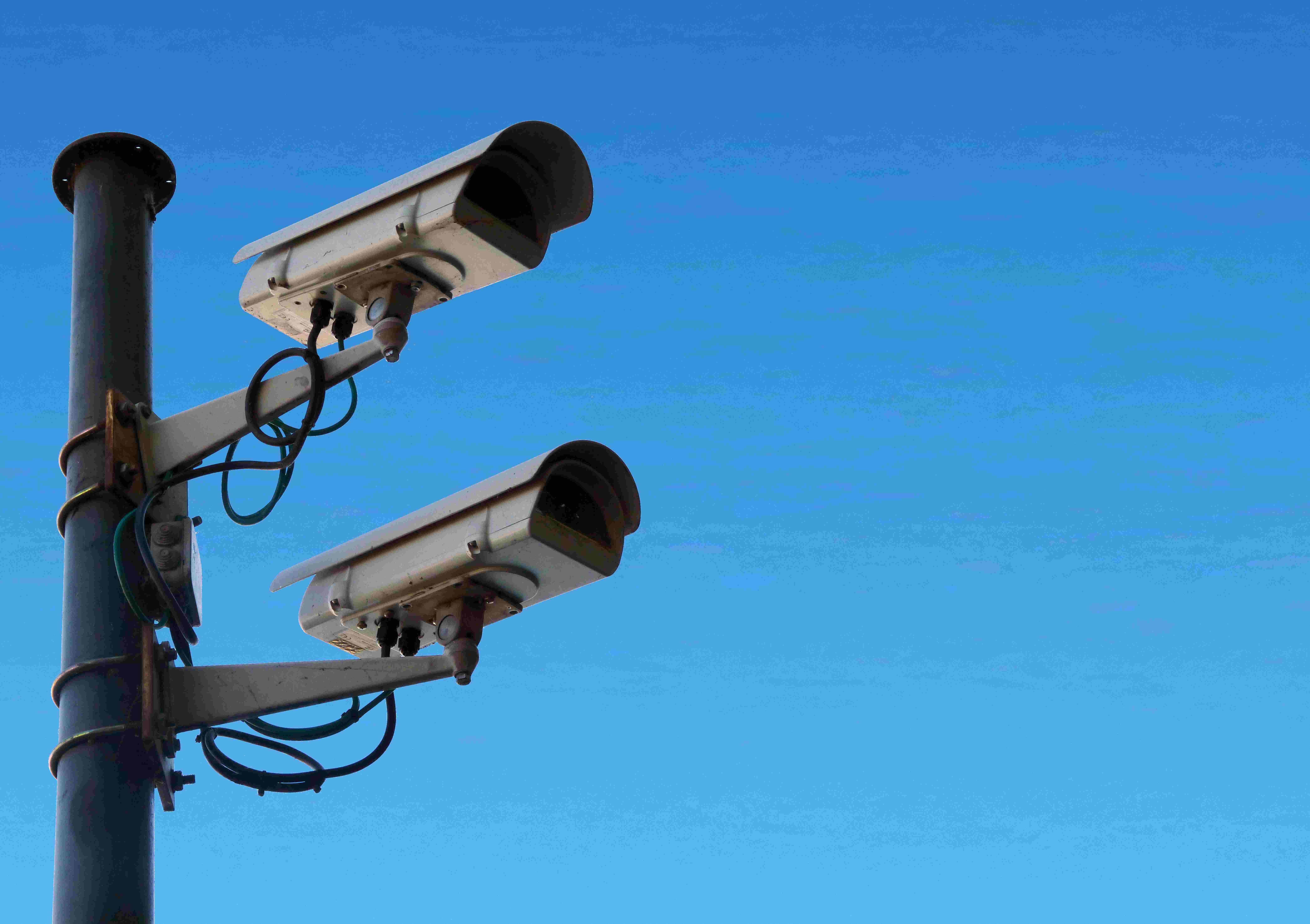
This Week on What the Hack: Surveillance, Flock ALPRs, and the Panopticon
This Week on What the Hack: Surveillance, Flock ALPRs, and the Panopticon
Worried about AI? Don’t trust Flock Security? You might get on a law enforcement list for that. Investigative reporter Daniel Boguslaw explains Big Tech’s push to re-label anti-surveillance camera activists and AI skeptics alike as threats to national security.
Episode 271

Ep. 271: “Are You Being Watched? (You Are.)”
“What the Hack?” is DeleteMe’s true cybercrime podcast hosted by Beau Friedlander.
Disclaimer: This transcript was auto-generated and may include minor errors.
Beau: This year, we’ve been talking about surveillance. A lot about details like where you drive, where you shop, what you buy… and all that data, someone has it and you never agreed to hand it over.
Daniel: Breached data sets and commercially available data with a program running the sorting mechanism for that stuff is horrifying.
Beau: Now, when it comes to the more granular stuff that law enforcement uses, the government no longer needs a warrant to get that stuff.
Daniel: The intelligence agencies really can get almost everything they need and want on the open market.
Beau: Now add AI.
Daniel: They really do have the capability to buy data on every American and use AI to sort it in real time and create rankings of entire populations and demographics.
Beau: And if you just share the opinion that you don’t like surveillance everywhere, that you just don’t like people watching everything you do, that might actually make you, according to some new reporting, a threat, a national security threat.
Daniel: The public is completely cut out from the decision-making process about what constitutes a threat and how the federal government prioritizes law enforcement.
Beau: I’m Beau Friedlander, and you’re listening to What the Hack?, the podcast that asks, in a world where your data is everywhere, how do you stay safe online?
Start/Intro
Beau: Daniel Boguslaw is an investigative reporter who’s written for “The Intercept,” “The American Prospect,” and “The American Conservative.” He has a Substack called “Deeper States.” You can imagine what that’s about. He’s a reporter who gets his hands on primary documents, stuff that most of us don’t see anyway: Homeland Security threat bulletins, FBI contact lists. And his beat right now is how the government and the companies that it contracts with are starting to coalesce around this idea that people who don’t like what they’re doing are, in some way, dissidents or even worse, a threat. His most recent reporting is about anti-technology extremism. I do know a little bit about that over the course of my career, and when we’re talking about Flock cameras and the pushback against that and Axon and surveillance pricing, none of that is extremism. That’s just people not liking some really creepy stuff and wanting it to stop. So anyway, Daniel Boguslaw has written for all the places that I read and I’ve never met him, and I don’t really understand that. Now he’s in Germany, and thanks to technology, we’re gonna be talking about technology. So Daniel, welcome to What The Hack?
Daniel: Thanks for having me. Great to be here. I think it’s strange that we haven’t crossed paths before. I know you want to talk about my articles, but I kind of wanted to talk about your journey and travel some.
Beau: Yeah, well, I tend to travel at the scrim of every wooded area at night, so it’s easy to miss me.
Daniel: I’ve spent a lot of my career in the daytime, and I’m moving into sort of darkness, nocturnal travels away from annoying people and into my own realm. So again, this is another point of meeting between us. So anyways, you’ve been involved in publishing books for a long time.
Beau: We’re not gonna do much of this, but for people who’ve been listening to this podcast for five years, I guess you deserve a cookie, because I never talk about my career. But I did have a small press, independent publishing house.
Daniel: But this is a good segue, I think, into my reporting because there was something that you tried to publish that you… I feel like Nardwuar here. There was something that you tried to publish that you were not able to publish because of a very cantankerous man in prison.
Beau: This unnamed author that Daniel’s talking about is Theodore Kaczynski, who was the Unabomber. He was convicted for that. He was a serial killer. He was an anti-technology crusader ish. He was alone in the woods. So there’s a lot of lore…
Daniel: …bombs to professors who were just working on technology that he thought was evil. But ironically was kind of still very small scale stuff, right? I mean, he was targeting like nanochemists, nanobiologists, people trying to build really small scale things. So even his own logic was kind of– His self-reported logic was even out of step with his actions. But my reporting is about these new categories that are drawn directly from him and expanded to a much more normal swath of the population.
Beau: Well, but I think that’s where the overlap is, Daniel, is that Kaczynski, operating by himself from his cabin in the woods, that is not how Che Guevara would’ve started a war against something that needed to be taken out.
Daniel: Yes. And I mean, even the sort of intellectual craftsmen of these new emerging threat categories, right? These new extremism labels, the academics writing about this so-called rise in anti-technology terrorism, even the academics formulating this stuff, kind of give a nod to the fact that underneath the sort of psychotic homicidal ideation that Kaczynski had, there were these accurate critiques of, okay, we’re getting more alienated. This technology is not always created with some kind of democratic impetus or some kind of democratic control. It can be largely unregulated or only regulated by the corporations that are creating it. And so even the people who are now kind of ringing this alarm bell about very broad swaths of the population that are concerned about the rapid rise in AI or data centers or Flock cameras, even they recognize that there’s something there that is a legitimate concern and a legitimate fear.
Beau: Okay, so that’s the territory we’re getting into today. We’re talking about license plate cameras, license plate readers, data brokers, and AI. The way that that is possibly a really dangerous mix ’cause AI can sort through stuff so quickly. It means that where you drive, where you shop, who you talk to, it’s all being known, right? It’s like always already being known. Sold. And according to my guest this week, it’s being used to decide who counts as a national security threat now. You know my beef. Whether you’re on the left or the right, it’s your data. Nobody asked for it. Nobody asked, but they did. They took it. It’s a problem. I am politically neutral that we’re talking about privacy, we’re talking about surveillance, we’re talking about technology. People on the left and right of the aisle hate it equally except for people who benefit from it. So what is this American Conservative listing I saw for you? You don’t strike me as a… It was the first thing I was like, “Oh, yep, yep. Oh yeah, Intercept. Oh, there he is at The American Prospect.” And then I had like a record scratch moment when I saw The American Conservative. Do you identify as a conservative these days?
Daniel: No, not at all. But I will say that I am very interested in speaking to sources from all political denominations, but also speaking in my reporting to people of all political persuasions. And I think the movement against oppressive technology we’ve seen in this country has been a bipartisan movement. It has been people at the most local level going to their city councils and really coming together. And I honestly find the movement against data centers and against ALRP license plate readers to be like a really beautiful de-escalation of political polarization. So look, I mean, you read my stuff. I’m of the left. I came up through the left. I have a lot of gripes with the left. But I have no problem writing and speaking to the right.
Beau: And going back to my publishing career and Theodore Kaczynski, neither did he. And it was one thing that I think was actually very insightful on his part. Which was that the right and left when it comes to technology are an unimportant distinction. Because technology has become the exclusive property of oligarchs now. And it affects right and left. And I will tell you, my test for these things has always been what I call the checkout line test, where I will turn around in a busy store and say, “What do you think of a private company knowing where you are all the time?”
Daniel: Yeah, and I just… some of my life experience has just… it sounds cheesy and it makes a lot of people mad when I say this, but a very formative experience for me was working on a fire crew in Oregon, in like the middle of nowhere Oregon. And it was a very diverse, racially diverse, politically diverse group, and you go out into the woods for three weeks at a time and those political signifiers really fall away pretty quickly, you know?
Beau: Speak to that because that was the thing that jumped out at me from your resume, was the fact that you’d been a firefighter in a pretty dangerous setting. Is it just silly for me to say that you’re still doing that, but you’re doing it with technology?
Daniel: Yeah, I’d say that’s accurate. I mean, I really miss that work and being out in the woods. I spend so much time unfortunately locked into my computer at my desk, which I really hate. But yeah, I like poking big bears, whether it’s in the woods or online.
Beau: Well, we talked about Flock, and I was fortunate enough to talk to Ben Jordan a few times right after he began his reporting, and then it all took off. This was the year that Flock became a populist symbol of technological overreach.
Flock
Beau: You’re still on that beat. You just did some Flock reporting. Tell me what’s going on.
Daniel: Yeah. It kind of all blurs together ’cause I’ve just been on this beat. We’ve seen the company and the CEO come out and make statements about activists who are opposed to Flock’s ALRPs. He said they were terrorists, right? And then he had to walk that comment back and apologize. But my question was sort of, how does the federal government view this stuff? What is the information sharing like between local and state police and federal law enforcement? One of the big concerns obviously that activists have had is that there’s a sort of federalization that happens with local and state police where they’re able to kind of search across state lines using Flock. All of a sudden you’re not just talking about the police being able to query the CCTV in your local town, but all of a sudden they are kind of tapping into this panopticon. So I was kind of interested, like, what does this national outlook look like from the inside? And I was able to get what are effectively Department of Homeland Security reports that are sort of laundered through these fusion centers, which are a post-9/11 Frankenstein creation that combines state and local police with the FBI and the Department of Homeland Security. They’re state-funded or placed, but then they get a lot of DHS funding. And so basically this showed that these fusion centers and therefore DHS and FBI were surveilling various anti-Flock activists.
Beau: There’s a map that Flock wants to get offline right now. There’s a Sparrow map and there’s reasons why that is important. Why are people talking about it right now?
Daniel: Yeah. So people basically said, “If you’re going to monitor us without our consent, we’re going to use the same technology to monitor you and see how you like it.” The piece I reported on was about an app or program that someone built which converts any camera which can connect to the internet with a program that uses AI to try to identify federal and local law enforcement vehicles using training on police logos. So they basically built a reverse Flock just for law enforcement vehicles, and I basically got my hands on documents showing that the Department of Homeland Security was surveilling the discourse and the users of this app. And at the same time, they were saying, “Well, there’s no threat. No one’s making any threat. No one is claiming they’re gonna use this to commit a criminal act, to commit violence.” And yet they’re putting this report together and shooting it out to like 80 fusion centers plus over 200 FBI joint terrorism task forces, plus 60-plus FBI liaison foreign offices. So you’re talking about this app that this kid built to surveil law enforcement vehicles in the same way that they’re surveilling civilian vehicles. No crime, no even premonition of a crime, and yet that kid and his app is now on a threat bulletin going in every single state.
Transition
Beau: Now, the kid who builds the map, well, that’s the Unabomber in the woods. It’s a unilateral move. It’s an interesting unilateral move, but it’s a unilateral move. Is it illegal? Did he do anything wrong? No. Could something illegal happen because of what he did? Totally. It could actually empower criminals to do better crime. If you know where the police are, you know where they’re not. So is it a threat to law enforcement? Totally is. But what I think’s not being asked is, aren’t all these license plate readers a threat to our democracy? When there’s this massive blow to democracy on this one side that is co-signed by government agencies, everyone thinks it’s great, even though it’s absolutely categorically unconstitutional. We’re talking about the Fourth Amendment. And then you have somebody who decides unilaterally, a cowboy, decides to go ahead and punch back. If they happen to be good at punching back, you got yourself a real mess. We’re starting to walk into the messy part of this, which is where it’s just gonna be a kind of war going back and forth.
Daniel: The thing I wanted to push back on is this idea that the guy who built Sparrow Map, this reverse-engineered thing, is a lone wolf or is like Kaczynski because if you go and look at his app… First of all, he makes no effort to hide his identity. I didn’t name him in my piece, but I basically said, “If you wanna know who he is, go look at his Instagram page. His name is on there.” But also I think that unlike Kaczynski, who basically said, “I’m the judge, jury, and executioner,” and sent bombs to random people, he’s saying, “Hey, if you wanna be involved in this project, here’s how you can be empowered.” I just think that we have civics lessons and “I’m Just a Bill,” and here’s how the official process works, but the reality is that no politician listens to your bill or wants to introduce your bill until there is a critical mass of people asking for it, demanding it, and raising awareness. I don’t deny what you said—you’re obviously right about it—yeah, some guy wants to rob a bank and now there’s a real-time map of where the police are. That’s every criminal’s wet dream. But at the same time, I think it’s really a useful tool to put pressure on the police and to show the police, “This is why we’re upset. This is what it feels like to be watched all the time.” I always think about what is the immediate effect of something like Sparrow Map: you have a real-time map of cops and you can speed or rob a bank. But really the thing that I find so cool and beautiful about it is it’s a protest. It’s a way of saying, “We reject this.” We don’t necessarily want to have these cameras watching police all the time, but it’s a way for us to show and register our discontent with the current system and put it on the map.
Beau: I wasn’t meaningfully joining the Unabomber to the guy who made the Sparrow Map because there’s no comparison between somebody who is judge, jury, and executioner to somebody who created an open-source tool that is making a social and political point. The connection between the two for me is more the idea of individual agency, even if it’s a small collective, versus these huge motions that are happening in big tech. And I do think that Sparrow Map could be dangerous. I do understand why law enforcement is reacting the way they’re reacting, because they’re scared. Same reason that Sparrow Map was created, because people are scared. The issue here is we’re seeing a collective fear around what’s happening.
Daniel: Right, but this is the logic of the post-9/11 counterterrorism state. The fact that there are going to be attacks is the justification for the endless expansion into new corners of American life, new demographics, racial demographics, political demographics, gender demographics, as we’ve seen with the Trump administration’s NSPM-7 and the envelopment of transgender people into a new terrorist category. My response would be, if you look at the way that European countries have decided to deal with terrorism as a society, they have acknowledged that you cannot prevent lone wolf attacks really fully, and that they are going to decide that as a society and as a culture, they prioritize their civil liberties above this idea of total social surveillance. And in my mind, it’s a very rational calculation too, because as we know with US counterterrorism strategy, there are counterterrorism tactics and surveillance methods that both work and are important. However, there are limits to what as a society based on the Constitution we should allow our security agencies to do. Going into every mosque in LA and New York and recruiting informants not only was proved ineffective for stopping future attacks, but also created tons of hostility within those very same communities. So my point is not to disagree that crime is real, that lone wolf attacks are real, or that people are radicalized, but it’s more about how we as a society want to approach that problem.
Beau: The idea that law enforcement put out these communiqués about Sparrow Map, again, some of them are overreactions, some of them are understandable reactions. The net result though is a kind of anything goes vibe, and that has always been the Wild West situation of big tech. Now, the reason I bring it up, the reason I think it’s important right now is because companies like Anthropic have been actually working on the problem set of identifying people who are anti-AI. And that should scare people.
Daniel: Yeah. And this is something that people really don’t understand. Some people who were really involved with Occupy remember a piece of this story from those days. During Occupy, there was reporting about the financial firms working with the Department of Homeland Security and FBI to monitor protesters in Zuccotti Park, and then also to monitor the Occupy movement nationally. So there were documents showing this direct back-and-forth communication with FBI and DHS, and that communication stream has been institutionalized since 9/11 with about a half dozen formal communication programs between corporations, the Department of Homeland Security, and the Bureau. There’s something called InfraGard. There’s something called DSAC. There’s something called HSIN. These are like Microsoft Teams, basically, like Slack, but for corporate security offices and federal law enforcement agencies. And the issue with this is that the average American citizen cannot really pick up the phone and get an immediate response from the Department of Homeland Security or the FBI over a predatory tech company screwing them over. But these companies are allowed to communicate what their perceived threats to their bottom line and interests are directly into the government. In fact, my reporting showed that they are hiring in-house intelligence analysts to monitor activists, to monitor stop AI, pause AI campaigns. And then those intelligence analysts are writing reports that then get shot into the bureau, get shot into DHS. Now you have the federal government taking their marching orders from these massive corporations. And maybe the public says, “That’s great. These companies are generating profit. That’s good for our economy.” But there’s no discussion about whether that’s a good thing and whether they should be allowed to do that. The public is completely cut out from the decision-making process about what constitutes a threat and how the federal government prioritizes law enforcement. After 9/11, white-collar crime enforcement in the FBI was decimated. Those special agents and those squads were completely reassigned to counterterrorism. And instead of shifting back—part of this issue was also at main justice and US Attorneys offices—instead of shifting FBI agents back to white-collar crime and corporate crime enforcement, they got reassigned to domestic terrorism. And now they’re working on anti-technology extremists. So the counterterrorism apparatus does not apply to corporations, and we don’t have a law enforcement system to investigate, prosecute, and hold these companies to account. What we do have is a system that is obsessed with seeing and finding threats in the communities of normal Americans organizing and exercising their constitutional rights.
Beau: And meanwhile, there’s a digital Lex Luthor possibly operating in the ether of AIs through all of these data centers. There is no true regulation of an industry that didn’t even exist. What does that sound like to you? That sounds like a lot of other things. That sounds like data brokers. That sounds like the idea of online privacy. We’re right back where we’ve always been, which is like you build the thing and you’re like, “We wanna bring it to market.” Well, it’s not secure. It can be compromised. Who cares? We need to get to market.
Daniel: I’m gonna take it even one step further by saying that it’s already basically fully finalized with the Frontier labs, but when it comes to data centers, there’s a huge push from the industry right now to have them fully enshrined in the critical infrastructure designation.
Beau: Coming up, how a warehouse full of servers, a data center, could end up with the same legal protection as the power grid, and why that could really matter for most of us.
C Break
Beau: I’m sure some people are going to be thinking data centers are not up there with water supply and electricity. So how is a data center considered part of critical infrastructure?
Daniel: The big talking point that I’ve seen from industry trying to get this formal designation, which would enshrine data centers with the same protection as military ammunition or the power grid or anything that’s critical for national security and national defense, is by pointing to one of the Iranian strikes on an Amazon AWS server data center in one of the Gulf states, I think it was Saudi. And by saying, “Look, this is the lifeblood of the internet. This is for maintaining patient care, maintaining schools staying open, maintaining the servers for the federal government.” Obviously there’s some truth to the total digitization and reliance of our society on the web and the servers that power it. But at the same time, the net effect of that critical infrastructure designation on data centers is to remove it from the public square, to remove it from our normal democratic process where people get to decide both at the local and federal level what they wanna live with, and to say, “No, this is too important for the democratic process. This is gonna be enveloped in national security language. The ownership patterns and the regulatory patterns are gonna become classified, and we’re just gonna remove this from normal people’s ability to govern.”
Beau: It’s a very similar move to what Flock did by interweaving their existence with law enforcement. Private company, but they become crucial to law enforcement doing their job. Like, “Wanna find the bad guy? We can show you exactly where he was, is, and where he gets his prescription drugs.”
Daniel: Yeah, and speaking of that, to get my feet wet reporting on this sort of criminalization of widespread opposition, these new threat categories, anti-technology extremism—now there’s a new one that started, I just reported last week, of anti-surveillance extremism.
Beau: So let me talk about anti-surveillance extremism. Come on. My daughters are 25 and 22, almost 26 the older one. And both of them know what a Flock camera looks like, and both of them will do some version of flipping the bird or saying cut it down to it. They may correct me on this. But I know my partner thinks that when she sees Flock cameras. And I clock them all the time. I’m like, “Oh, I guess they know I’m going to the hardware store.” People don’t like it. They do not like being tracked. Does that make me an anti-surveillance person? I don’t think so. That makes me nostalgic for 2024.
Daniel: Right. And does that make you an extremist too? The language here is also really important to clarify. People forget this, but the term used to be terrorist. During the Clinton administration, the term was domestic terrorist. They had the KKK, they had white supremacist gangs. And then the PATRIOT Act passed, and then it was still kind of terrorist, terrorist, terrorist. And then all of a sudden, right around Obama, it switched to violent extremist. All of a sudden that category blossomed, and then it blossomed again. They dropped violent. It was just extremist. And so the bucket of the logic of like anyone with any idea can be a terrorist is not to say that that’s completely untrue, but it is to say that we are applying this logic that has a very specific meaning of a terrorist group and extrapolating it to anyone who believes in anything and takes any idea too far.
Beau: Wow, and who’s not getting their ideas from these AIs? Oh my God, it’s so dystopian. If you’re thinking for yourself, if you’re saying, “No, AI, I don’t need your help with this particular thing I’m working on,” is that extreme? It’s starting to feel that way.
Daniel: Yeah, and who gets to say who’s an extremist? The companies that are on the phone with DHS and FBI every day saying, “We’re really worried about these extremists who don’t like our technology,” right?
Beau: Who have protected status or who are lobbying for protected status as part of infrastructure.
FBI etc
Daniel: One of the other stories I reported about two months ago was the FBI contract solicitation for integrating AI into their terrorist watch list. That list is about 2 million names, with I think 6,000 American citizens on that list, and I think that number has doubled according to my reporting. But the one consistent civil liberties concern that I hear from the Director of National Intelligence’s office, Department of Homeland Security, and FBI is that the marginal rules that once governed how the government could spy on people have been rendered completely irrelevant due to open market data procurement. The intelligence agencies really can get almost everything they need and want on the open market in a warrantless way, just buying it. And when you think about that amount of data combined with AI, and Kash Patel of the FBI has been very clear that it’s a priority to infuse AI into every part of the FBI’s operations, that’s when you’re really getting towards this total panopticon, right? Where they really do have the capability to buy data on every American and use AI to sort it in real time and create rankings of entire populations and demographics. To me that is something that I just think about all the time. And the sad thing is, even with that, there are still gonna be terrorist attacks, there is still gonna be crime, there is still gonna be violence. It is not gonna solve the problem. It is just going to create an ability for the federal government to go after people much easier.
Beau: The idea of this panopticon is something that comes up quite a bit. If you’re not familiar with it, Jeremy Bentham was a philosopher in England, and he created a prison where there was a central tower and spokes going off the tower. The idea was that a single guard could at any point see everybody in the prison at the same time. And when people talk about it in tech, they mean that we’re now in a technological panopticon where if somebody so chooses, they can just drop in on your life easily because your data is out there. There’s a way to find you and what you’re up to.
Daniel: The most essential part of the panopticon is not actually that everyone is being surveilled at the same time. It’s that they think that they may be being surveilled at any given moment. The core of the panopticon is actually that everyone is not being surveilled at every moment.
Beau: That’s why it’s an inside job, because if you think you are, you’re gonna behave differently.
Daniel: And so this is the fundamental struggle that I contend with all the time reporting on this stuff, which is on the one hand you wanna show people what they’re capable of and what the government is doing and what their plans are, but at the same time you can end up doing their job for them by creating this fear of total surveillance of people who are not criminals, people who are not terrorists, but who are like, “I don’t wanna lose my job.” So much of this stuff gets tossed around by people like me or you who can go on a podcast or write an article. And I think it gets lost that a lot of normal people who have no visibility of any kind are really afraid. They’re really afraid that something is gonna go wrong and someone’s gonna come and they’re gonna get a knock on their door and lose their job. As more and more people are one paycheck away from disaster, this idea of being watched is not about, “Oh, I’m gonna commit a crime.” It’s about, “What am I not gonna do because I’m afraid, because they’re watching me, because they’re gonna snitch on me for a parking ticket that I’m not gonna be able to pay because I had to buy groceries for my kids?” Their ability to use this technology for “1984” is still far off. I believe that our institutions actually still have a lot of life left in them. There’s a war on them in different ways, but they still exist, and they still function. The point should be to try to use these institutions to further safeguard them from that distant “1984” reality. But it’s a catch-22: you have to warn people about the extreme nature of these threats, but you also don’t wanna be the guy in the panopticon. You don’t wanna be the guy rattling the bars and warning people who have not committed a crime, who are not being watched, that they should stay home from that protest, that they shouldn’t Google left-wing zines or literature. You wanna make sure that people are still feeling empowered. So it’s a balancing act. My colleague Ken Klippenstein gets about a door knock a year from the FBI for an article he writes. What he does is he writes a goofy article about it to try to show people that you still have rights in this country. They can come, and they can scare you, and they can put your long file down on the table, but you’re still afforded the rights of the Constitution. It’s a precarious dance to try to report on it and give people the facts they need to stand up to it, but also to remind people that they have rights, and that they should go out, and that there’s a good chance that the guy in that tower is not actually looking at you right now.
Beau: There’s a very good chance that the guy in the tower is not looking at you, doesn’t know who you are. But the fear that it might be happening is well-founded enough for us to talk about. What are the best ways for people to push back right now?
Advice
Beau: What is the best… Even, Daniel, if it’s just a thought, the thought being most likely the dude in the panopticon is not looking at you, so go about your business.
Daniel: Yeah, I think a lot about what Sy Hersh said. Sy Hersh was repeatedly asked by reporters, “You’re reporting on the CIA, are you concerned?” And he always said in all of his interviews when he was asked that, “If I got concerned that they were reading my mail, which they probably are, and tapping my phone, which they probably are, then they’d be winning.” And so I try to go about my reporting and my life ignoring them, ignoring any concern and any fear about them intervening. He said, “If they ever do show up at my door, then I’ll talk to them when they do. But until then, I’m gonna live my life.” And I think that’s the mentality to carry with you.
Hersh Story
Beau: Well, it’s so funny you should bring up Seymour Hersh at the end of our conversation because while we were talking, I kept thinking, “Is this guy a young Seymour Hersh? Hmm, I wonder.”
Daniel: When I was at The Intercept, I felt like nobody there had any advice for me, and nobody there was doing the type of deep investigative work that I wanted to do. So on a whim, I found Sy’s address, and I showed up to his house unannounced. I was really beaten down. My editors had been killing all my stories, and I needed a win. So I go up… His porch door was open. I knocked on his door, and his wife came to the door and asked, “Who are you?” I said, “I’m Dan Boguslaw. I work at The Intercept, and I wanted to see if Sy was home.” She said, “Does Sy know you’re coming?” I said, “Well, no, I just thought I’d drop in.” She shakes her head and says, “Okay, I’ll go get him.” And Sy, in my memory, bursts through the door and says, “What the fk is the matter with you? You never heard of writing an email? What happened? You watched ‘All the President’s Men’ too many times? You really think this is how this works? This isn’t how this works. Pick up the phone. Call me like a normal person. Let me ask you something, kid. Has door knocking really ever worked for you?” And I said, “Well, Mr. Hersh, yeah, it’s worked for me one or two times.” He said, “Well, it’s not working now,” and he goes back inside and closes the door.
Beau: Did you have a subsequent conversation with him or was that the end?
Daniel: I eventually did. I eventually called him like a normal person. I didn’t tell him I was that same kid. I mean, he was pretty old so there was no recollection.
Back to AI
Beau: Seymour Hersh may have forgotten about Daniel, but big tech won’t. Because as we’ve been talking about, every click, every post, every address you’ve ever had, every picture, every place you’ve parked your car, every purchase you’ve made with a credit card, they’re all sitting somewhere, and now AI’s sifting through all of it, making all kinds of sense of it that never has been made before. The concern I think most people have is that their privacy somehow has been augmented by AI, and you talked about the FBI using AI in all channels now. Is it true? Is all the stuff that is known about us through data brokers, through what I call shadow data brokers, which are just big companies that have a lot of data, like Amazon… If you add AI inference to that, what does it do to our privacy, and have you thought much about it?
Daniel: I have seen the tip of the iceberg in terms of pretty serious tools for querying private data, and I’ve sort of seen into that world. I’ve seen a lot of the tools that are being sold. Just without AI, the ability with basic plugging in of breached data sets and commercially available data with a non-AI computer program running the sorting mechanism for that stuff is horrifying. That the private sector has access to this is horrifying. So the idea of integrating AI in any capacity into what I’ve already seen sorting that type of data is pretty unimaginable. The level of granularity and triangulation that you can get about what a person’s interests are… We’re not talking about age, sex, number of children. We’re talking preferences that you don’t even know you have, and being able to query those and identify those on a mass scale. It’s a real problem. At the same time, every time they talk about a Hugging Face incident or some big AI-driven exploit of a website or a company, there’s a quieter voice saying, “Well, think about how many patches this AI has plugged in the cyber defense.” Are there gonna be more services like DeleteMe that get more granular and expand? I think so. People are hungry for that, and I don’t know that consumer protection technology has kept pace with everything else. But I see a lot of DIY tech stuff on Instagram, and a lot of new startups trying to help people maintain their privacy. So I think there will be a kind of AI matching on the defensive side, if that makes sense. We’ll see how effective it is.
Beau: There almost certainly will be. And if people were listening, they shouldn’t be scared in the sense that the guy in the panopticon isn’t looking. He isn’t looking, but he really most likely, unless you’re Daniel, won’t be looking. What I hope you heard is that we are still in the infancy of this technology, and all the stuff that could keep it from going wrong is still working. So if you are concerned about this, do not worry about signing up for this or that Substack about it. Get yourself educated. Stay up to date. Become active. Write to your representatives.
Daniel: Just run for office. Hell, run for office on an AI governance ticket or on whatever the hell you want. The best politicians are normal, crazy people who didn’t go to Harvard or Princeton and go with their gut. So that’s my advice too.
Ending
Beau: Theodore Kaczynski left society and decided to change it from the outside, appointing himself prosecutor, judge, jury, and executioner. A real critique of technology got lost because of the violence. He was a terrorist, not a critic or activist. That’s what happens when you take that route. Daniel’s reporting suggests that the terrorism label may be misapplied these days. It’s a tendency, and it’s worrisome. Increasingly, criticism is being mislabeled as terrorism. A guy builds Sparrow Maps, he’s findable. All those concerned citizens going to city council meetings saying they don’t want surveillance cameras in their community, the people fighting data centers that sign petitions and show up at zoning hearings, those are activists. That’s the opposite of an angry man in a cabin in the woods playing God. Now, law enforcement says that the data it buys is commercially available to anyone and that buying it is legal. Let me add here that our forefathers deserve a break for not foreseeing license plate readers when they drafted the Fourth Amendment. Law enforcement says it helps them find suspects and missing people faster than they could otherwise. Maybe so. But we live in a democracy, and stuff needs to be decided first. “Legal” and “decided by the public” aren’t the same thing. No one asked me. No one asked you. But people are starting to ask our courts if any of this makes sense, and that’s exactly how democracy works. If disliking being tracked makes you an extremist, then the net is catching most of the people I talk to. Everyone’s gonna get this label, and that’s crazy. So do what Seymour Hersh did. Don’t worry if the guy in the tower in the panopticon is looking at you. Live your life anyway. He might be looking at you. Who cares? And if you’re angry about any of this, go to the meeting. Take Daniel’s advice and run for office. Do something legal.
TFS
Beau: And now it’s time for our tinfoil swan, our paranoid takeaway to keep you safe on and offline. This week, I’m taking it straight out of Daniel Boguslaw’s Instagram, which is drboguslaw. He does a lot of good reporting there. And what we’re gonna learn this week is how to delete your face from the ICE biometric database. Now, who wants to be in that? I don’t. All right, step one, navigate to Clearview AI and go to their takedown page. It’s www.clearviewai/privacy-and-requests. So go there. Step two, find your state and request your deletion. Step three, wait for Clearview to wipe your face. That’s it. That is a do-it-yourself opt-out. And if you’re interested in other do-it-yourself opt-outs, you can go to DeleteMe and find them. There’s tons of them. Or you can just use DeleteMe. It’s a lot quicker. That’s it for this week. I hope that you learned something, and reach out if you want to tell me something. Have a good week. Stay safe out there. Thanks for listening.
Learn More:
- Hear more about Flock Safety’s privacy issues
- Read about the Panopticon and how it relates to data privacy and surveillance in our recent blog post on “Why Doesn’t Gen Z Care about Privacy?“
- Find out how to remove your personal information from the internet with DeleteMe.

news?

Exclusive Listener Offer
What The Hack brings you the stories and insights about digital privacy. DeleteMe is our premium privacy service that removes you from more than 750 data brokers like Whitepages, Spokeo, BeenVerified, plus many more.
As a WTH listener, get an exclusive 20% off any plan with code: WTH.
Listen to Recent Episodes
This Week on What the Hack: Surveillance, Flock ALPRs, and the Panopticon