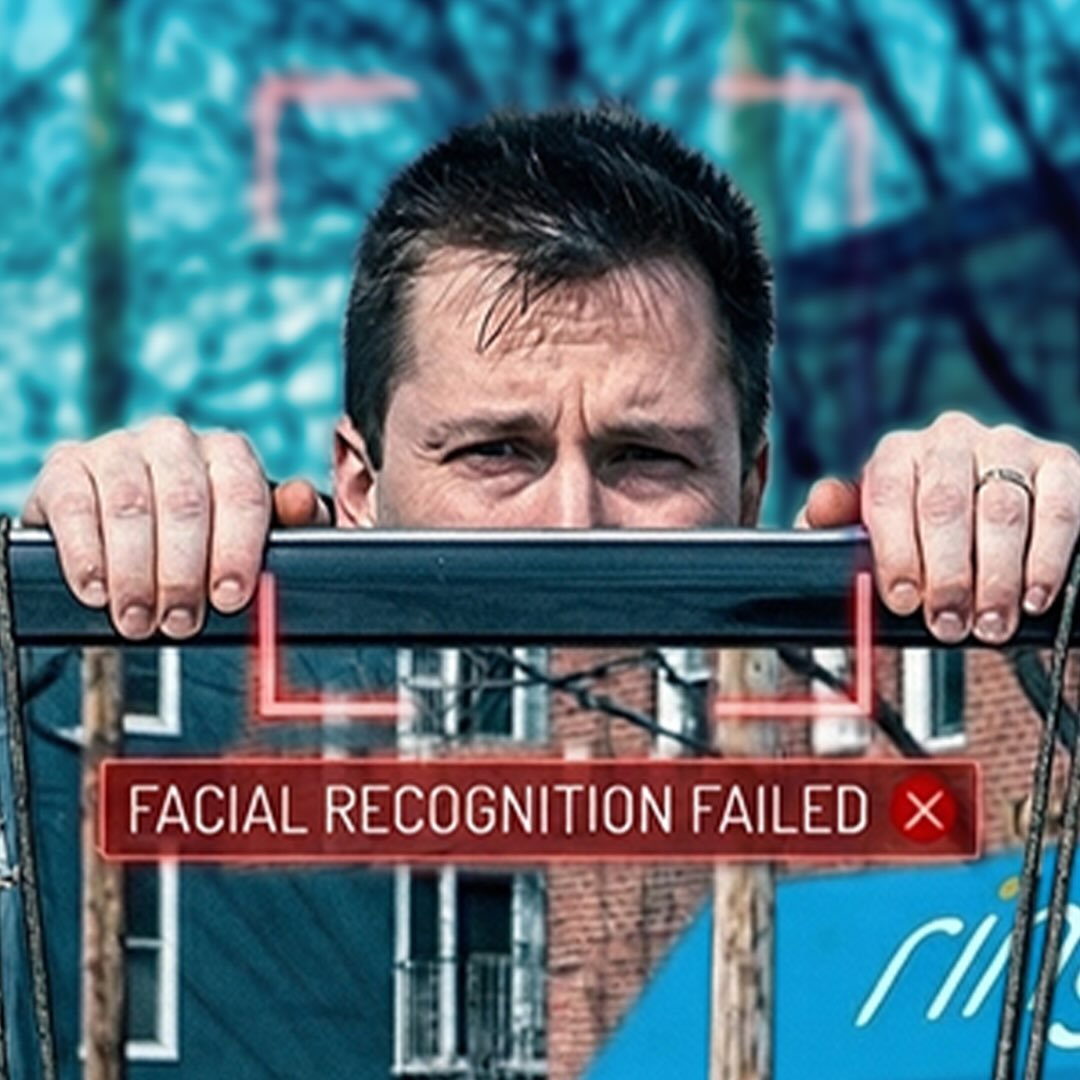
This Week on What the Hack: Holiday Shopping and Your Privacy
This Week on What the Hack: Holiday Shopping and Your Privacy
Your holiday wish list has cameras, microphones, and more pointed right at you, and you might not even know it. Jen Caltrider explains why smart glasses top her do-not-buy list and why the best gift this year might come from a thrift store.
Episode 277

Ep. 277: “Holiday Hidden Privacy Nightmares”
“What the Hack?” is DeleteMe’s true cybercrime podcast hosted by Beau Friedlander.
Disclaimer: This transcript was auto-generated and may include minor errors.
Beau: It’s about to be gift-giving season, which means you’re probably already drowning in ads telling you what to buy, and it’s all, oh, you know, connected stuff, smartwatch, doorbells, robot this or that. It’s all got a Wi-Fi connection, a camera, a microphone, and probably AI enhanced now, which means that the gift you give may be giving a lot of information to a third party.
Jen: Data collection has exploded over the past decade. If privacy’s dead, there’s an argument to be made that we’re getting pretty darn close. Well, what does privacy even mean?
Beau: This is old hat, but you know about the fitness tracker, right? That knows how well your sister sleeps or your brother or whatever, their heart rate and how stressed out they are. That doorbell camera, same thing. Amazon’s Ring paid $5.8 million to settle with the FTC after employees and contractors were caught watching customers’ private videos, including in their bedrooms and bathrooms.
NBC CLip: The toy’s maker tells parents to teach their kids not to share personal information with the robot, and yet it also encourages kids to work on skills like emotional regulation and self-confidence, which will undoubtedly involve some personal conversations.
FOX Clip: Even toys for younger kids, like a smart microphone, let’s say, that the child can sing into or a stuffed animal, can learn the child’s name.
Beau: And if you’re thinking about putting a bow on a new car, well, that’s the worst thing you could possibly do if you’re worried about your data. When Mozilla reviewed 25 car brands not that long ago, every single one failed on privacy. Nissan’s privacy policy even said it could collect information about your sexual activity. Think about that. Really? Why? Yeah, I don’t have a good answer.
NBC CLip: Amazon and its Ring products, Samsung, Microsoft Xbox, and Wyze were already on the naughty list, that’s because they either share your information with third parties, or they have security flaws that could expose your information to hackers.
Beau: And one gift that keeps showing up on a lot of wish lists, I hope, you know, not mine anyway, but for some people, is a pair of glasses with a camera, a microphone, and AI built right in, pointed at everyone you meet.
CBS Clip: Many popular high-tech gadgets that may end up being given as holiday presents can actually track, monitor, and record children, and now parents are realizing that it’s not just Santa who may be keeping tabs on their kids.
Beau: All right. We’re revisiting a conversation with Jen Caltrider before you make these decisions that are going to give your stuff away to everyone and anyone, or the people you love, yada, yada, yada. Consumer privacy cheerleader and creator of Mozilla’s Privacy Not Included, and all-around privacy genius, Jen Caltrider is here again. Because it turns out Santa isn’t the only one who knows when you’re sleeping anymore. Your watch knows, right? Your mattress knows. Your stuffed animal knows. Your TV knows, and maybe even your video games. But unlike Santa, they don’t give you anything. They just take, take, take. I’m Beau Friedlander, and this is What the Hack?, the podcast that asks, in a world where your data is everywhere, how do you stay safe online?
Start
Jen: Hello
Beau: Jen Keltrider, Jen Caltrider. I’m gonna sing the Jen Caltrider song.
Jen: Can’t wait to hear
Beau: We just did. That was the whole thing
Jen: Oh, well, it’s excellent
Beau: ‘Cause I was just in the woods and all of my words escape me when I’m in the woods. We were like maybe two miles in, and there was a coyote poop in the middle of the trail
Jen: a lot of coyotes where I live. Like, we see them a lot, and they’re like just creepy animals.
Beau: are. They’re sneaky little weirdos
Jen: Yeah. And maybe I watched too much Wile E. Coyote as a kid or something, but yeah, they’re like, I’m not particularly afraid of them for me, for my dogs for sure, but like they’re just kind of like creepy, you know?
Beau: But speaking of Wile E. Coyote, we are in the business of trying to catch the roadrunners of privacy hard behavior, right? And I am the proud owner of two deactivated Meta accounts. And yep, ’cause I know it hurts them. I know they don’t want them deactivated. So the other thing that I am the owner of is a Messenger account that wasn’t deactivated, and the most hilarious part about that was my ex-stepmother, who is now deceased, just asked me if I wanted $3,000 on Messenger
Jen: Ouija board st right there
Beau: Or a coyote. It’s probably what coyotes do all the time. They’re like, “Hey, you want $3,000? Just come in the woods, dog.”
Jen: Yeah. That’s what coyotes do with Ouija boards is they ask you for money on your dead ex-stepmother’s Messenger account. That’s some, like, that’s a pathway there
Beau: That is a pathway. But speaking of pathways, Ouija boards do not come with privacy policies because they’re analog. I bet you have some thoughts about games where you might. It is, you know, people are about to start shopping like crazy with reckless abandon, emphasis on the reckless. What in the game department,
Jen: So we’re talking video game consoles here because you can still go out and buy Uno and be safe. But if you’re playing, say, Uno on your PlayStation, there might be a privacy concern or two
Beau: The one game that I did play for a while when I was very, very nervous. And so I have to say, got into the Candy Crush landscape, and
Jen: Oh. I haven’t read Candy Crush’s privacy policy, but I’m gonna wager that Candy Crush is collecting some information on you and probably using it to make money off of that information it collects on you. Yes.
Beau: All right, so what’s at risk in that kind of situation?
Jen: Well, I think in the scope of things, your Candy Crush addiction, is only mildly concerning from a privacy perspective, given that all the information our AI chatbots and our cars and everything else that’s collected on us happens. But, you know, I would say that, you know, it’s an app that you put on your phone. Again, I haven’t read Candy Crush’s specific privacy policy, so I’m talking a little more generally here. But, you know, any app that you put on your phone is gonna ask for permissions, and those permissions are things like, “Can I access your microphone and your camera and your contacts and your flashlight?” You know, one of my favorite is a Christian dating app that required access to your flashlight through the app. The jokes about seeing the light are a lot of fun, but you do wonder, why does an app need to access my flashlight if it’s not going to use your flashlight? So being aware of all of that. But then there’s the data it collects. And so, yeah, it’s gonna know that you’re playing the game, but it also might be tracking you in other ways. You know, some apps can track you. There’s the usage or what links you click in an app, and then it’ll know, oh, you like to click on this certain thing about football every day, so you must be interested in football. People of a certain age and a certain gender that click on football links also like these other eight things, and so that’s where your advertising shows up.
Beau: Well, so they’re all in the business of inference collecting and then using them against us to sell us stuff. And I think that, you know, like I always thought, well, in that Candy Crush world, it seemed to me like the other thing they could be really honing in on is how addictive your personality is because you’re using it, how much you’re using it. But it’s nowhere near as creepy as today’s automobiles. New cars can know things about you that would shock a porn star. And then there’s social media, forget about it. Your internet service provider knows so much about you. Imagine you had a butler who lived with you, and they handed you all the things you need to do, like the most depraved things that you do or just the most private things you do, and then you will no longer be so excited about your connected toilet. How did we get here? So how did we get here? When did all of our devices start spying on us? What’s the backstory?
Jen: Well, you know, this is something, as a consumer privacy advocate, since 2017 or beyond, I’ve been thinking about this a lot because when I first started researching consumer privacy, you know, it was like, “Oh, your smartwatch, it collects your steps and now your heart rate.” Now think about everything our smartwatches collect. They know where we fell, our heart rate, how well we slept, and how stressed we are. Data collection has exploded over the past decade. If privacy’s dead, there’s an argument to be made that we’re getting pretty darn close. Well, what does privacy even mean? So back in the 1800s, privacy meant you went in your cabin and you shut your door and closed your windows and people left you alone. Great. I love that definition of privacy. But that definition changed, oh, you know, ’80s, ’90s, when we started connecting computers to the internet. Your data exists in the world. You go to your doctor and your doctor learns that you have a heart condition. That’s data that exists on you. And the idea of privacy in our modern world is data’s going to exist on us, but you have control and consent. Only you can control that data, and you can consent where it can be shared and used. And that’s the definition of privacy that we’ve had for a while. But that definition went way out the window when the big tech players started collecting as much data on us as they could, making it very hard to know when we consented to all that data being shared or having any ownership of that data at all. And it started 20, 25 years ago. It’s accelerated with the introduction in the past few years of cameras everywhere, microphones everywhere. Our cars, sensors to know how much you weigh and how fast you’re driving and how hard you brake, and then there’s cameras shining on your face and microphones. The cameras in our cars now, they’re starting to be able to tell what emotion you’re feeling. And then we take all that information and we send it off to the AI overlords that have developed, and they process all of that, and they know way more about us than we do. And in the future that’s coming, I’m gonna guess that, you know, Ray-Ban’s Meta smart glasses they got a camera, they got a microphone, and now they have the AI processing, that multimodal AI processing. So I live right on the border of Quebec, and I can’t speak French. So if I went over the border, they could translate in real time for me, and I would look less like a dumb American. But when we are all wearing glasses that see everything, hear everything, and process that all with AI, that definition of consent that you have any kind of control of privacy, that you have any kind of control or consent over any of your data, is absolutely gone
Beau: Jen, “Let us go then, you and I, into the dark of where we die.”
Jen: Nothing you do through Meta is ever private. I mean, they have horrible track record with privacy. Their privacy policies, I mean, assuming you can even wade through them, they’re super confusing, you know, are basically like, “Yeah, we’re collecting tons of data on you, and we’re gonna use that to make us a lot of money.” Nothing that you’re using when you use Meta AI through Instagram or Facebook or, you know, whatever, no, that stuff’s not private. Whether there is some world where the sensitive information has stricter privacy protections often. Sometimes it’s state by state. I haven’t read Meta’s privacy policy in a few months, so I can’t say exactly what theirs says, but I can say their track record is terrible, and I wouldn’t trust them
Beau: It’s a bone sticking out of the corpse of privacy, which is dead. I think that we’ve reached a point where—think about what the humble algorithm is already doing to people on social media, YouTube, Instagram’s Reels, TikTok. We’re already living a reality where if you are a heavy user of those apps, you may be surprised that you don’t know what you think, or you know what you think, but you don’t know why you think it. I suspect that all the dystopian films we’ve seen, you know, come out of Hollywood are kid stuff compared to what actually The Matrix is gonna be a lot scarier than The Matrix was because you’re not gonna know. You know, basically, Elon Musk, Peter Thiel, Mark Zuckerberg, whoever, they’re gonna be able to decide what you think, and that is the end of the world as we know it
Jen: we all have something to hide. We close the door when we go to the bathroom. We don’t share our financial logins with people. There are certain thoughts that we only share with our closest confidant. So we all have something to hide. The problem is most people don’t feel any harm in sharing a lot of things. We don’t want people to feel harm, but they might also not be feeling the harms that other people feel, or they might not be aware of the harms that we as a community are experiencing. I think of the example of Cambridge Analytica, so Cambridge Analytica collected a bunch of data on people through Facebook. Facebook then shared that data out with people that used that to target people politically, to manipulate them or coerce them into voting for a candidate. It’s not the people that were impacted by having their data sold, but the people who lost money when Facebook’s stock took a dive after that story came out were allowed to continue their lawsuit. Eight years later, however long, the Supreme Court ruled, “Hey, you can continue this lawsuit,” and that’s great. That was just some data points that Facebook gathered, that allowed them to create profiles on people to determine who’s going to be the easiest to kind of convince to vote for a political candidate. That was bad. You know, now we have this world of AI chatbots, where people who are lonely, and there’s lots of lonely people out there, lots of vulnerable people out there, lots of people that are just curious, and they download these relationship chatbots, and they, you know, “I need a girlfriend. I need a boyfriend. I need a soulmate. I just want somebody to share my deepest, darkest thoughts with,” and it’s safer to talk to an AI bot than it is a human. And so they’re sharing all this super duper sensitive personal information with these chatbots. A lot of these chatbots, if you dig into them, you’re like, “Well, who’s behind this?” You know? We knew who was behind Facebook, right? Mark Zuckerberg. A lot of them, it’s questionable actually. It’s not always obvious. And, you know, you get a few hundred thousand or a few million users, and they’re sharing your deepest, darkest secrets. It makes Cambridge Analytica look like, you know, a lollipop. It makes it just look like nothing. You know, it’s like, oh, so you like to post about your soccer league, and you’re angry about your ex on Facebook. And now you’re talking about, you know, your addictions, your sexual kinks, your, you know, your deepest, darkest fears, and you’re sharing that, and you don’t necessarily know who’s behind that. So the potential for manipulation in that world, it’s really, really scary. And, you know, you were talking about, you know, manipulate you, coerce you, you know, people don’t know what they think, and now they’re being told what to think and not knowing who’s behind that. You know, I think we’ve only scratched the surface of what’s coming with that, and that’s really scary.
Beau: Coming up, if smart glasses are on your holiday shopping list or you think someone is buying them for you, stick around. Jen tells us the one gift she’d skip this season and how two college students turned a pair of them into a walk down the street doxing machine. For real. Also, a big idea for taking back your data.
C Break 1
Beau: Remember, I guess it was about 10 or 15 years ago that Yves de Montjoye wanted to prove that you could de-anonymize data sets. So he bought a huge number of credit card data sets that were anonymized, and then he crunched Instagram posts about food and cross-correlated, and then through seeing that somebody had eaten at McDonald’s and posted a picture of it on a certain date at a certain time, he cross-correlated it to a purchase that was anonymized on a credit card and re-identified the account that way. Now we have digital natives who are like, “That’s cool, Grandpa. Watch this. Hold my Pez dispenser.” Pez is also analog. Not gonna tell on you unless… But your television is, you know, the toys that you buy for your children for sure are. You know, all the home security cameras, that’s probably an issue. That awesome coffee machine that’s connected. What’s the most alarming example that you can think of, or if you wanna give us a list of several things that suck? You know, I just think there’s gonna be a lot of people who listen to us who are open to what we’re saying. They believe this particular worldview is correct, and they don’t wanna make a mistake. And if it means not getting a refrigerator that knows when to send you an ad for a certain kind of food because that’s when you snack, maybe half an hour before, here’s the ad. So what’s the worst this holiday season?
Jen: Well, I have a particular bee in my bonnet, and I don’t know how many people are going out to buy this, but I see that the sales of these are going up, and it’s those smart glasses.
CBS Clip: There are growing privacy concerns over Meta’s AI glasses and people being recorded without consent.
Clip: This is what she actually wants for Christmas, Ray-Ban Metas. So cute, and I feel like they’re the perfect Christmas gift ’cause you’re probably not gonna wanna buy these yourself.
The Guardian Clip: They’ve been described as pervert glasses and there have been viral videos of women being filmed without their knowledge. I got filmed with meta glasses. I messaged him, “Hi, I’m 17. Didn’t know you were filming this.”
Clip: Meet the next generation of smart glasses. The new Meta glasses have AI-enhanced technology. Come check us out….
CBS Clip: If someone sees a phone in front of their face, they have the opportunity to step away, to approach someone and say, “Hey, I don’t want you to record.” With these smart glasses and this smart technology, you’re taking away the right of refusal.
Jen: You know, some students at, I believe, Harvard, developed an app just kind of to raise awareness, and this is what kind of has been my fear all along. And it’s an app that lets you walk down the street wearing these glasses. You look at anybody’s face, and it’ll basically tell y’all, you know, their name, you know, who they are. It can just dox anybody just by walking down the street.
NBC CLip: And welcome back. We’ve all heard about those smart glasses, but did you know there was a way to use the glasses to learn personal information about strangers just by looking at them? Yeah, this is some frightening stuff here, right? So there’s two Harvard students that are now highlighting the privacy vulnerabilities that are associated with these glasses. The students behind this say that they can imagine some situations where it would be helpful to have this technology, but it’s also easy to imagine how the information gathered in this way can be used in a harmful way. And so they’re hoping that by showing what is already possible, that it might prompt people to take a few extra steps to protect their personal information. The reactions Harvard juniors AnhPhu Nguyen and Kane Ardaevio got when they showed people how quickly they could learn personal information about them, like their address and family members’ names, ranged from amazement to shock. Is your address Valley? Oh my God. Yes. So it was pretty clear to us that like a lot of the data that we were able to uncover using these like relatively simple tools is, like people didn’t even know that existed.
Jen: Maybe people are going to spend more time shopping for the video games and, you know, hopefully the Ouija boards and things like that. But this is going to be on some wish lists, and the sales are increasing. And the fact that, you know, anybody can walk down the street, and it’s that scene from Terminator when he lands, and he’s, like, naked, and he’s, like, trying to figure out whose clothes are gonna fit him. And he’s just, like, scanning everybody, and then he decides, “Your clothes fit me, so I’ll kill you and take your clothes.” You know? Like, we joke about that, but it’s actually not that far off. And I think that’s the thing that kind of really worries me the most because the moment we’re all wearing these glasses, which, you know, and a lot of us are probably like, “I’ll never wear those glasses. They sound dumb.” But they’re gonna be useful, you know? Like, you can just talk, and you got your AI assistant right there with you all the time telling you to turn left. Until we think about privacy differently. And that’s an interesting conversation because if our 1800s definition of privacy where you go in your house and shut your doors no longer applies, and if our 20th century definition of privacy where our data’s collected but, you know, I get a consent to what’s collected and shared is also out the window, well, so what is privacy? I mean, we joke that it’s dead. I mean, we don’t really joke. We’re privacy nerds. We kind of feel that it’s dead. But what is next? What does privacy look like? And here’s my thought, if you wanna hear it. All this data exists. You know, there’s no putting that toothpaste back in the tube. The problem is, is who owns the data? It’s your data. You know, as the people, you know, it’s like, “Oh, I don’t have anything to hide.” Well, we all have something to hide, whether it’s, you know, how often we fart or not, you know? I don’t need the world to know that. That’s data about me. So if, you know, big tech owns that data, I don’t have any control over it. I can’t determine who gets it. Maybe that’s data that would help my doctor. I don’t know. But if I owned the data, if I had a black box in my house where all my data lived, and the company had to come to me and say, “Hey, I wanna access this data to give you this service. Do you give me permission?” And I could say, “Yeah, sure. This would be useful. You could access it for this one thing, and then you don’t own it. You can’t see it anymore after this is done.” That sounds cool, you know, and then I can revoke that at any time. I can go in and change my data, things like that. You know, that sounds kinda cool. I have no clue how you would pull that off. But I feel like if we don’t start moving in that direction, like, we’re really in trouble. [Beat] I’ve been talking to a friend of mine who is literally one of the smartest people I know. Like, he graduated with, like, degrees and PhDs in computer science and a law degree when he was, like, 21 or something. He’s super smart. And he’s thinking about, you know, something that sounds pretty kind of, well, what? Data portability. You know, and this concept of data portability, which is one I’m still kind of trying to wrap my brain around and learn about. But, you know, if I wanted to take my data and take it from Meta and say bring it over to Apple, because Apple’s slightly better, in theory, you know, how do I do that? Is that even possible? If I wanted to take my data from Apple and say, “Apple, I don’t trust you anymore. I want my data to sit on my black box,” how do I even do that, you know? And so I think, you know, there’s policy steps, there’s technical steps, and they are going to sound really probably dry and dull to a lot of us. Data portability. You know, just the simple act of getting all my photos off of Google and bringing them to my little black box in my house and making sure Google doesn’t have any of my photos anymore. It sounds easy enough, but is it? It’s not
Beau: You know what? If a company told me like, “For $15 a month, I can guarantee you data portability, and you can take your data wherever you want, and you don’t have to do a thing. We know who you are,” ’cause the whole internet knows who you are. “We will do a Ghostbusters thing and put you in the little crazy box. Then all your information is in that crazy box, and now you can do with it whatever you like.” Here’s one thought I have though, Jem, because I just, you know, deactivated my socials. Old data isn’t as valuable as fresh data. So my data tomorrow from Meta is gonna be worth less than somebody who’s on now, and in a month it’s gonna be worth even less. And in a year nobody’s gonna pay anything for it ’cause it no longer reflects an actionable idea for an advertiser, and I’m no longer anyone to manipulate because I’m not there to be manipulated. I was recently looking at a retreat, and at this retreat they also treat addictions, and one of the addictions, I couldn’t believe it. This is a place where you go if you have a heroin addiction or a booze addiction or whatever, right? Do you know they’re treating social media addiction now at rehabs? You can pay 30 grand a month, and you will leave no longer on social media. Now, if you think that’s the rehab being evil, I think you’re wrong. That’s how evil the social media companies are
Jen: They’re good at making it addictive, that’s for sure. I mean, remember Joe the Camel was like, “Oh, it’s targeting young people.” Well, the targeting of young people that big tech does with their social media is crazy. People that are vulnerable, people that are lonely, people that are young are just trying to form their ideologies and just being slammed with these really disturbing ideologies that are misogynistic, racist, hateful, and so prevalent online. I can’t imagine being a parent trying to raise a child in this world where your YouTube algorithm is literally two clicks away from the Andrew Tates of the world. It terrifies me. With big tobacco, eventually we passed some laws and made it harder, but I don’t know. It’s really depressing. Happy holidays.
Transition
Beau: What are the most practical steps? What can consumers do to vet products’ privacy and security short of reading the privacy policy, which you are very good at doing? What can people do?
Jen: Well, you know, one simple thing that people can do is, you know, what we talked about. Like, does the company that you’re using the product from have a bad track record? Like, have you heard them, you know, negatively? If you do a quick Google search, does it show up that they were fined by the FTC or some, you know, regulatory agency for millions of dollars for violating kids’ privacy or having data leaks? Like, that doesn’t take that long. And if they do, like, don’t trust them. You know? But short of that, and I know that that kind of encompasses most of our tech companies at this point, but short of that, you know, just dial it back. Like, you know, share less. You know, it’s not that hard. You know, delete apps off your phone. Every, you know, once a week I look at all the apps on my phone. I was like, “Do I need this app?” It’s probably tracking me, and I delete it. You know, I was just home looking after my mom. She had surgery. And, you know, whenever I go home, you know, it’s usually been a while, and my mom’s due for a new iPad or a new iPhone or something. I’m her tech support. You know, and I got her set up with a new iPad, and I just took off a bunch of the apps that she had downloaded that probably weren’t the safest apps, you know? Do that for your friends and loved ones. That’s an easy thing to do. You know, go home for the holidays, be like, “Hey, Mom, can I borrow your iPad? Oh, this app here is probably tracking you. Do you mind if I delete it?” And, you know, she’ll be like, “Oh, I haven’t used that in eight months. Delete it.” That’s just a little, tiny thing, but surely can have an impact. But also, you know, I think at this point, the thing that’s going to make the most difference is, you know, pushing the regulators to protect consumers, and that is where we’re in trouble. It’s state-based privacy laws. You know, the ones that do get passed sometimes are getting watered down or killed. I live in Vermont, and we had a really good privacy law that was vetoed by the governor, and then the veto-proof majority in the state legislature failed to override the veto by one vote because big tech is really good at lobbying about how this is going to hurt business. I just did another interview with a fairly big TV outlet, and they’re like, “Well, when we talk to the businesses, they say these regulations are gonna hurt business.” And okay, business is making millions and billions of dollars, and consumers are getting harmed every day. Maybe, just maybe, you know, consumers could win one. And so, in order for consumers to win one, you know, we have to speak up. We have to download fewer apps. We have to share less stuff on social media, and we have to get involved not just every four years in a presidential election or every two years in, you know, the election of our senator or our federal representatives. We have to pay attention every year. Like, does your state have a state privacy law? Is it coming up in your state legislature? You know, give your representative a call and say, “I’m a consumer, and I’d sure like this, and I know they’re gonna say it’s gonna hurt business, but if you don’t pass it, it’s gonna hurt me.” And I think maybe those steps are the ones that we need to be taking more now than worrying too much about, you know, the camera on my home because we know the camera on your home is probably recording you and everybody else, so, you know, now that our cars can tell our emotions, I mean, who cares if PlayStation knows that I like to play Call of Duty all night on Friday night?
Beau: Okay, so what do you actually put under the tree this year? Coming up, Jen makes the case for gifts that can’t spy on anybody, and why a thrift store, Wii might just beat a brand-new video game console.
C Break 2
Beau: I am going to be giving away a present to at least two people this Christmas. I already have the present for two, and they’re analog. My fitness tracker these days is a mirror. I look in it, and then sometimes I get close to it and see if it steams up. I know I’m breathing. I’m good to go. So many generations before us didn’t have these fitness trackers. Common sense still prevails. Along the lines of common sense, analog gifts. If someone wants to give me a carbide-tipped chisel about an inch and a half with a really good steel shaft, I would be very happy to accept that. Don’t just get me a book because you think it looked cool, because I’m really particular about the books that I want to read. Is that the takeaway? Just give analog gifts?
Jen: I love analog gifts. I just absolutely love analog gifts, you know? And if, you know, part of what I hear is like, “Oh, but, you know, AI chatbots are growing because I’m feeling lonely.” Well, buy a game, you know? Learn how to play chess and then find if there’s a park in your area where there’s public chess boards, and you might go and meet somebody. I mean, I’m an introvert, so that sounds terrible to me. But if you’re feeling lonely, pick up a hobby, you know, or just go to the thrift store and like just play. You know, there’s some crazy stuff out there. You know, I dug out Guitar Hero for the Wii. You guys remember Guitar Hero? Yeah. You know, my Wii doesn’t connect to the internet anymore because the servers don’t exist, but I can still play Guitar Hero. If you can go and dig up Guitar Hero at your local thrift store and you can still buy a little Wii, like, you know, forget about, you know, the Xbox. Go get Guitar Hero on an old Wii and just have fun because they don’t make games like that anymore. Call of Duty has nothing on Guitar Hero, you know. So just get creative, you know. There’s so much cool stuff out there in the world that doesn’t connect to the internet that can still bring us together. And then that’s part of the joy of just like sorting it out.
Beau: You know, I’ll say, Jen, first of all, I am grateful that you joined us, and I’m optimistic after this conversation. The reason I’m optimistic is because shortly after Christmas comes New Year, and I’ve already taken steps to start building my own black box at home for my privacy. You have inspired me trying to figure out who I am in the universe and what I want my particular part of it to look like. That is where privacy comes to play because our intentionality, we can set intentions when it comes to our privacy, and then we can start living in a way that is more conducive to making that happen. And yes, it means buying the physical book, not buying the Kindle, and buying it where? At a bookstore
Jen: used bookstores even better because then you’re probably supporting somebody local
Beau: Jen Caltrider, smartest person in the entire universe when it comes to things privacy, thank you so much for joining us today. Thank you
Jen: Thank you for having me.
TFS
Okay, now it’s time for the Tinfoil Swan, your paranoid takeaway to keep you safe on and offline. Before you hit buy now on your holiday shopping cart, here’s a few pieces of advice. One, do your homework. Read about the company that makes whatever it is you wanna give, and see if there’s a, you know, some fines, FTC problems, you know, breaches. Be careful. Do your research. Don’t just buy something from the Acme this-is-a-dumb-thing-to-plug-into-the-internet company. Two, ask if it actually needs access to the internet. Your coffee maker, I know you wanna just do it from your phone, but teddy bear? Come on. Really? If there’s a dumb version that works, I would say get that instead. Okay, three, consider this. Germany recently told parents to destroy a talking doll called My Friend Cayla because, meine Freundin Cayla, because strangers could use it to listen to kids even talk to them. We’ve heard this before. Listen, anything you’re getting, monitors, toys, whatever, you better make sure that they can’t be hacked. And here’s the thing, they probably can be. And you know what’s really cool? Jacks. With a ball, you know, the bouncing ball and the jack. Or like crayons. Cool. Or a ball, right? I know. It is a lot cooler. Don’t give these things. These things are bad. Four, watch out for the subscription. Okay, come on, do I need to tell you this? Yeah. You get this thing, you wanna use it, there’s a subscription, it costs you a ton of money. Again, read the small print. Five, look for an off switch. Is there some way to make that camera not work? Is there some way to turn that microphone off? If there isn’t, yeah, again, I already think you shouldn’t be buying those things, but if you are, like, that’s something to look at. Six, on setup, you know what? Turn all the stuff off that involves data sharing and improving the product for the company, not your job. Just don’t. Just say no. Seven, anyone who goes analog is in heaven. Listen, a chess set is super cool. Books are super cool. For me, I mean, actually I could use some very good, very sharp carbide tip chisels, because I want to carve words into a piece of marble that I have. And finally, remember, maybe this is the way to think about what to get. The best gifts usually don’t come with a privacy policy. I’ve never seen a privacy policy come with a baseball mitt. Never. All right. Stay safe out there. If you like the show, remember, tell people about it. Share the episode. They may not know that certain car makers are able to know when you’ve been having sex, or at least claim the right to know. That’s pretty weird. I mean, it continues to baffle my mind. Anyway, but here we are. Be careful out there because there’s nothing but swindle out there, especially in the land of perfectly non-swindle-ish things that steal your data.
Learn More:
- Read our article on surveillance pricing ahead of your holiday shopping spree.
- Learn more about AI inferences and how the data companies collect is being used against you.
- Find out how to remove your personal information from the internet

news?

Exclusive Listener Offer
What The Hack brings you the stories and insights about digital privacy. DeleteMe is our premium privacy service that removes you from more than 750 data brokers like Whitepages, Spokeo, BeenVerified, plus many more.
As a WTH listener, get an exclusive 20% off any plan with code: WTH.
Listen to Recent Episodes