Gift Card Fraud and How Scammers Use Kindness

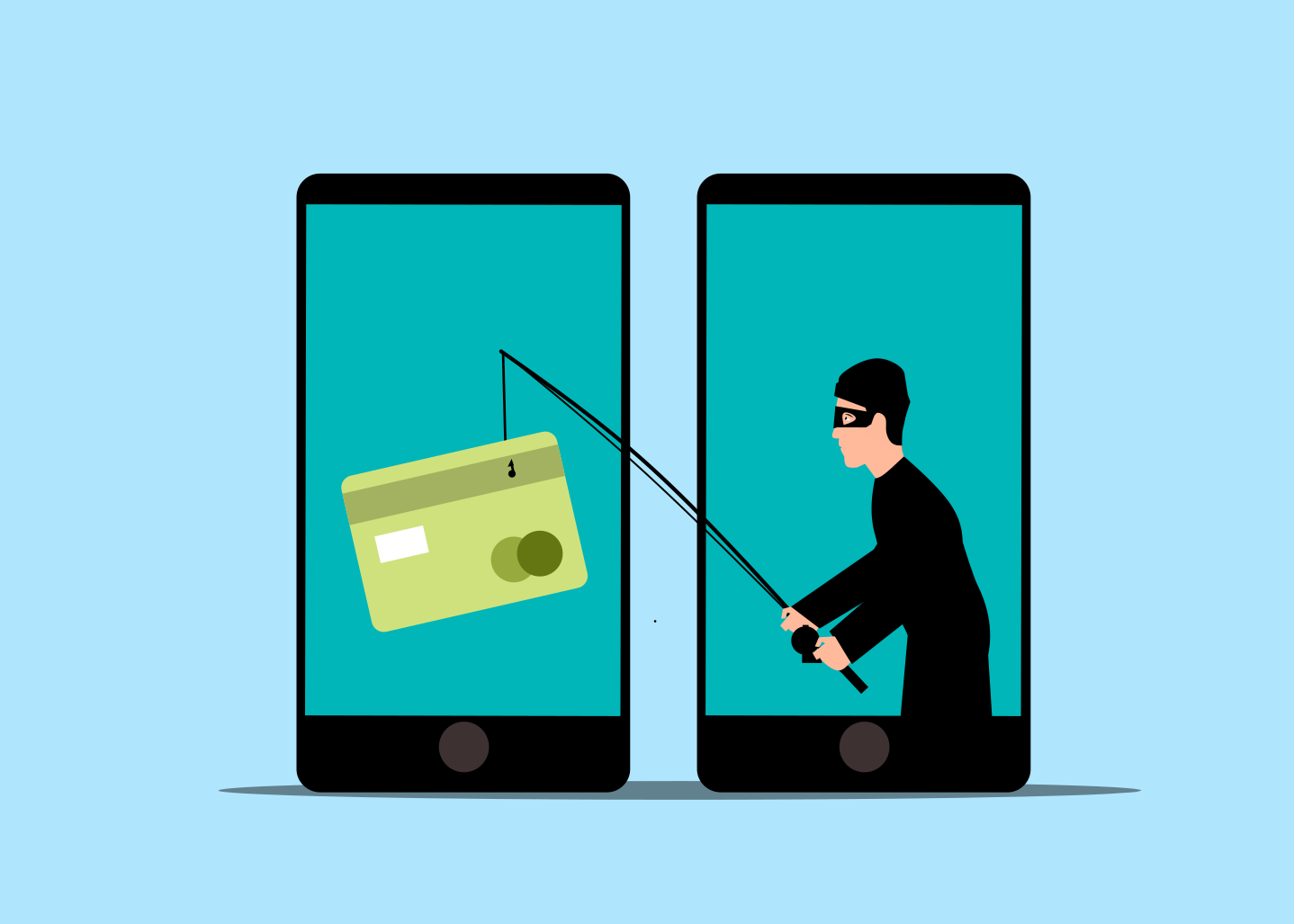
A CVS parking lot recently became the site of a $3,000 robbery with the victim serving as willing accomplice.
The target of this crime was an older adult. This wasn’t a mugging or a pickpocketed wallet. It started with the weaponization of the target’s sense of decency and kindness and a scheme that has become all too familiar to tens of thousands of Americans: The crime was gift card fraud.
In our recent episode of What the Hack, we talk about gift card fraud, a pernicious threat that often happens more than once, people becoming serial victims, especially older adults, leaving their families searching for a way to protect them. Fortunately, there are ways to do just that.
The first scam
Brian Ward’s dad, who we’ll call John, is an educated guy. After growing up in upstate New York, he studied at Yale University and went on to study law at the University of Virginia.
During the tech boom, he was a big-time corporate lawyer whose secretaries and assistants handled the emails and the computers. Now, he’s 85 years old and sometimes asks Brian for tech support for his tablet and home computer. He lives mostly independently in a retirement community.
And like all of us, John gets scam emails.
The thing is, John is no fool, but the scammers have gotten more and more sophisticated. In the first of three major scams, John received an email from a bath store he’d shopped at before. The email brought up an erroneous purchase and asked him to call a number. Since it was from a familiar source, John called the number.
Phase Two: That email wasn’t from a bath store. It was from a scammer. Cue the nightmare that many individuals with older adult relatives have experienced.
The scammer said they would refund him the $420 purchase; all John had to do was type the amount into a website form. But unfortunately, John “accidentally added two extra zeroes” according to the scammer, resulting in $42,000 being sent to his account. The only right thing to do was wire the extra money back. Of course, John was always going to do the right thing.
Fortunately, his financial advisor flagged the transaction and it never went through. Score one for the financial system.
The second scam
Scammers seem to have radar for victims that will provide payouts, so they targeted Brian’s dad again. This time, it was a smaller amount that would raise fewer flags: just $3000. Here’s where gift card fraud comes in.
The trick began with a fake alert regarding a PayPal account. The fraudster claimed that they mistakenly refunded $3,000 to the account instead of $30. Here, the scammer weaponized John’s kindness with a plea for sympathy. The person on the line fabricated a story about losing their job over the mistake.
John naturally wanted to help the desperate worker. The caller explained that rules prevented a standard cash refund. Instead, they requested payment in gift cards. The scammer explicitly instructed the 85-year-old to buy Sephora and Apple cards across multiple stores to avoid suspicion. John hopped into his car and followed the directions. He drove from place to place, bought the cards, scratched off the back panels, and read the codes over the phone. The money vanished instantly.
When family members intervened during a follow-up call, the brazen scammer even tried to pit the father against his own son. Only then did the former lawyer hang up.
Unfortunately, the fraud didn’t stop there.
The third scam
The third scam was another instance of gift card fraud. This time it started with a caller from “Chase Bank” who wanted him to withdraw $30,000.
Brian’s dad visited a real Chase Bank to make the withdrawal, and fortunately, the teller refused and called Brian, who quickly contacted his dad. Score two for the financial system.
Unfortunately, John hung up on him before going on to visit the CVS next door and buy $3000 worth of gift cards all at once. No one flagged it. When John came home, his family was waiting with a law enforcement officer. This time when the scammer “Clara” called, she got to talk to a police officer. Even as she brazenly argued with that officer, it finally became clear to John that the whole thing was a con.
But it left his family wondering how they could possibly protect him from increasingly sophisticated threats.
The next right thing
Sometimes, there’s nothing you can do to prevent an older adult relative, or any relative for that matter, from falling victim to another scam. The truth is that we’re all a phone call away. We’re wired to respond to requests or offers for help by becoming more trusting and compliant. It’s called the “reciprocity response,” and scammers love hacking it to get at their victims.
That doesn’t mean you’re completely helpless.
Start with the AARP’s free resources for relatives of chronic scam victims. The AARP’s Fraud Watch Helpline provides immediate assistance in the middle of a crisis, including gift card fraud.
Other steps you can take include:
- Restricting phone access: Adjust cell phone settings so the device only rings for established contacts. Route all unknown numbers directly to voicemail to block cold-calling fraudsters.
- Deploy anti-scam software: Install specialized browser extensions, such as Seraph Secure, on computers and tablets. These tools block remote-access programs and prevent seniors from clicking dangerous pop-up links that mimic tech support alerts.
- Utilize data removal services: Scammers build victim profiles by searching public databases for names, ages, addresses, and property values. Use data deletion services to scrub a relative’s personal information from data brokers and public search engines, making them harder to target.
- Counter loneliness: Isolation increases vulnerability. Maintain regular, open communication so aging relatives feel comfortable discussing odd financial requests without shame or fear of judgment.
- Enacting legal safeguards: In the most extreme cases, you may need to establish a power of attorney. This legal step allows trusted family members or financial managers to oversee accounts and freeze suspicious, large-scale transactions before money leaves the bank.
It’s dangerous out there, and scammers have proven their tactics hundreds of thousands of times. Often, the best you can do is make yourself or your older relative harder to find and harder to hit online so a cybercriminal moves on to the next victim.
Learn more:
- Access the AARP’s free resources for relatives of chronic scam victims
- Discover the latest scams for older adults and how to stop them
- Listen to the full episode of What the Hack and read through the transcript to learn more about scammer tactics and gift card fraud

news?

Don’t have the time?
DeleteMe is our premium privacy service that removes you from more than 750 data brokers like Whitepages, Spokeo, BeenVerified, plus many more.
Save 10% on DeleteMe when you use the code BLOG10.
Related Posts
California’s DROP Is Live: What It Does, What It Doesn’t, and How to Use It

Why Doesn’t Gen Z Care About Privacy?