What Are the Latest Scams for Older Adults?


Every year, scams against older adults increase in number and sophistication. Many people have lost their entire retirement savings as a result. But what can you do about it? And what are the latest scams for older adults?
Table of Contents
The scam crisis for older adults
A recent report from the Internet Crime Complaint Center (IC3) gave some very bad news when it comes to the latest scams for older adults. The data is worth a closer look.
1. Fraud complaints and losses increased significantly in 2025
Adults in the 60+ age bracket reported 37 percent more cases of fraud than in the previous year, reaching 201,266 complaints total.
Monetary losses due to scams for older adults reached nearly $8 billion, up 59 percent from 2024.
2. The latest scams for older adults haven’t changed
Top scams still include phishing/spoofing, tech support scams, investment, and romance scams. More on each of these later. Older adults report more scams than younger age brackets.
The report showed around 167k complaints in the next most-targeted age bracket (40-49) compared to over 200,000 aimed at the 60+ age group. Older adults make up nearly a quarter of all cyber-enabled fraud reporting.
There may be multiple reasons for this, but one seems to be that retirement accounts are particularly attractive to cybercriminals.
3. Despite growing awareness and enforcement actions, fraud losses have increased
Starting in 2022, fraud incidents have increased every year, as have monetary losses due to fraud against older adults.
Something has to change.
Latest scams for older adults
Prevention starts with awareness.
According to the IC3’s report, these are the most commonly reported scams among the 60+ age bracket. The following list is far from exhaustive and doesn’t include cyberthreats like malware, ransomware, and standard data breaches.
1. Phishing
Phishing accounted for nearly 50,000 of the complaints from the 60+ age group to the IC3. It cost U.S. older adults around $77 million last year.
Phishing is a play on cybercriminals “fishing” for information through email, text, a voice message, a call, or any other means of communication. In the past, email was the most common method. Now, AI-generated voicemails and calls are growing in frequency.
Most phishing scams involve some sort of impersonation. The message will appear to be from a legitimate company and will include a malicious link or a request for information.
Sometimes, the purpose is simply to extract information that scammers can sell on the dark web or use to steal the victim’s identity. In other cases, AI coding tools let cybercriminals set up entire web pages that are convincing imitations of legitimate sites. Once a victim enters credentials on those sites, the cybercriminal can use those credentials for an account takeover (ATO) attack.
Don’t fall for phishing:
- Check the URL at the end of the email address. Cybercriminals will sometimes replace letters with numbers (for example, Amaz0n.com, with a zero instead of an o) or add hyphens where they shouldn’t be.
- Don’t open unsolicited emails or text messages. If you don’t have an account with Chase bank, don’t open an email that claims to be from Chase.
- Don’t click links. Look up the company directly in the search bar or open it from a bookmark.
- Avoid unsecured websites. Most legitimate sites have a lock symbol in the address bar. The URL should start with HTTPS instead of HTTP.
- Don’t share sensitive info over the phone, no matter who calls. Scammers can sound convincing, friendly, and honest. They can even spoof the voices of loved ones. More on that later.
- Remove your data from broker sites. Data brokers frequently share your contact info, including private email addresses and phone numbers.
Preventing phishing starts with keeping your personal info private.
2. Tech support scams
Tech support scams and customer support scams are the second most common form of attack, coming in at around 21,000 reports. However, the losses are significantly more than from phishing, totaling more than $1 billion.
These scams can start in many different ways:
- Fake ads on social media or Google
- Browser pop-ups on various websites
- Emails urging recipients to call a support number
- Bank support and “fraud department” calls
- Malicious text messages with fake support numbers
One attack takes the form of a browser popup that shows up blaring red, sometimes accompanied by loud noises and automated voice warnings. Victims may see a number come up to call a technician who can help them get their computer back from the “virus.” In reality, there is no virus, and they can usually close the browser window or shut down their computer to stop the attack completely.
Another example we saw not long ago on What the Hack involved an older adult who lost access to his social media accounts. As many people unfortunately know, Meta has no support number to call if your account gets hacked or taken over. That leaves the way open for scammers who can reach out via DM, text, or through targeted ads claiming they can help victims reclaim their accounts or that they are the official support team for the social media platform.
In reality, they will steal money and credentials and leave victims in an even worse situation.
Listen to the full episode to hear more about how this kind of scam can take shape.
Don’t click sponsored links for tech support.
Ignore browser popups, texts, and calls that attempt to inspire fear and offer assistance.
Remove your personal information from data broker sites to make yourself less of a target for scammers in the first place.
3. Investment scams
Investment scams can happen through:
- Dating apps
- Social media DMs
- Fraudulent ads
- Wrong number texts
On dating apps, the cybercriminal usually plays a long game, establishing trust over weeks or months, asking for more and more funds, and then walking away with the entirety of the victim’s investment. This practice is known as financial grooming or romance baiting. Cybercriminals call it “pig butchering” because they see themselves as “fattening up” victims before the “slaughter.”
If someone you’ve never met in person starts asking for money, take a step back. Investment scams cause by far the most financial damage each year for older adults, totalling more than $3.5 billion in losses in 2025.
Not all investment scams have a romantic element. Sometimes, it starts with an advertisement from a broker or “investment expert.” Other times, it starts with a wrong number from someone who then pivots to asking the recipient to invest in a “great opportunity” alongside them.
Do your research and think twice before clicking on sponsored search results or social media ads. Ignore wrong number texts, period. They’re a scammer’s favorite tool to turn a casual interaction into a scam.
4. Romance scams
Romance scams are frequently just one form of an investment scam. However, they can also turn into sextortion.
In sextortion, a scammer convinces the victim to send intimate images and then threatens to release those images to family members or friends unless the victim pays. While these are less common among older adults than many other age brackets, confidence/romance scams as a whole made up around $600 million worth of fraud losses for the 60+ age group in 2025.
People who fall for romance scams are often lonely and have few other stable relationships. This makes it particularly difficult to recover after a scam. If you have been targeted with a romance scam, know that you’re not alone and there are resources available. Start with the AARP’s Fraud Watch Network Helpline.
5. Non-payment/non-delivery
Most of us have received a text that claims we have an unpaid toll or a fine for missing jury duty. Older adults may be particularly susceptible because many come from a generation that values politeness and staying out of debt more than younger generations.
You will never receive a genuine text requesting payment for a toll, a warrant, or missed jury duty. Ignore them and block the sender. Do not text “STOP” or respond in any way, as this confirms to the cybercriminals that your phone number is active and you are a potential target.
6. Extortion
Extortion scams occur when a malicious actor claims to have some form of compromising information on a victim and threatens to release that information to friends, family members, or the internet at large unless some kind of recompense is made.
In most cases, the perpetrator never had access to the victim’s computer or any compromising information in the first place.
These scams take many forms. One that has circulated recently occurs when a cybercriminal sends an email to a victim with a picture of their home, usually taken from Zillow or Google Street View. The cybercriminal claims to have access to surveillance cameras or webcam footage that would be embarrassing to the victim if released.
Simply ignore these emails, block the sender, and move on with your life. The cybercriminal is usually too busy to pursue you and will move on to the next target.
In some rare cases, cybercriminals will continue to harass the intended victim with more emails and texts from various sources. In that case, consider getting a new email address and phone number.
Next, prevent further exposure. Use an email and phone number masking service. Remove your information from data broker sites.
7. Government impersonation
Government impersonation accounted for roughly $400 million in losses in 2025.
Cybercriminals call or text victims claiming there are open warrants or that the victim’s identity has been stolen and they need help to resolve the issue. They sometimes create entire websites that appear to be legitimate government sites.
Watch out for texts claiming to be from the IRS or law enforcement. The IRS won’t call or text you. Neither will the FBI.
8. Employment scams
Older adults are returning to the workforce in unusually high numbers due to a high cost of living, and that makes them a target for employment scams.
In employment scams, cybercriminals pose as recruiters or businesses. They may ask for an upfront payment for “office supplies” or to secure an opportunity.
Never pay to secure a job opportunity. Do your research on companies that offer work.
9. Lottery/inheritance scams
Scammers often use money to bypass victims’ natural defenses and encourage them to act quickly. You may receive a text or call encouraging you to “act now to secure your inheritance” or lottery winnings.
Scammers may even use the names of recently deceased relatives. Cybercriminals have access to lists of your relatives from data broker sites. Public obituaries are another source for this information.
Be skeptical of calls or texts claiming you have an “inheritance” waiting for you, and do your due diligence. Involve family members and friends who can help.
Remember that if it sounds too good to be true, it is.
10. Real estate scams
Common real estate scams targeting older adults often exploit home equity through reverse mortgage schemes or home title theft. In reverse mortgage fraud, scammers may pressure you into taking out a loan for “urgent” home repairs or “can’t-miss” investments, only to disappear with the cash.
Title theft, or deed fraud, is more covert; criminals use forged documents to transfer your home’s ownership into their names, allowing them to take out loans against your property without you ever knowing.
To protect yourself, always verify the identity of anyone who contacts you unsolicited. Never sign documents you don’t fully understand, and be wary of “high-pressure” tactics that demand immediate action. A great free defense is to sign up for property alerts through your local county recorder’s office, which will notify you if any documents are filed against your address.
Additionally, regularly check your credit report at AnnualCreditReport.com for any unfamiliar loans or inquiries that could signal someone is using your home as collateral
More on real estate scams can be found here.
11. Advanced fee scams
Cybercriminals will sometimes ask for a “deposit” for a good or service and then back out, leaving you in the hole. This happens with puppy scams, where a cybercriminal posing as a legitimate breeder asks for an advanced payment to make sure your puppy has everything it needs to arrive safely. We saw an example of this on What the Hack not long ago. It also happens with job offers, with home repairs, and with various types of online purchases.
Don’t send money until you have something in your hand to show for it. There’s no reason to take the risk.
12. Overpayment scams
Overpayment scams occur when a cybercriminal sends you money, usually through a P2P payment app like Venmo or PayPal. The scammer will claim that it was an accident and ask you to send back the money. When you send the money, they cancel the original transaction. That means their money never actually hits your account, but your money will be gone for good.
If someone, anyone, sends you money and claims it was by accident, do not send the money back. Also, don’t try to spend it, as it could be stolen money. Inform the platform and wait until the dispute is resolved.
13. Threats of violence
While threats of violence thankfully make up a small portion of the latest scams for older adults, they are some of the most frightening and distressing for the victims.
Cybercriminals will send text messages, calls, or even video calls telling victims that they have a price on their heads or that a gang has put a hit out on them or their family members. The messages may be accompanied by personal information and graphic imagery. All the recipient needs to do is pay a certain amount of money and the threat will go away — except that it doesn’t. The scammer will squeeze the victim for as long as possible until they finally cut off contact.
Inform your local police department if you receive this kind of threat, but also know, it’s likely empty. There’s a good chance the scammer is someone in a foreign country who has zero physical access to you or your family.
14. Charity scams
A lot of charity scams start from an email or a phone call from a seemingly legitimate charity. Some red flags:
- Requests for funds in the form of cryptocurrencies
- Requests for funds in the form of gift cards
- Phone number not listed on the charity’s website
- Email address has incorrect characters
Legitimate charities don’t deal in cryptocurrencies. Gift cards are common in scams because it’s difficult to track funds or claw them back.
15. Cryptocurrency scams
Across all age groups, cryptocurrency scams cost victims more than $11 billion in 2025. The most common crypto scams are investment scams, but as mentioned above, they can also be charity scams or any other type of scam that requires crypto as payment. Cybercriminals may request that victims go to a crypto ATM to send currency.
Cryptocurrencies are difficult to track and to recoup, but organizations like the AARP are working with lawmakers to establish better safeguards. In the meantime, steer clear of crypto kiosks entirely. Scammers love them.
16. Gift card scams
A cybercriminal can pose as a relative or employer and ask you to buy gift cards on their behalf. In many cases, the message seems convincing enough that victims will willingly purchase several gift cards and share the numbers on the back with the scammers. As soon as they share the numbers, the scammer will withdraw the funds.
Be especially cautious of anyone who asks you to buy multiple gift cards, even if they seem to be someone you know.
Learn more about these scams from the AARP.
17. Recovery scams
Recovery scams are worryingly common. A cybercriminal will reach out after you mention being scammed on social media and will offer to help you get your money back.
The problem? No one can get your money back, but the scammer will be happy to take even more before they leave you alone.
Cut your losses. If anything can be done, organizations like the AARP and IC3 will be your best bet for recovery. Never trust so-called recovery experts or recovery lawyers, period.
18. Grandparent scams
These aren’t mentioned in the IC3 report, but according to the Federal Deposit Insurance Corporation, grandparent scams are growing in frequency. Scammers will look for personal information on data broker sites and the dark web and research potential victims. Once they have sufficient data, they will reach out claiming to be a grandchild or another relative in distress and in need of money. Or they will claim to have kidnapped an older adults’ grandchildren and demand a ransom.
These are particularly pernicious thanks to AI. A cybercriminal only needs three seconds of your grandchild’s voice to create a convincing deepfake. It will sound like your grandchild, but it will come from another number — unless the scammer found a way to spoof your relative’s phone.
Remove personal information from data brokers and create a safe word so you can verify who is on the other end of the line if they ask for money. Meet with your relatives face to face before you send funds.
Stay updated on these and other scams so you can keep yourself and your accounts safe in 2026.
AI in scams for older adults
Across all different types of scams, AI has made life much easier for cybercriminals and tougher for older adults.
We already talked about voice cloning. Scammers only need a tiny snippet of audio from a Facebook or TikTok post to recreate a person’s voice with chilling accuracy. It’s a total gut-punch for older adults because, in that moment of hearing a loved one in distress, most won’t think to confirm their identity.
Deepfake videos are another threat. Scammers can now use filters during live video calls to swap their face. Keep that in mind if you’re talking with someone on a dating app: that profile picture or even their face in a video call could be AI-generated.
Plus, the obvious typos and mistakes we used to use to spot scams are basically gone. Thanks to AI, scammers can now churn out emails and texts that are well-written and professional. They sound like your actual bank or the Social Security Administration. It’s much harder to tell what’s a legitimate alert and what’s a trap.
Double your due diligence. Don’t pick up calls from unknown numbers. Create a safe word for family members. Be cautious of online dating platforms. It’s a risky world out there, and AI’s only making it tougher to stay safe.
Data brokers and scams
Another commonality across all types of scams is that they generally start with exposed personal information.
Much of that is thanks to data brokers. Data brokers fuel billions of dollars worth in fraud and identity theft, according to recent research from the Joint Economic Committee. One of the ways this happens is major data breaches like the National Public Data breach. NPD is a data broker that stored the SSNs of nearly every American. Those got exposed when cybercriminals hacked its database.
But the reality is that most of the time, cybercriminals don’t need to hack anything. Your personal information is one Google search away, including your phone number, email address, home address, age bracket, employment history and status, relationship status, relatives, and much, much more.
Scammers cross-reference this publicly available information with data scraped from the dark web to create detailed profiles that make their attacks far more convincing and dangerous. That’s why we recommend being proactive and removing your information from data broker sites.
Note that even if you remove your info, data brokers will scrape it from public records and reupload your profile, usually in about four months. That’s why a service like DeleteMe can be helpful: to monitor on your behalf so you have peace of mind when it comes to your digital footprint.
What should you do if you’ve been scammed as an older adult?
The first thing to keep in mind is that you are a victim. You are not a fool.
Cybercriminals have been perfecting their methods for decades, and they’re extremely good at what they do. According to AARP’s research, 4 in 10 U.S. adults have already fallen victim to fraud or scams in some form.
It’s natural to feel angry, frustrated, and even depressed after a scam, particularly if you’ve experienced a significant financial loss. For many, it can be their worst nightmare realized. It can mean a loss of retirement savings and a loss of trust in self. It can turn your relationships and your life upside down.
That said, there is an “afterward.” There are stories from folks who’ve been scammed and come back stronger, and we hear about them all the time on What the Hack. There are also people who can help you.
But if you’ve only just been scammed, start here to minimize the damage:
- Shut down all contact with the scammer. Go scorched earth if need be. Delete social media accounts. Block contacts. Delete dating apps; whatever you need to do to keep yourself and your future safe.
- Change your passwords and turn on 2FA. If cybercriminals compromise one account and you reuse that password anywhere else, those accounts are also in danger. Turn on two-factor authentication so anyone who wants to sign in will need a PIN or your fingerprint.
- Freeze your credit. Identity theft may be the next step after a scam. Make sure your scammer can’t ruin your credit as well.
- Document everything. Take screenshots and save links wherever you can.
- Report the scam. Report it to the platforms where you were scammed, as well as to your local law enforcement, IC3, and the AARP’s helpline if need be.
- Involve trusted relatives and friends. You don’t have to go through it alone. Being scammed can be emotionally and financially devastating. Make sure you have someone who can come along for the ride and offer support.
- Talk to the AARP or another resource to start cleaning up the damage. It can take a while to recover from a scam, but with the right help, you can.
Resources for scam victims
These can help if you’ve already been scammed, as well as give you some tips on how to avoid future threats:
- AARP Fraud Watch Network Helpline – The AARP can offer advice, help, and encouragement after a fraud or scam incident, even if you’re not a member.
- Internet Crime Complaint Center – You can report a scam, but the IC3 may not be able to offer immediate assistance. They can, however, help document the incident, and it can help with overarching enforcement against the scam economy.
- FDIC scam resources – The FDIC has resources specifically for older adults to learn about and avoid common scams.
- National Elder Fraud Hotline – If you or an older adult you know has fallen victim to a scam, you can get help immediately here.
- Operation Shamrock – Operation Shamrock has a significant amount of educational material and other resources for scam victims.
- The Cybercrime Support Network – Find support groups who can walk with you through the aftermath of a scam.
Being scammed is an emotionally and mentally devastating experience. Sometimes, just talking to someone who understands is the first step to healing.
Frequently asked questions
Here are your older adult scam questions answered.
1. What should I do if an older relative is in denial about a scam?
The AARP has resources to help with this specific scenario. In general, involve other relatives, authorities, and platforms to crack down on scammers, and stand by victims. Loneliness is a big reason why some older adults become chronic scam victims.
2. What should I do if I’ve been scammed?
Cease contact with the scammer immediately. Do not ask for your money back or continue to engage. Report to the appropriate authorities and talk to the AARP’s helpline for assistance.
3. Can I get my money back after a scam?
Unfortunately, it is rare that law enforcement can help you completely recover your funds after a scam. Don’t fall for a second “recovery” scam and lose even more money. Contact authorities and use the legitimate resources listed above.
4. Do data brokers make it easier for cybercriminals to scam people?
Yes. Data brokers must be held accountable for their role in facilitating fraud and scams. Many states allow you to opt out. Make sure you take advantage of those rights and opt out or work with DeleteMe to help you stay safer online.
Final thoughts
Ultimately, scams all start with one thing: trust. And trust is also something that is natural and necessary for everyone to function in today’s society. That makes it hard to avoid falling victim, but not impossible. Arm yourself with the knowledge you need to stay safe, and reduce your digital footprint. That’s how you’ll contribute to making life tougher for the fraudsters this year.
Learn more
- Learn about data brokers and how they misuse your data.
- Read through our five-minute privacy tips to reduce your digital footprint.
- Discover how to remove your info from the internet

news?

Don’t have the time?
DeleteMe is our premium privacy service that removes you from more than 750 data brokers like Whitepages, Spokeo, BeenVerified, plus many more.
Save 10% on DeleteMe when you use the code BLOG10.
Related Posts
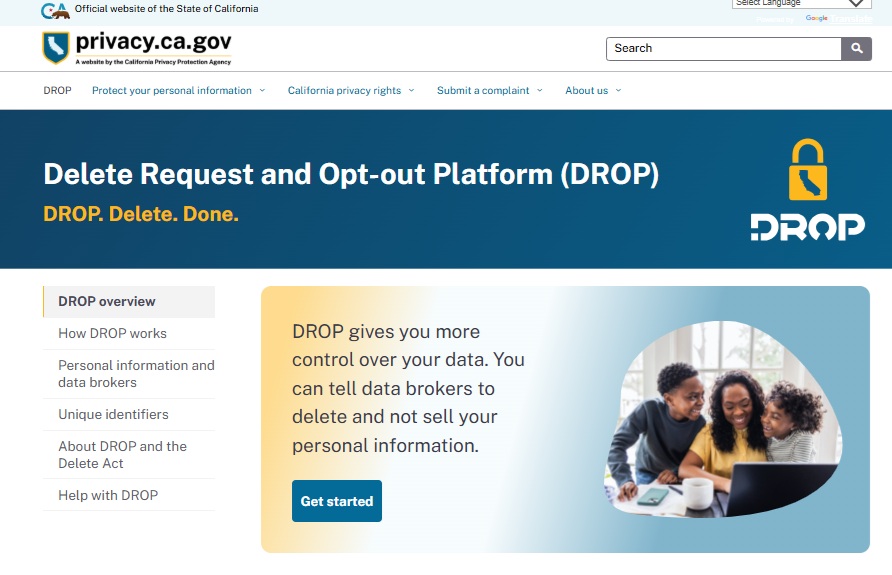
California’s DROP Is Live: What It Does, What It Doesn’t, and How to Use It

Why Doesn’t Gen Z Care About Privacy?